MOSCOW
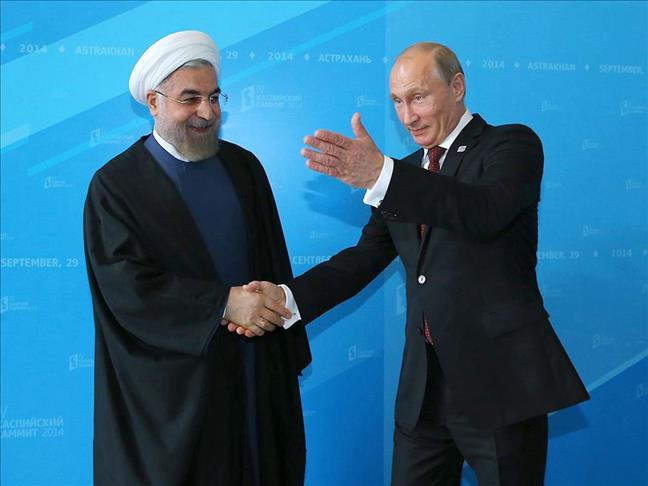
The oil-for-goods agreement makes Iran and Russia partners, said Karine Gevorgyan, an expert from Moscow on Thursday.
The start of the "oil-for-goods" program, between Russia and Iran, was confirmed by Russian Deputy Foreign Minister Sergei Ryabkov on Tuesday.
With the agreement, which the two countries have been negotiating since last year, Russia is to purchase 500,000 barrels of crude oil per day from Iran in exchange for Russian goods.
The agreement has strategic implications for both countries, Gevorgyan said. "Russian-made defense missile systems will arrive in Iran this year and when we consider the situation in the area, military equipment is crucial for Iran," said Gevorgyan.
An agreement with Russia to deliver the S-300 - said to be one of the world's most efficient anti-aircraft systems - will be signed at a security conference in Moscow on Wednesday, Defense Minister Hossein Dehghan said on Iranian state television.
The contract for Russia to supply S-300 defense missile systems to Iran was signed in 2007, but was unilaterally suspended by Russia in 2010 when the United Nations Security Council imposed an arms embargo on Iran. Now it will be part of the oil-for-goods program.
"But the oil-for-goods program may not work because it was planned before the Ukrainian crisis," said Nina Mamedova, President of the Institute of Oriental Studies in Iran.
"Conditions have changed a lot. If the sanctions against Tehran are removed, Iran may abandon the deal. If Iran were to sell that oil on the open market, it would be more profitable," said Mamedova.
The agreement for oil-for-goods was planned for five years and estimated to be worth more than $20 billion in 2014. However, due to lower oil prices now it is estimated to be around $10 billion.
"If the sanctions are removed, oil prices will decrease, that’s why Russia wants to bring Iranian oil under control," said Irina Fyodorova, a Middle East expert from Russian Academy of Sciences.
"Moscow holds some of Iranian oil. If the U.S and the EU remove the sanctions, Iranian oil will flow into the international market and that will pressure oil prices lower. That’s not good for Russia," added Fyodorova.