by Furkan Naci Top
ISTANBUL
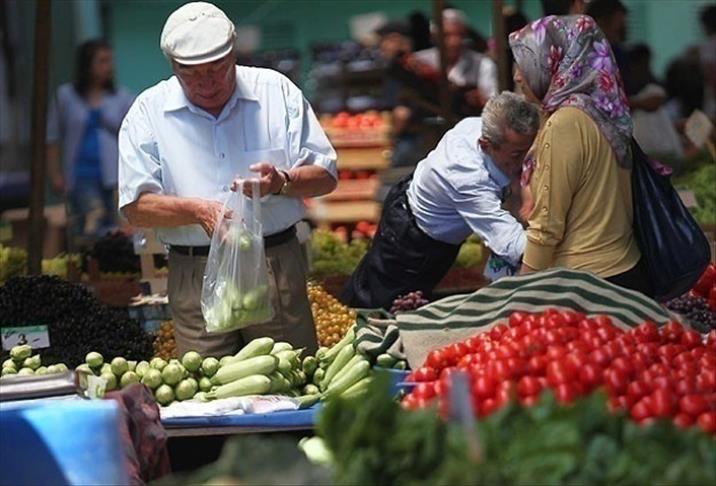
Turkish food prices are high, and the middleman is mostly to blame, experts told The Anadolu Agency on Wednesday.
Why are food prices so high? The middleman is to blame, as the businesses that connect producer and consumer add considerable cost to the retail prices. There is also a critical lack of organization by producers that pushes up prices.
Prices in retail stores are three times the prices asked at the producers, said the head of theTurkish Union of Agricultural Chambers of Commerce Semsi Bayraktar.
"The difference between field prices and market prices will not close up," he added.
Parsley provides a good example: It is sold in stores at more than 440 percent of the producer price, while oranges and mandarins show prices that are three times as large.
Bayraktar attributes the price difference to middlemen.
"Production in small volumes in our country, lacking in organized marketing institutions and insufficient transportation and storage systems enable middlemen to control the market," said Bayraktar. He called for more direct sales.
Prices also may be manipulated following bad weather conditions, as big wholesalers might pile up products to sell in the future, and brokers can sometimes negotiate higher prices, Bayraktar said.
Fruit and vegetable brokers generally make profit by buying products from farmers and selling them to retailers. They operate mainly from wholesale markets in cities.
Economist Zafer Ergezen agrees that middlemen are the cause of difference between the producer and consumer prices.
"There is a problem in the supply chain," said Ergezen, who sees the high food prices as "unreasonable" since the global food prices are decreasing.
Driver of inflation
High food prices in Turkey are one of the main drivers of the high inflation rate in 2014, according to the Turkish central bank.
Food prices made the largest contribution to the increase in consumer prices, the bank said in a report released in October which covered the last quarter of 2014.
The increase in the Consumer Price Index was reported at 7.24 percent in January, down from 8.17 percent in December 2014, according to a report released in January by the Turkish Statistical Institute.
The increase in food and non-alcoholic prices was the second highest segment in the inflation basket, rising by 3.52 percent, after alcoholic beverages and tobacco products. Consumers paid 10 percent more in January 2015 compared with the same month in the previous year, according to the TurkStat report. Food and beverages constitute more than a quarter of the goods in the inflation basket that is designated by state-run statistics body.
Turkey has seen high inflation rates during 2014, which peaked in May at 9.66 percent; the rate was over nine percent for half of the year.
There had been a record-high rise in food prices of 14.4 percent year-on-year in August due to a drought.
Ergezen, a commodity markets expert, said that food prices were "effective" in increasing the inflation rate. The poor suffer the most, he said, as tomato, aubergine and pepper prices rose about 50 percent in January.
Blizzards froze crops in the greeneries in that month contrary to the mostly mild climate of southern Turkey and pushed up prices, Ergezen said.
The UN Food and Agriculture Organization also noted the opposite direction between Turkish food prices and the price of food on global markets in its recent report in early January, according to Ergezen.
"Global wheat prices went down by 27 percent in last two months. If this does not reflect on Turkish prices, the related institutions should investigate the reasons behind it and generate solutions," said the commodities expert.
Ergezen predicts a lower inflation rate this year, as does the Turkish central bank which has forecast a drop in inflation to about 5 percent.
Low oil prices and limited increases in food prices should reduce inflation in 2015, Ergezen said.
The structural problems, on the other hand, should also be solved as Bayraktar notes. He proposes more technology-based agricultural production and irrigation for a more fruitful yield as well as further protection from the weather.