ISTANBUL
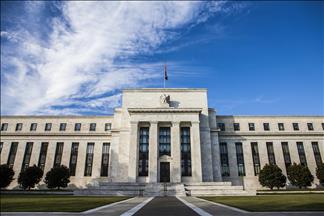
Expectations that the US Federal Reserve could soon begin cutting interest rates are increasingly being pushed back as persistent inflation risks, resilient economic data and rising energy prices linked to geopolitical tensions cloud the outlook for monetary easing.
Investors anticipated the Fed would begin easing borrowing costs in the first half of the year after a prolonged tightening cycle that lifted the federal funds rate to a range of 3.5% and 3.75%.
But the central bank has kept interest rates unchanged at policy meetings, reiterating that it needs greater confidence that inflation is moving sustainably toward its 2% target before beginning to cut rates.
Market expectations have since shifted, with investors increasingly pricing in a later start to rate reductions as inflation remains above target and the US economy continues to show resilience.
Geopolitical tensions adding to inflation risks
Economists said the escalation of tensions in the Middle East, particularly concerns about potential disruptions to global oil and natural gas supplies, has complicated the inflation outlook and made policymakers more cautious.
Gregory Daco, chief economist at EY-Parthenon, said a combination of geopolitical risks and strong economic data has reduced confidence that the Fed will soon begin cutting rates.
“Persistent inflation and higher inflation expectations stemming from the conflict in the Middle East, resilient economic activity, and tighter-for-longer policy signals have reduced confidence in an imminent easing cycle,” Daco told Anadolu.
Higher energy prices, triggered by geopolitical tensions, could further complicate the Fed’s policy outlook, he added, as rising oil costs tend to feed directly into consumer prices.
“Higher oil and energy prices from Middle East tensions risk lifting energy prices, which will feed into inflation, likely forcing the Fed to remain cautious and complicating the path toward policy easing,” he said.
Energy markets have become increasingly sensitive to geopolitical developments in recent weeks, with oil prices climbing amid fears that disruptions in the region could affect global supply routes and production.
Strong US economy reduces urgency for cuts
Recent economic indicators have reinforced expectations that the Fed may keep borrowing costs elevated.
The US labor market has remained resilient, with the unemployment rate coming in at 4.3% in January, according to the US Bureau of Labor Statistics, indicating continued strength in employment despite high borrowing costs.
Consumer spending, which accounts for roughly two-thirds of US economic activity, has also shown resilience despite higher borrowing costs.
Daco said those factors have reduced the urgency for the central bank to lower rates.
“Strong US data—especially a low unemployment rate and resilient consumer spending—diminishes the perceived urgency for rate cuts,” he said.
He warned that a prolonged period of high interest rates could tighten global financial conditions and increase vulnerabilities in emerging markets.
“A higher-for-longer Fed risks tightening global financial conditions, pressuring capital flows and currencies in emerging markets and raising vulnerabilities for highly indebted economies,” Daco added.
Oil price surge reshaping market expectations
Mark Zandi, chief economist at Moody’s Analytics, said investors are increasingly concerned that rising energy prices linked to the conflict with Iran could push inflation higher.
Investor expectations for further rate cuts are being scaled back as disruptions to global oil and natural gas supplies threaten to lift US inflation, said Zandi.
He noted that energy price increases can have a measurable effect on inflation indicators closely watched by the Fed.
Zandi said every $10 sustained increase in the price of West Texas Intermediate crude oil tends to raise inflation, as measured by the personal consumption expenditures (PCE) deflator, by around 0.15 percentage points in the following year.
With oil prices already rising significantly in recent weeks, the inflation outlook could become even more challenging, he said.
Zandi added that while higher energy prices could slow economic growth, investors believe the Fed will prioritize controlling inflation, reducing the likelihood of aggressive rate cuts this year.
He also said expectations that the Fed will keep rates elevated have strengthened the US dollar, placing pressure on emerging-market currencies.
The pressures could persist until geopolitical tensions ease and energy markets stabilize, Zandi noted.
Inflation progress slowing
US inflation has moderated significantly from its pandemic-era peak but remains above the Federal Reserve’s 2% target, reinforcing the central bank’s cautious stance on policy easing.
The Fed’s preferred inflation gauge, the personal consumption expenditures (PCE) price index, rose 2.5% year-over-year in the latest reading, down sharply from its 2022 peak of more than 7%, but still above the Fed’s 2% target.
Meanwhile, core PCE inflation, which excludes volatile food and energy prices and is closely monitored by policymakers, increased around 2.8% annually, reflecting persistent price pressures in services such as housing, health care and transportation.
Consumer price index (CPI) data also point to lingering inflation pressures. Headline CPI inflation has slowed to 2.4% annually in January, compared to a peak of 9.1% in June 2022, but remains above levels consistent with the Fed’s target.
Wage growth has also remained relatively firm, with average hourly earnings rising 4% year-over-year, highlighting continued strength in the labor market.
Economists said the combination of still-elevated core inflation and resilient wage growth is one of the main reasons policymakers remain reluctant to begin cutting rates prematurely.
Key indicators investors are watching
Looking ahead, economists said investors should closely monitor several key indicators to assess when the Fed might begin easing policy.
Daco said trends in core inflation, wage growth, labor-market strength, consumer spending and broader financial conditions will be critical in determining when the Fed could feel comfortable initiating rate cuts later this year.
Until clearer evidence emerges that inflation is moving sustainably toward the central bank’s target, analysts said the Fed is likely to maintain a cautious approach to monetary easing.