By Andrew Jay Rosenbaum
ANKARA
Regional and national strategies were high on the agenda at the World Economic Forum at Davos, Switzerland, on Thursday, with delegates focusing on the need to boost the European and global economies.
The World Economic Forum, which unites 2,500 of the world’s leaders, business people and regulators, heard first a panel discussion on whether economic stimulus measures planned by the European Central Bank would succeed.
The plan to inject €60 billion ($69.9 billion) into the Euro-zone economy with bond purchases had been announced earlier by European Central Bank governor Mario Draghi.
International Monetary Fund Managing Director Christine Lagarde said that quantitative easing “has already shown that it is effective”, and that market expectations for the plan's success were clear.
But Harvard economist Larry Summers warned the effect of the stimulus would be “less impactful” than a similar approach had been in the U.S. after the 2008 financial crisis.
He said: "Longer-term interest rates, which the loose monetary policy is supposed to drive down to spur economic growth, are already low in Europe.
"Rates were higher in U.S. when the Federal Reserve first started buying bonds, increasing the potential impact of QE."
Summers said that direct stimulus from government spending would be more effective, but he blamed European leaders for being “less creative” than they should be.
- Support for European program
The conference, held under the title of “Europe’s Twin Challenges, Growth and Stability,” brought together some of the region’s most important political leaders.
German Vice Chancellor Sigmar Gabriel insisted that his government would support the European Central Bank's program.
He called on other European governments to make the important structural reforms that Germany had put through in the past five years.
Irish Prime Minister Enda Kenny - along with Dutch Prime Minister Mark Rutte - agreed, adding that European governments should work closely with European institutions.
“... Whatever the European Central Bank announces today, we will accept it with a smile,” said Finland’s Prime Minister Alexander Stubb.
- Merkel slams Russian actions in Ukraine
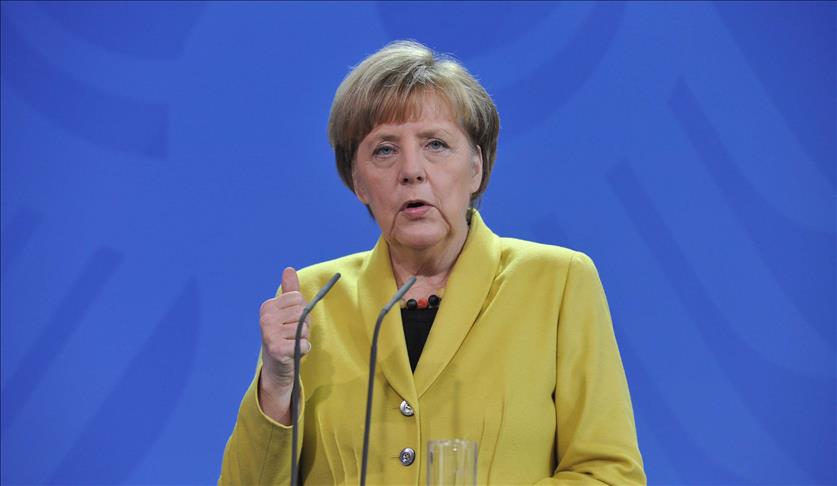
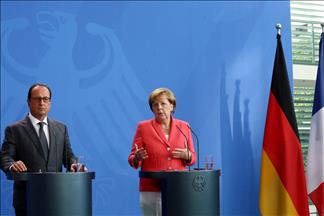
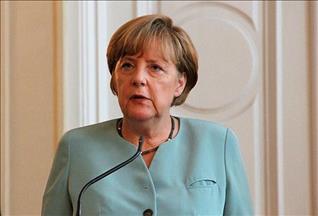
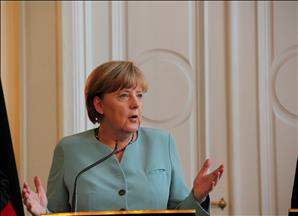
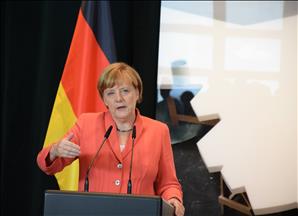
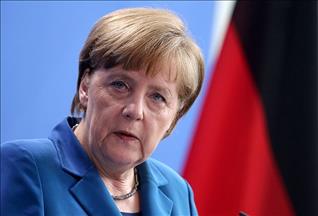
In a speech to the forum later on Thursday, German Chancellor Angela Merkel strongly rejected any compromise over Russia’s actions in Ukraine.
"There is one thing that we hold very important – the elementary principles of the European Union were violated," Merkel said.
She maintained that the violent occupation of the territory of another sovereign state violated the fundamental tenets of European Union – the very tenets, she said, that had maintained peace in Europe for so long.
Merkel also defended Germany’s “tight” economic policies, saying that they were intended to protect the rights of the next generation.
“We have six million people in the workforce who are going to retire,” Merkel said. “We cannot leave the burden of paying for them to the next generation.”
- Egypt opportunities 'increasing'
In a speech to the forum, Egyptian President Abdel Fattah al-Sisi said economic opportunities were increasing in Egypt.
“We are proposing a number of infrastructure projects to international investors as public-private partnerships,” al-Sisi said, adding that one was the creation of a dual carriageway on the Suez Canal, and that other canal-transport related projects were to come.
He also called for the adoption of the two-state solution for Palestinians – with a capital at East Jerusalem.
“This is the only possible solution for peace,” he said.
The Egyptian president, who has repeatedly been criticized for his hardline policies in Egypt, with both domestic and international critics and human rights groups accusing him of heading a brutal military dictatorship, claimed Egypt was "building a democracy".
Al-Sisi ousted Egypt's first democratically elected leader, Mohamad Morsi, in a 2013 coup d'etat.
Amnesty International said at the time that, in the period after the coup, security forces including the army killed more than 120 protesters, military courts unfairly tried more than 12,000 civilians and the army arrested women protesters and subjected them to forced "virginity tests".
The Davos forum will end on Friday with a discussion on the global economy by central bankers.