Ekip
29 October 2015•Update: 30 October 2015
By Joshua Carroll
YANGON, Myanmar
Myanmar’s government, army and police are responsible for genocide against the Rohingya Muslim minority, new legal analysis suggests, and it should be investigated by the United Nations for systematic human rights abuses.
The analysis by the Allard K. Lowenstein International Human Rights Clinic at Yale Law School, presented in Bangkok Thursday, is based on evidence gathered over three years by the Fortify Rights advocacy group.
It makes a strong case, the group said, that government policies restricting births, denying freedom of movement and stifling humanitarian aid are part of an attempt to destroy the Rohingya as a group, in whole or in part.
The analysis also details allegations of killings, forced labor, sexual violence and arbitrary detention that occurred since Thein Sein’s widely praised reformist administration came to power in 2011.
“This analysis does not conclude definitively whether genocide is occurring,” the 78-page Yale Law School document says. It adds: “However… the paper finds strong evidence that genocide is being committed against Rohingya."
"Rohingya face existential threats,” said Mathew Smith, Fortify Rights’ executive director, “and their situation is worsening. Domestic remedies have failed. It’s time for the international community to act.”
The group called on the UN to “immediately” set up a Commission of Inquiry into whether genocide has been committed as well as into systematic rights violations in Rakhine state, where the majority of Myanmar’s roughly one million Rohingya live.
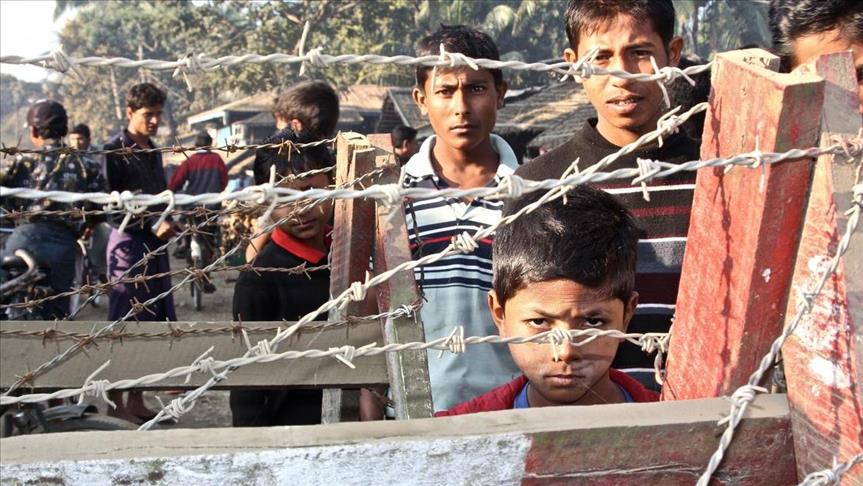
Rohingya have faced widespread persecution for decades, but their situation has become ever more perilous since 2012, when Buddhist rioters rampaged through villages in Sittwe, Rakhine’s capital, torching Rohingya houses and butchered people with machetes and other crude weapons.
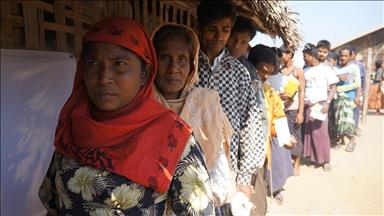
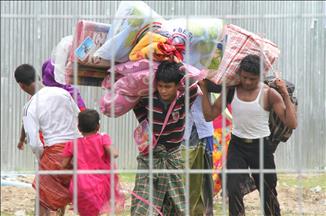
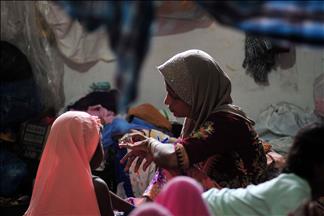
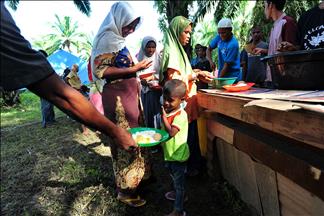
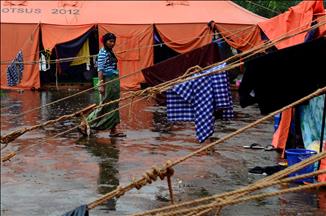
Since then, around 140,000 Rohingya have been unable to return to their villages, confined to a swathe of land in squalid displacement camps, where they are often denied basic healthcare.
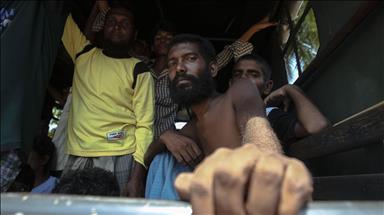
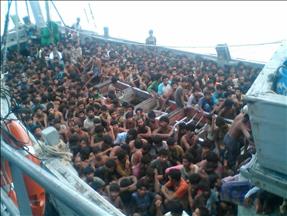
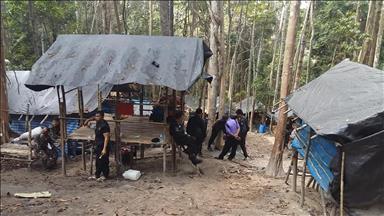
The apartheid-like system has helped drive tens of thousands to make perilous boat journeys in an attempt to escape to nearby countries like Malaysia.
“Authorities have effectively forced Rohingya to take deadly journeys by sea, particularly since 2012, knowing the risks of death they face in doing so,” said Fortify Rights in a statement.
The Rohingya are excluded from a general election Nov. 8 that has long been anticipated as a test of Thein Sein’s reforms.
Earlier this year his government withdrew the temporary citizenship held by hundreds of thousands from the group that granted them suffrage.