- Youth support, diaspora backing and social media activism fueled his rapid political rise
- Analysts say his leadership will test Nepal’s foreign policy balance
KATHMANDU, Nepal
Before 2022, Balendra Shah, or Balen, was not known to many outside Kathmandu’s hip-hop scene. Today, he is Nepal’s prime minister.
Trained as a structural engineer, Shah, 35, built his reputation in rooftop bars and online rap battles in Kathmandu, where his lyrics focused on poverty, corruption and underdevelopment that had plagued Nepal for decades.
His ancestral home is in Nepal’s southern plains bordering India, but he was born and raised in the Nepali capital, where his father practiced traditional ayurvedic medicine as a government employee, giving him early exposure to city life and politics.
During his school days, Shah had nothing to do with politics. He did not even cast a vote until 2022, when he voted for himself in the Kathmandu mayoral race.
In the 2022 local election, Shah fielded himself as a candidate for Kathmandu mayor, creating social media accounts and an email address with the handle Balen4Mayor.
Dressed head-to-toe in black, Shah cut a striking figure for many young voters as he moved through every corner of the capital appealing for support and promising change.
He campaigned on anti-corruption and accountability, appearing on podcasts and television shows, and young voters were energized by the novice politician, with many volunteering for his campaign.
That youth support also resonated with Nepalis abroad, inspiring many in the diaspora to urge relatives back home to back Shah over the old guard. Nearly a quarter of households in Nepal have at least one member living abroad, making social media a key link between voters at home and the diaspora.
Shah won the election by defeating heavyweight candidates from established parties by a huge margin, raising eyebrows across Nepal’s political establishment.
Life as mayor
Elected mayor of the capital, the television-savvy Shah largely withdrew from traditional media and became increasingly inaccessible to journalists.
Instead, he remained highly active on social media platforms such as Facebook, X and TikTok, often posting controversial messages late at night, particularly at the start of the weekend.
Alongside courting controversy, he focused on improving bureaucratic efficiency, livestreaming meetings and personally visiting disputed areas to reclaim public land.
However, some of his actions appeared to contradict the themes of his music advocating for the poor. As mayor, he removed street vendors, expanded roads and took action against tax defaulters, moves that drew criticism early in his tenure.
Unlike previous mayors, Shah frequently visited project sites and directly questioned contractors about construction quality. He also joined city authorities in demolishing unauthorized structures.
In one widely shared incident, he confronted a property owner in Baneshwor who was obstructing the demolition of illegal structures built in a basement designated for parking.
“Am I supposed to have a map of your house? Who should have it: you or me?” he said.
When the owner refused to back down, Shah retrieved official housing plans from his office, returned to the site and proceeded with the demolition using excavators and security personnel.
The incident, viewed by millions on social media and YouTube, was praised by many supporters and further boosted his popularity.
Throughout his tenure, Shah also continued to publicly criticize established political leaders and bureaucrats.
He warned that garbage could be dumped in front of government offices if they failed to cooperate with the city administration. He also suggested relocating Singha Durbar, the main government complex, or even burning it down if officials did not support his efforts.
He also drew attention through nationalist gestures, including displaying a Greater Nepal map in his office, which claims parts of India and Bangladesh, and even banned Bollywood films in Kathmandu cinemas.
Social media war
In September 2025, the government led by KP Sharma Oli suspended social media platforms for failing to register in Nepal, fueling anger among young people.
Many had been using social media to expose corruption and highlight inequalities between political elites and rural populations, and the restrictions intensified anti-government anger.
Shah backed Gen Z protesters. In social media posts, he urged the students to join the street protests to bring down the Oli administration.
Thousands of students, many in school uniforms, took to the streets of Kathmandu to protest corruption and inequality. Then, police opened fire outside the Parliament complex, killing 19 people.
The next day, violence spiraled across Nepal.
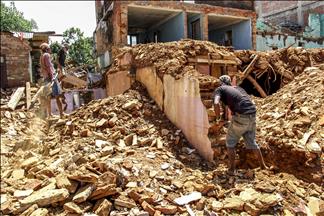
Angry protesters burned down key government buildings, including the presidential palace, the prime minister’s office, parliament and the supreme court, as well as homes of leaders, businesses and hotels.
A total of 77 people were killed over two days, making it one of the deadliest episodes in Nepal’s modern history. The unrest forced Oli to resign.
Shah later urged protesters to engage in talks with the Nepal Army.
Following those calls, protest leaders initiated discussions and backed retired Supreme Court chief justice Sushila Karki to lead an interim government ahead of fresh elections.
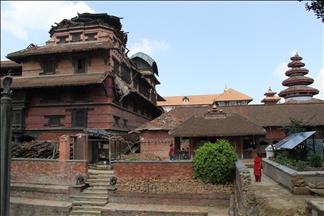
As mayor, Shah faced criticism for failing to protect historic monuments during the unrest, particularly after fires damaged heritage buildings.
He declined to take on the role of prime minister at that stage and instead supported Karki’s appointment.
Even so, his influence grew significantly during this period, positioning him as a key political figure.
The shift has been driven in part by Nepal’s young population, with more than 40% under the age of 35 and a median age of around 25.7 years.
From mayor to prime minister
Earlier this year, Shah resigned as mayor and joined the Rastriya Swatantra Party (RSP), a relatively new political force founded by television personality Rabi Lamichhane.
The party had emerged as the fourth-largest group in parliament following the 2022 elections but was later embroiled in controversy over allegations against Lamichhane, including cooperative scams, organized crime and money laundering. He was eventually suspended from parliament and imprisoned.
After his release from detention, Lamichhane reached an agreement with Shah, elevating him to the number two role within the party.
Shah quickly became its main public face, attracting broad support across different demographic groups, including youth, women and diaspora communities.
Unlike Lamichhane, whose political style attracted significant controversy, Shah cultivated a softer, more inclusive approach, drawing enormous support from across Nepal without resorting to divisive rhetoric or hate speech.
In this year’s elections, as legacy parties turned defensive, Shah ran on generational change – and emerged victorious.
Shah defeated ousted former prime minister Oli in his home election constituency with a huge margin. His party secured nearly a two-thirds majority in the 275-member parliament – the first since the restoration of Nepali democracy in 1990, the year Shah was born.
“Balen’s victory has had wide political, social and cultural effects,” said Santa Gaha Magar, editor of Onlinekhabar, a prominent digital outlet.
“Frustration towards old guards and hope for change helped him to rise to power, which has redefined the both meaning and ways of doing politics in Nepal,” he added.
Magar said Shah’s rise could encourage greater youth participation in politics.
“Unlike those old leaders of making politics their life-time profession, young people will try in politics and will engage in the professions of their choice if they are rejected by people in the election," he said.
Foreign policy impact
Shah previously used anti-India rhetoric during his time as mayor but has since received support from multiple international partners following his electoral victory.
India was among the first countries to congratulate him, followed by the US and China.
Indian Prime Minister Narendra Modi said he looked forward to working together for “mutual prosperity, progress and well-being of our two countries.”
Analysts say Shah’s leadership will test Nepal’s ability to balance relations with its powerful neighbors.
“Balen’s rise to power is going to be a litmus test from the perspective of foreign relations. Let’s see how he balances neighboring countries in safeguarding our national interests,” said Prem Raj Khanal, assistant professor at Tribhuvan University.
“Unlike leaders of the old parties, he has no baggage while dealing with the neighboring countries,” he added. “Let’s see how he acts.”