Berk Kutay Gokmen
23 March 2026•Update: 23 March 2026
ISTANBUL
Japan on Monday denied claims by US envoy to the UN Mike Waltz that Japanese Prime Minister Sanae Takaichi has committed portions of her navy to operations in the Strait of Hormuz.
At a press conference in Tokyo on Monday, Japanese Chief Cabinet Secretary Minoru Kihara said: "It's not true that Japan made a concrete promise" regarding the blockade of the Strait of Hormuz.
He said that during a meeting with Takaichi in Washington on Thursday, US President Donald Trump requested a contribution from Japan, according to the Jiji Press.
On Sunday, Waltz said in an interview with CBS News: “We just had the Japanese Prime Minister commit to portions of her navy and the Japanese navy, 80% of what is coming out of the Gulf is going to Asia.”
“So we are seeing our allies come around as they should, but at the same time, the president (Trump) is not going to stand for this regime, as it has threatened and tried for five decades to hold the world's energy supplies hostage,” he added.
Tokyo has also signaled the possibility of deploying its Self-Defense Forces for minesweeping operations in the Strait of Hormuz if a ceasefire is reached between Iran, the US, and Israel.
Let's say (in case of a) ceasefire, and in the event that mines pose an obstacle, we may have to think about it," Foreign Minister Toshimitsu Motegi said, referring to a potential deployment of the Self-Defense Forces.
Motegi, who attended Japan-US summit talks in Washington last Thursday, said there was "no specific promise" made and no issue requiring further consideration in Tokyo.
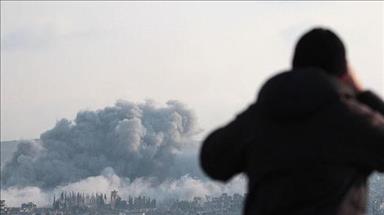
US-Israeli strikes on Iran began on Feb. 28, with Tehran retaliating through repeated drone and missile attacks targeting Israel and Gulf countries hosting US military assets.
Japan imports about 90% of its crude oil from the Middle East, most of which passes through the narrow waterway.