

Afghanistan ranks 3rd highest in explosive ordnance casualties, with 80% children: UN Mine Action Service
UNMAS warns that explosive hazards are hindering aid delivery, safe returns, and reconstruction across multiple conflict zones
GENEVA
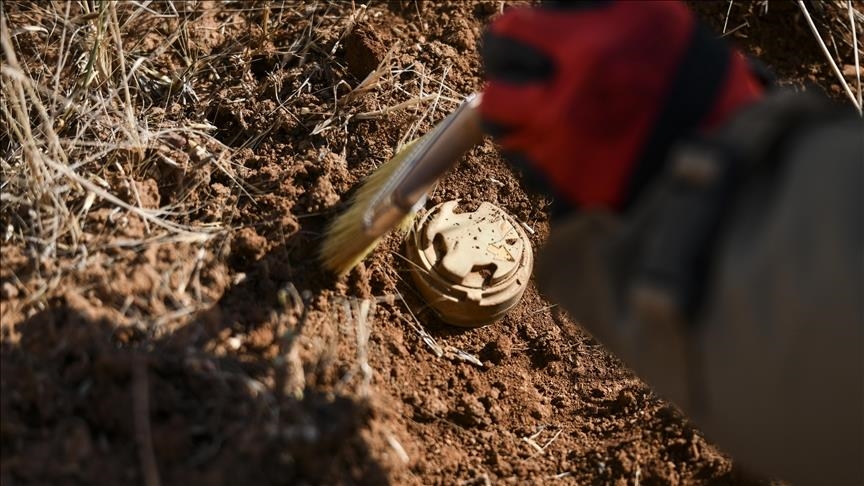
Afghanistan continues to face one of the world’s heaviest explosive ordnance burdens, the UN Mine Action Service (UNMAS) warned on Wednesday, as contamination surges across several conflict zones and underfunded mine-action programs struggle to keep pace with growing needs.
Speaking at a UNMAS briefing in Geneva, the head of the agency's Afghanistan program, Nick Pond, said the country "has the third highest explosive ordnance casualty figures in the world in 2024, with over 54 people per month killed and injured by explosive ordnance," adding that 80% of victims are children.
He noted that only 168 teams remain operational, "more than 40% lower than this month last year, and it’s probably the lowest the number has ever been since the program started in 1988."
Pond also cited data from the Landmine Monitor, underscoring Afghanistan's long-standing toll on children. Since 1999, the country has recorded "over 15,000 child casualties… which is 43% of the total number of children killed and injured since 1999."
In Sudan, where the conflict since April 2023 has spread through densely populated areas, UNMAS described rapidly deteriorating conditions.
The program chief, Sediq Rashid, said the war has produced "large-scale unexploded ordnance contamination in populated areas," with an estimated 14 million people requiring mine-action support.
Since the conflict began, UNMAS has documented "30 explosions leaving behind more than 240 casualties… more than 100 of them are children. Only five clearance teams are currently active, all in Khartoum, he said, while "more than 1.5 million people have returned to the capital," raising fears of further accidents.
In Gaza, UNMAS reported that after two years of intense hostilities, the scale of contamination is "absolutely immense."
Since October 2023, the agency has recorded about 400 people who have been affected by unexploded ordnance. UNMAS teams have accompanied "more than 800 humanitarian convoys" and conducted "over 650 explosive hazard assessments of hospitals, schools, roads, shelters, and other vital infrastructure."
With a ceasefire in place since Oct. 10, Julius Van Der Walt, the program chief in the occupied Palestinian Territories, said the moment "warrants an expanded and sustained mine action response.”
Nigeria has also seen a significant rise in incidents, with the program documenting 672 casualties in 2024, far higher than previous public estimates.
"80% of all of the civilian casualties are happening in 11 of the 15 areas of return," the program chief of the country, Edwin Faigmane, said.
Across all operations, UNMAS stressed the growing importance of risk education, noting that in Gaza alone it has reached "more than 450,000 people."
Anadolu Agency website contains only a portion of the news stories offered to subscribers in the AA News Broadcasting System (HAS), and in summarized form. Please contact us for subscription options.

Morning Briefing: April 4, 2026
Pipeline alternatives, including routes via Türkiye, gain relevance amid Strait of Hormuz concerns
Trump says downed US jet will not affect Iran negotiations: Report
2nd US Air Force combat plane crashes in Persian Gulf region: Report
FACTBOX - Confirmed US fighter jets shot down in modern conflicts



