- Now in US custody, Maduro and Flores face a court fight as Washington says it remains in the driving seat of Venezuela’s politics, oil sector and regional balance
HOUSTON, United States
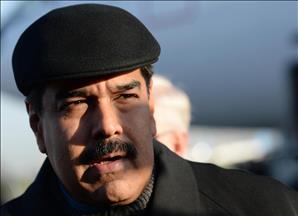
It has been a month since US military forces captured Venezuela's President Nicolas Maduro and his wife, Cilia Flores, bringing the leader and former first lady to the US to face criminal charges of narco-terrorism.
The events leading up to Maduro's detainment on Jan. 3, 2026 were long in the making as President Donald Trump has targeted the Venezuelan leader after he was inaugurated for his second term on Jan. 20, 2025.
Since January 2025, Trump has seen broadened terror designations to cartels and repeated US military strikes on alleged drug traffickers as part of a campaign that culminated in the early-January operation. After an initial hearing and arraignment, Maduro and Flores now await their next hearing on March 17.
Here are the key developments that have taken place since their capture:
Jan. 3
The US carries out air and missile strikes across Venezuela, then launches a special forces operation to capture President Nicolas Maduro and his wife Cilia Flores from the capital Caracas.
The operation followed months of escalation and left dozens dead, according to officials. Maduro is transferred to US custody and flown to New York. Washington says it would oversee Venezuela’s administration while a new leadership process unfolds.
Attorney General Pam Bondi says Maduro will face charges in the US justice system including narco-terrorism conspiracy, cocaine importation, and weapons offenses.
Jan. 4
Speaking to reporters, US President Donald Trump says the US is now “in charge” of Venezuela.
Officials later clarified that Washington would use military pressure and oil sanctions to coerce cooperation from new leaders as it seeks to access Venezuela’s oil and maintain its naval blockade while not ruling out further military action.
Jan. 5
Maduro and Flores are arraigned in their first appearance in Manhattan federal court.
Both plead "not guilty" and remain detained. Maduro claims immunity as Venezuela’s president and challenges the legality of his capture.
Maduro’s Vice President Delcy Rodriguez is sworn in as interim president. She is sworn in by National Assembly head Jorge Rodríguez, as 283 lawmakers elected last year also took office.
Jan. 8
Trump says US oversight of Venezuela could last “much longer,” possibly years, with no timetable for elections. He highlights Washington’s coordination with interim leader Rodriguez, and says his administration aims to rebuild the South American country, revive its oil sector. He stops short of ruling out further military action.
Jan. 9
Trump holds a meeting with the executives of US oil and gas companies at the White House, urging them to invest billions in rebuilding Venezuela’s oil infrastructure. He outlined plans to sell sanctioned Venezuelan oil, control proceeds, expand production, and offer security guarantees.
Trump was seeking up to $100 billion in investment in the hydrocarbon sector of Venezuela, which boasts the most proven reserves worldwide. However, companies stopped short of making any firm commitments.
Trump also signs executive order declaring a national emergency to “safeguard” Venezuelan oil revenue. The measure is meant to shield funds from attempts by courts or creditors — such as oil companies that had previously lost their assets in Venezuela — to seize the money.
Jan. 15
Cuba holds a state tribute in the capital Havana for 32 of its soldiers killed in the US military operation, with leaders including Miguel Diaz-Canel and Raul Castro receiving the flag-draped remains amid public mourning and street processions.
Thousands of Cubans paid respects as many more lined the route, waving flags and saluting the troops honored as national heroes.
Jan. 16
Venezuelan opposition figure and Nobel Peace Prize laureate Maria Corina Machado presents her Nobel medal to Trump at the White House, praising his administration’s actions in Venezuela.
The gesture sparked controversy, as the Nobel Institute stressed the prize was not transferable and critics accused Machado of politicizing the award.
Jan. 26
Venezuela releases at least 104 political detainees, according to rights group Foro Penal, saying more releases could follow and urging authorities to publish official lists.
Acting President Rodriguez confirmed that detainees held under Maduro would be freed, though non-governmental organizations dispute official claims and warn many released prisoners still face unresolved charges and legal restrictions.
Jan. 30
Acting President Rodriguez announces a broad amnesty bill covering political violence since 1999, saying it aims to heal divisions and will be taken up urgently by parliament.
She also ordered the closure of El Helicoide, a notorious detention center, to be converted into a social and cultural facility. Rights groups welcomed the move but urged non-discriminatory application and broader dismantling of repression.
Jan. 31
US envoy Laura Dogu arrives in Caracas to reopen a US diplomatic mission after seven years, nearly a month after US forces captured Maduro. Venezuelan officials say talks would focus on restoring dialogue and resolving disputes.
The visit comes as Washington pressures Rodríguez to privatize Venezuela’s oil sector, following a deal to export crude to the US and new legislation opening the industry to foreign firms.
Feb. 2
Venezuelan oil exports jumped to about 800,000 barrels per day in January from 498,000 in December after the US ended its oil blockade with Maduro’s capture.
US licenses to traders revived shipments, lifting output and making the US the top destination again, while millions of barrels remain in storage awaiting export.