Merve Berker
08 March 2026•Update: 08 March 2026
ANKARA
Rising oil prices and disruptions to shipping routes linked to the war involving Iran are creating economic challenges for the US and complicating policy decisions for the Federal Reserve, media reports said on Saturday.
The conflict is pushing up energy costs and contributing to economic uncertainty at a time when policymakers had begun to see signs of easing inflation, according to NBC News.
Economists warn that the situation could create a combination of higher prices and slower growth.
The national average gasoline price reached $3.41 per gallon on Saturday, according to the American Automobile Association (AAA), rising by $0.43 over the past week.
At the same time, US crude oil recorded its largest weekly gain on record in data dating back to 1983, indicating gasoline prices could continue increasing.
New labor market data also signaled economic weakness.
Figures from the Bureau of Labor Statistics showed the US economy lost 92,000 jobs last month, while revisions to earlier data revealed 69,000 fewer jobs than previously estimated.
Economists said these developments complicate the Federal Reserve’s efforts to balance its dual mandate of stable prices and maximum employment.
“The February report and latest geopolitical developments complicate the Fed’s job by raising risks on both sides of the dual mandate,” Gregory Daco, chief economist at EY, wrote in a client note cited by NBC News.
He said the decline in payrolls and rising unemployment risks could weaken economic growth, while the Middle East conflict increases inflation risks.
Much of the concern centers on the Strait of Hormuz along Iran’s southern coast, through which roughly one-fifth of the world’s oil supply passes.
More than 80% of global trade moves by sea, according to the World Bank, meaning disruptions in the waterway could increase freight costs and delay deliveries of goods.
The Goldman Sachs group warned oil prices could climb above $100 per barrel if disruptions to shipping continue.
Crude oil settled just under $91 per barrel on Friday.
Federal Reserve officials said they are closely monitoring developments.
San Francisco Federal Reserve President Mary Daly described the situation as “a balance of risks calculation.”
Meanwhile, President Donald Trump said rising gasoline prices were not his main concern.
“I don’t have any concern about it,” Trump told Reuters. “[Gas prices] will drop very rapidly when this is over.”
Economists say the Federal Reserve may face a difficult path if inflation rises while economic growth weakens.
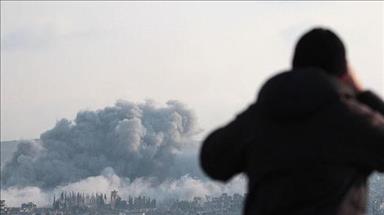
Regional tensions have soared since the United States and Israel launched a large-scale attack on Iran on Feb. 28, killing more than 1,300 people to date, including Iranian Supreme Leader Ali Khamenei, over 150 schoolgirls, and senior military officials.
Iran has retaliated with sweeping strikes of its own that have targeted US bases, diplomatic facilities, and military personnel across the region, as well as multiple Israeli cities.