Beyza Binnur Donmez
22 May 2026•Update: 22 May 2026
- WHO revised its risk assessment to 'very high' at national level in DR Congo, 'high' at regional level, keeping 'low' at global level - WHO chief scientist says 2 monoclonal antibodies and 1 antiviral drug have shown 'some effectiveness' against Bundibugyo strain
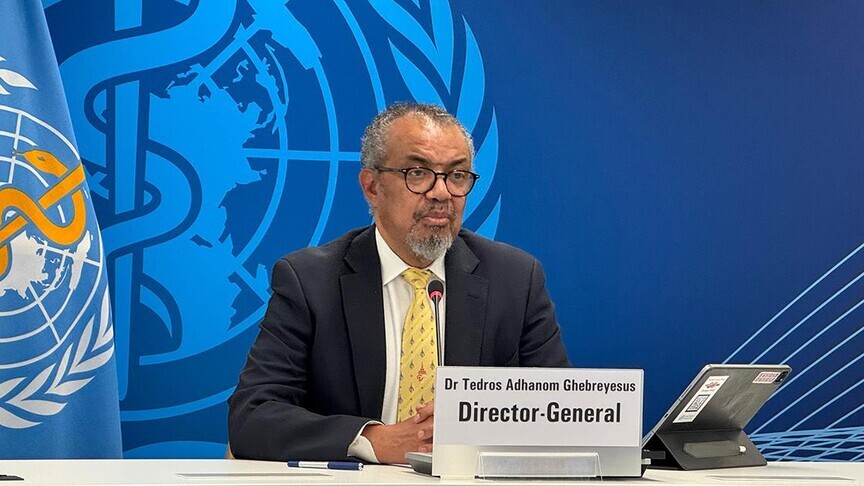
The World Health Organization (WHO) chief on Friday described the Ebola outbreak in the Democratic Republic of the Congo as “deeply worrisome,” warning that the scale of the epidemic is likely far greater than confirmed figures suggest.
Tedros Adhanom Ghebreyesus said in a post through US social media company X that 82 Ebola cases and seven deaths have so far been confirmed in the DR Congo, but added: “We know the epidemic in the DRC is much larger.”
There are now almost 750 suspected cases and 177 suspected deaths, he noted.
Tedros said the situation in Uganda is currently stable, with two confirmed cases and one reported death, adding that no new infections or deaths had been recorded there.
He also said an American national working in Congo had tested positive for Ebola and was transferred to Germany for treatment, while another American identified as a high-risk contact had reportedly been transferred to the Czech Republic.
Tedros noted that the figures continue to evolve as surveillance and laboratory testing improve, but warned that “violence and insecurity are impeding the response.”
He said additional WHO personnel had been deployed to Ituri province, the epicenter of the outbreak, to support affected communities and coordinate response efforts with authorities in affected countries.
Later, in a press briefing, Tedros said the WHO revised its risk assessment to "very high" at the national level in Congo, "high" at the regional level, and "low" at the global level.
The previous assessment of the agency was high for both the national and regional levels and low for the global.
The current Ebola outbreak is caused by the Bundibugyo virus strain, unlike many previous outbreaks linked to the Zaire strain, and there are currently no approved vaccines or treatments for it.
Tedros noted that only two previous Bundibugyo outbreaks have been recorded, in Uganda in 2007 and Congo in 2012.
According to the WHO chief, the agency and partner organizations are reviewing potential vaccines, therapeutics, and diagnostics, while WHO’s advisory group has recommended advancing two monoclonal antibodies into clinical trials and evaluating the antiviral obeldesivir for high-risk contacts.
He also warned of growing distrust toward outside authorities in affected communities, citing a security incident at a hospital in Ituri, where tents and medical supplies were set on fire on Thursday.
“Building trust in the affected communities is critical to a successful response,” he said. “We are also committed to ensuring that essential health services for the affected communities are maintained and strengthened, based on their need.”
2 monoclonal antibodies, antiviral drug show effectiveness against strain
Sylvia Briand, WHO chief scientist, told reporters in Geneva that two monoclonal antibodies and one antiviral drug have shown "some effectiveness" against the strain and are being prioritized under strict clinical protocols.
She noted that the antiviral obeldesivir could potentially be used as post-exposure prophylaxis for high-risk contacts to prevent disease development after exposure.
Briand said WHO experts are also reviewing additional medical countermeasures through global research networks and collaborative scientific groups focused on filoviruses, the virus family that includes Ebola. She stressed that any deployment of treatments would require strict protocols to protect patients and ensure meaningful clinical data collection.
Vasee Moorthy from the WHO said vaccine experts met earlier this week and will continue discussions on Monday as part of ongoing efforts to evaluate potential vaccine options for the outbreak.
WHO officials also said neighboring countries are intensifying surveillance efforts and investigating suspected Ebola alerts as concerns grow over possible regional spread.
Abdirahman Mahamud, WHO’s director for health emergency alert and response operations, said suspected Ebola alerts had recently been investigated in South Sudan and Kenya, but Kenyan authorities later ruled out the cases following assessments. He noted that South Sudan currently has no confirmed Ebola infections.
During the WHO press briefing, Mahamud said such alerts are an important part of outbreak surveillance, with communities often identifying unusual illnesses or deaths before health workers investigate and determine whether cases are suspected or confirmed.
He urged countries in the region to strengthen surveillance systems and increase community involvement to support faster detection and response efforts.