By Magdalene Mukami
NAIROBI, Kenya
The Eastleigh estate has been the center of Kenyan capital Nairobi’s commercial life since Somali traders arrived decades ago, bringing with them their renowned business acumen and eye for a deal.
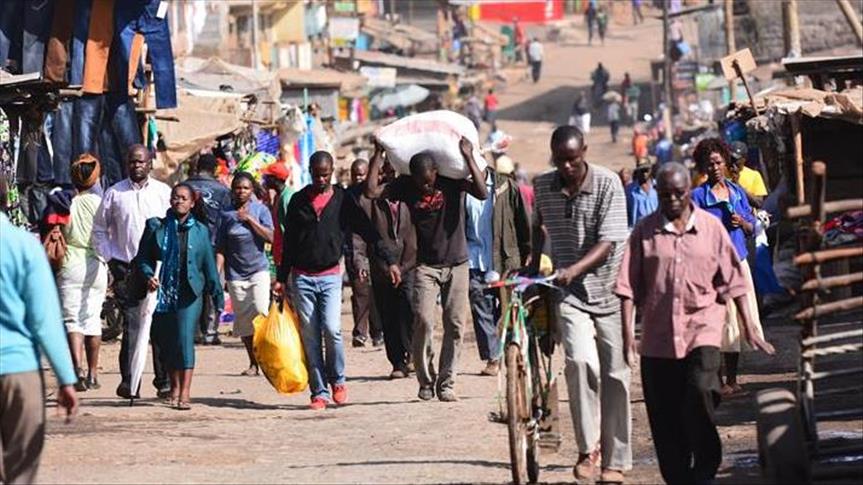
However, the hustle and bustle of the district’s garbage-strewn, dusty streets has taken on a different atmosphere in recent weeks as the Somali shopkeepers who inhabit the 60 or so malls in the area have come into conflict with mostly Kenyan street hawkers vying for the same trade.
Ibrahim Hussein, chairman of the Eastleigh Business District Association, told Anadolu Agency that more than 20,000 hawkers have flooded the area, known as Little Mogadishu, even though the authorities have issued licenses for just 200.
In response, the shopkeepers have launched a protest designed to punish the authorities for what they claim is their inaction -- shutting their businesses for three days last week and depriving the county administration, which receives about a third of its revenue from Eastleigh traders’ taxes, of vital income.
As well as blocking customers from entering the multi-storied malls, the Eastleigh traders claim the hawkers sell the same merchandise at cheaper prices due to their lack of overheads, including the 1 billion Kenya shillings ($9.9 million) the traders pay collectively in taxes every month.
“We are shutting our doors because business is bad,” Abdi Rashid, a 58-year-old shopkeeper with a bright orange beard and wearing a multicolored Somali taqiyah on his head.
“Our customers have nowhere to pass,” he told Anadolu Agency in his thickly accented Swahili. “Their stalls are so closely packed that we can’t even load our goods into the shops. They have ruined us.
“One might think that by closing shop we are losing lots of money. Sure, OK, but the government will lose even more because they rely on our taxes, which they won’t get unless we operate.”
Rashid, who sells perfumes and shoes, lamented that most of the invaders were “normal Kenyans” rather than Somalis.
“We are being targeted from all directions,” he raged. “First, it was whoever who was wearing a kanzu [a white robe worn by Muslims] was a terrorist. Now things have died down but they are still targeting us by ruining our business. This is not fair at all.”
For the past decade Eastleigh, which serves customers from across east Africa attracted by its cheap prices and range of goods, has previously suffered due to its Somali links, with many claiming the area was a hive of terrorist financing and investment by ransom-rich Somali pirates.
However, traders are feeling even more under pressure due to the unregulated hawkers who many of shopkeepers feel are exploiting an area known for its laissez faire approach to business regulation.
Handbag and garment trader Halima Osman complained that her shop had been looted by hawkers lining the nearby streets.
“Since Wednesday [Aug. 31] the shops have been closed,” she said. “Somebody took a sack of handbags from my stalls. This is not the first time that we have had our business premises looted -- it has happened in the past.
“We can’t do business like this. We can’t compete for space. It is either they leave or we leave and that would mean problems for our customers.”
Osman’s story, or ones like it, was repeated by other Somali business figures in the estate.
“I was born in Kenya, I have never been to Somalia, but they want us to go back to Somalia,” Noor Aden, a 33-year-old trader, said.
“They are forcing some of us to close our businesses after failing. When they see the market closed in such a way they are happy but my message is I am not leaving.”
While Anadolu Agency spoke to Aden, a group of hawkers approached, protesting at their right to run their businesses.
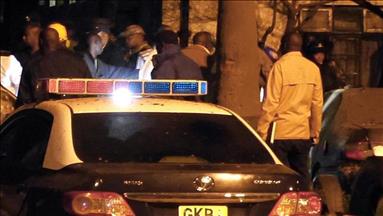
The sound of police sirens were not far behind, closely followed by officers firing their guns into the air to disperse the crowd, which fled panicking in all directions. Those who could not escape fast enough fell foul of police batons before managing to run off.
Maina Njenga, an Eastleigh hawker, bemoaned the attitude of the shopkeepers and the brutality of the police.
“We are poor, they shouldn’t use excessive force on us,” he said. “We can’t afford the shops. That is why we are here on the streets and the government has given us permission to sell on the streets.”
Another street seller, Ali Fatah, said the closure of the shops was bad for anyone wanting to make sales during the traditionally buoyant shopping period before next week’s Eid al-Adha.
“They should have allowed us to sell here at least until Eid so that we can make our payments,” he told Anadolu Agency. “Business is usually good in this period. They should understand us. They should consider where we are coming from.”
However, with the shopping malls shuttered and rival crowds of shopkeepers and hawkers holding opposing demonstrations amid police tear gas, there appeared to be slim chance of a pre-Eid sales boost.
“They are breaking into our stalls as we speak and looting,” clothes shop owner Abdi Mohammed said, typifying the entrenched view of Eastleigh’s Somalis.
“We cannot sit by idly and just do nothing… They have no right to sell on the roads. They are calling us refugees, we are not refugees we are the top businessmen in our country, Kenya.”
Hussein, the business association chairman, believed the authorities could still come around.
“We have an investment of more than 100 billion Kenya shillings ($989 million),” he said. “We have been great investors and this is evident. We want the government to understand that we contribute so much in terms of taxes -- I am talking about 1 billion shillings in a month.”
He added: “We have been frustrated, discriminated [against] by hawkers. We are unable to run our businesses. We want to appeal to the government that we are protected and our businesses protected as we are a large investment group.”
Hussein said the Wednesday, Thursday, and Friday shop closures would continue until the traders’ grievances were addressed.
news_share_descriptionsubscription_contact