

July 17, 2009
 ANTALYA: LAND OF ANCIENT CITIES
There are 135 separate historical sites in the southern province of Antalya which reached an international reputation with its sea, sun, beaches and history of thousands of years. Excavations continue in only 11 of them.
Selahattin Eyup Aksu, curator of the Antalya Museum, said, "642 tombs were found accidentally during construction works in the bus station. Those tombs were dated back to the 3rd century B.C. Excavations in the tombs will continue till the end of October. Our museum also carries out excavations in the Suluin Cave. We unearthed historical artifacts that belonged to the periods of Early Bronze Age, the Roman Empire and the Byzantine Empire."
 MYRA AND ANDRIAKE
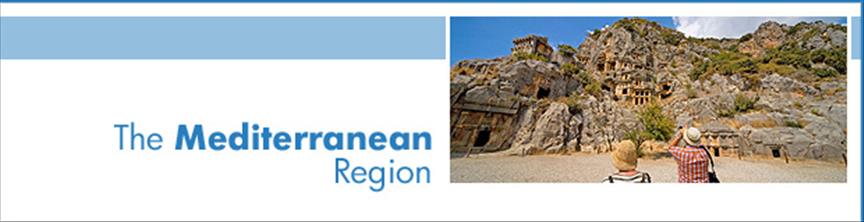
Myra was the biggest city in Lycia in the classical period. A team led by Professor Nevzat Celik of the Akdeniz University Department of Archaeology carries out the excavations in the ancient city near Demre town of Antalya.
"Recently, we found 24 bronze coins. There are figures of a temple and goddess on one side of the coins and portrait of the Roman Emperor Gordianus on the other. That means that the Myra had been authorized to mint. These are imperial coins that belonged to the Roman Empire. The ancient cities of Myra and Andriake remained under flood waters thrice. There is an intact history under 8 metres of alluvion," Celik said.
EXCAVATIONS IN ARYCANDA
Archaeological excavations in the ancient city of Arycanda near Finike town of Antalya have been continuing since 1971.
Professor Cevdet Bayburtluoglu, who heads the excavations, said, "Arycanda is known to be one of the oldest Lycian cities built upon five large terraces ascending a mountain slope near the small village of Aykiricay. We have unearthed 6-7 temples so far. Arycanda is an open air museum with its theatres, stadiums, public baths and sarcophaguses. It is a well-preserved ruin."
EXCAVATIONS IN HACIMUSALAR
Excavations in the Hacimusalar Tumulus has been continuing since 1994 under the leadership of Associate Professor Ilknur Ozgen of the Bilkent University. This year's efforts concentrated on the church in the heart of the tumulus.
KARAIN CAVE
During excavations in the Karain Cave led by Professor Kilic Kokten from 1946 to 1973, it was revealed that the cave was used as a settlement unit in the Palaeolithic, Neolithic and the Chalcolithic periods. Remains of hippo, rhino and elephants were also found in the cave. Professor Isin Yalcinkaya has been leading the excavations in the cave since 1985. Her team unearthed an axe of 500 thousand years in the cave last year.
 PERGA
PERGA
Perga was the capital of the then Pamphylia region. Excavations headed by Professor Haluk Abbasoglu, chairman of the Department of Archaeology of the Istanbul University, are considered the longest-lasting excavations in Turkey.
Abbasoglu told the A.A, "we unearthed a theatre, city walls, gates, public baths, fountains and houses. The cemetery of the ancient city was found in recent years. Also, we digged up nearly 200 statues."
 SANTA CLAUS MUSEUM
This year's excavations in the Santa Claus Museum near the town of Demre will begin on August 15 and last till September 15. A 20-member team led by Professor Yildiz Otuken, chairperson of the Department of Archaeology of the Hacettepe University, will try to bring the mosaics to the daylight.
ANCIENT CITY OF XANTHOS
The excavations in the ancient city of Xanthos near the town of Kas have been carried out by the French Bordeaux University and the French Academy of Archaeology since 1950. Seven French academicians, five French technicians and 20 workers are taking part in this year's digging efforts led by Professor Jacques Des Courtils of the Bordeaux University.
Xanthos was one of the five biggest cities of Lycia, Courtils said.
 PATARA
A 40-member team led by Professor Havva Iskan Isik of the Akdeniz University began the excavations in the ancient city of Patara near Kas town of Antalya on June 15. The team includes 4 German experts. This year's digging works concentrated on the palace. Also, restoration of the parliament building in the ancient city is continuing. The team aims at completing the restoration of the world's first democratic parliament building till 2010 and bring parliament speakers from all around the world in this ancient city.
EXCAVATIONS IN BADEMAGACI
Excavations in the Bademagaci Tumulus will begin on July 27 and will be carried out by a 25-member team headed by Professor Refik Duru of the Istanbul University Department of Archaeology. The team includes experts from Switzerland and Belgium.
 RHODIAPOLIS
A team headed by Professor Nevzat Cevik, chairman of the Akdeniz University Department of Archaeology, has been digging the ancient city of Rhodiapolis near Kumluca town of Antalya since 2006. Now, Associate Professor Isa Kizgut is leading the excavations.
The ancient city was first discovered by Austrian scientists in 1892. Famous philanthropist Opramoas was one of the most important persons once lived in this city. A theatre, a public bath and a church were digged up.
ADANA
During the excavations in the Tatarli Tumulus near Ceyhan town of the neighboring province of Adana, archaeologists are trying to unearth the ruins of a city belonged to the Kizzuwatna civilization. Kizzuwatna was an ancient Anatolian kingdom in the second milennium B.C.
The works began in 2007 under the leadership of Associate Serdar Girginer, chairman of the Cukurova University Department of Archaeology. Weaving-related objects unearthed during the excavations proposed that textile was a significant mainstay in the region. The seals belonging to the Hittite and Mesopotamia indicate that there was active trade. The excavations are expected to last for nearly 80 years to dig up the whole city.
HATAY
Excavations are underway in three regions in southern Hatay province which hosted many civilizations. British Archeologist Leonard Woolley had carried out the first excavation in 1937 in Accana Tumulus near Varisli village in Reyhanli town.
 346 tumuluses and an important palace were unearthed in a settling area formed of 17 layers in excavations.
Important artifacts that were obtained in excavations carried out since 2000 give clues about way of living and culture of the Hittite.
25 expert archeologists from various universities of Turkey and countries like the United States, Britain, and Italy and 60 workers are joining the new period excavations that started in July and will continue till to the end of August.
Some of the artifacts discovered in excavations were brought to Archeology Museum of Antakya, and the others are expected to be exhibited in a new museum that would be built in Narlica region.
The area covering a palace, temples and tombs is expected to be turned into a "Archaeologic Park".
The excavations are expected to continue for long years.
Artifacts belonging to Iron and Early Bronze Age were recovered from 7-layer Tayinat Tumulus in excavations carried out since 1930. 20 archeologists from U.S., Britain, Canada, Romania and Turkey, led by Prof. Timothy Harrison of the Toronto University and 17 workers carry out a meticulous study in the tumulus this year despite hot weather.
Archeology Department of Mustafa Kemal University have been conducting excavations in Sabuniye Tumulus in Sudatis region of the Samandag town since 2002 to enlighten Bronze Age period. This year's excavations are expected to take start on July 23.
Artifacts which have their origins in Egypt, Cyprus, Northern Syria and Mesopotamia were discovered in excavation works of the Sabuniye Tumulus. This place was reported to be one of the important port cities of the Eastern Mediterranean.
Inventory proceedings are underway for the artifacts discovered in the excavations since 1992 in Kinet Tumulus in Yesilkoy region in Dortyol town.
Nearly 1,600 artifacts have been unearthed in excavations in port city Kinet, expected to be founded 5,000 years ago.
 MERSIN SHEDS LIGHT ON ANATOLIAN HISTORY
Mersin is an important settlement unit with its geographical position, climate characteristics and topographical structure.
Excavation works in Yumuktepe Tumulus, one of the oldest settlement units of Anatolia, take place periodically in summer. Yumuktepe, which was a settling area from 7200 B.C. to 1100, has an extreme importance with respect to social, political, economic, cultural and technological developments.
Archeological works under the leadership of British Archeologist John Garstang were carried out systematically between 1936-1937 in Yumuktepe. The excavations had interrupted because of Second World War and re-started in 1946.
Excavations in two separate areas are carried out in Yumuktepe for searches of early Neolithic and Chaltholitic ages.
 SOLOI POMPEIOPOLIS ANCIENT CITY
Excavations in Soloi Pompeiopolis Ancient City in Mezitli town of southern province of Mersin are expected to start for the 11th time this month under the leadership of Prof. Remzi Yagci of Dokuz Eylul University.
Restoration works as well as the excavations will take place in the ancient city that includes all archaeologic periods extending from Neolithic Age to Byzantine period.
A 1700 year-old bronze status of Greek God of Son Apollo belonging to Roman period was unearthed during last year's excavations.
15th period of excavations will start in Elause Sebaste Ancient City in Ayas region of Erdemli town. The excavations are expected to be conducted by Prof. Evgenia Eqnini Schneider of Rome La Sapenza University in September.
Historical and cultural riches of the region will be unearthed after conclusion of the excavations. More than 300 artifacts, that have been unearthed particularly in the past 2 years, were delivered to Mersin Museum.
The artifacts are mainly ceramics, glass, coined money, terracotta as well as weaponry belonging to the Roman and the Byzantine period.
 BURDUR
Statue of Marcus Aurelius, the Roman Emperor, was unearthed last year during Sagalossos Ancient City excavations that continue for 20 years in Aglasun town of Mediterranean city of Burdur. The statue was 80 cm in height and 350 kilograms in weight.
The world has shown great interest in excavations in Sagolossos Ancient city, conducted by a team led by Prof. Marc Waelkens of the Belgian Leuven Catholic University Archeology Department.
250 people including Turkish and foreign scientists, students and workers attend the excavations that have started in 1989.
 KIBYRA ANCIENT CITY
A second excavation site has been formed for Kibyra Ancient City for three years. It was found out that Kibyra Ancient City located in Golhisar town of Burdur dates back to 1000 B.C.
Around 150,000 people were estimated to have lived in the city 3,000 years ago. There were agoras, theatre, public bath, exercise station, and temples in the city.
 ISPARTA
This year's excavations carried out in Pisidia Antiocheia Ancient City in Yalvac town of Isparta have started on June 14. The works are expected to focus on the public bath that remained from the Roman period.
The first excavations were made in 1924 in the city that was founded by Antiocheia from the origins of Seleucus in 281-261 B.C.
Sacred precinct for Mên, the ancient Moon God, was unearthed during the excavations that continued till 1927.
Birth of the city dated back to Bronze Age.
Antiocheia was the capital city of Pisidia region and Roman Emperor Augustus established the first and the biggest military colony there. In 25th B.C., Augustos brought 3,000 Romans from Rome and settled them to the region.
 PODCASTTÜMÜNÜ GÖR