WASHINGTON, D.C.
The Obama administration announced further sanctions on Russia Monday following what the White House calls Russia’s failure to live up to its obligations under a multilateral accord brokered earlier in April.
The deal, struck on April 17 in Geneva between Ukraine, the U.S., the EU and Russia, aimed to deescalate tensions in the east of Ukraine where pro-Russian protesters, some armed, have occupied government buildings and public spaces.
According to the agreement, all sides were required to refrain from “any violence, intimidation, or provocative action.” Pro-Russian protesters have nonetheless largely refused to relinquish control of occupied areas.
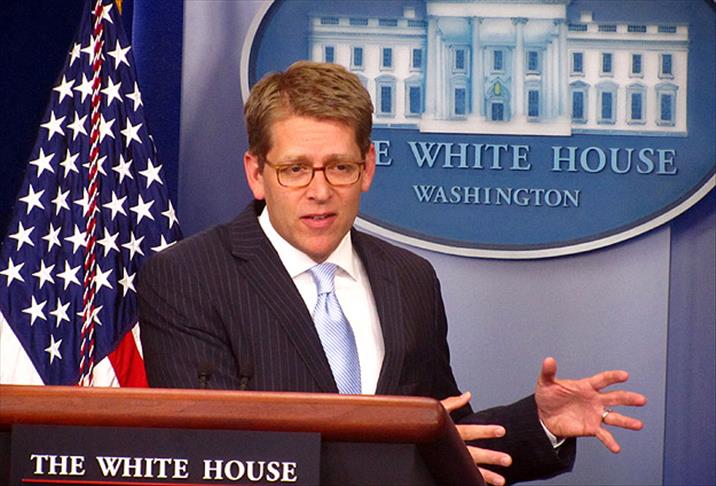
“Since April 17, Russia has done nothing to meet its Geneva commitments and in fact has further escalated the crisis,” said Jay Carney, the White House Press Secretary.
“Russia’s involvement in the recent violence in eastern Ukraine is indisputable.”
The U.S. Department of the Treasury is imposing sanctions on seven Russian government officials, including two members close to Russia’s President Vladimir Putin, according to Carney. They include Oleg Belavantsev, Russia’s Presidential Envoy to Crimea; Dmitry Kozak, Deputy Russian Prime Minister; General Evgeniy Murov, the director of Russia’s federal protective service; and Vyacheslav Volodin, the first deputy chief of staff of the Presidential Executive Office.
Seventeen companies linked to Putin’s inner circle were also sanctioned Monday, including SGM Group, a gas pipeline construction company, InvestCapitalBank, SMP Bank, the Volga Group, Transoil, a transportation company that specializes in moving oil and oil byproducts, and Aquanika, a mineral water and soft drink company.
Designated individuals will be subject to an asset freeze and a U.S. visa ban, while the companies will only be subject to an asset freeze. Additionally any transactions with U.S. persons or transactions within the U.S. are also prohibited with both the businesses and individuals.
Thirteen of those companies will be subject to additional restrictions by the U.S. Department of Commerce, including “a license requirement with a presumption of denial for the export, re-export or other foreign transfer of U.S.-origin items to the companies,” according to Carney.
The U.S. State Department and Commerce Department also announced tightened restrictions to deny export licenses of high-tech items that may contribute to Russia’s military.
“Effective immediately, the department’s Directorate of Defense Trade Controls will deny pending applications for export or re-export of any high technology defense articles or services regulated under the U.S. Munitions List to Russia or occupied Crimea that contribute to Russia’s military capabilities,” said Jen Psaki, Spokeswoman for the State Department.
She also said the U.S. would continue to re-evaluate its export licensing to Russia as events unfold.
englishnews@aa.com.tr