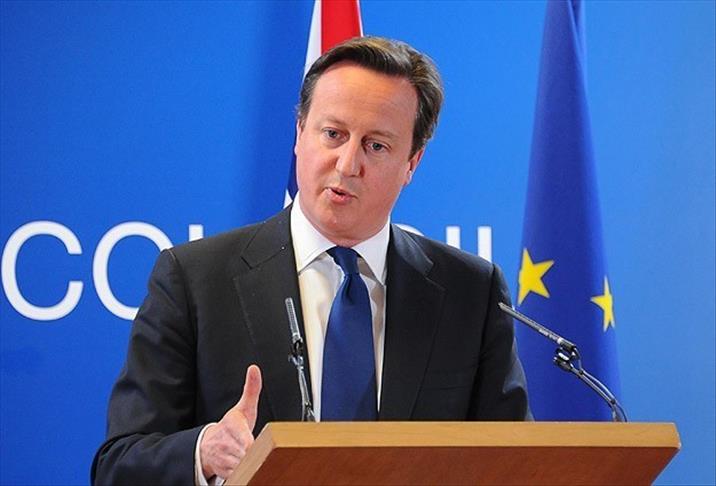
LONDON (AA) - British Prime Minister David Cameron said Wednesday that they would continue using all of Britain's diplomatic muscle in regards to peace talks of Syria dispute. A heated debate erupted at the House of Commons on Wednesday where British premier replied the questions of MPs during the weekly "Prime Minister's Question Time (PMQ)" session. During his statement at the parliament, David Cameron, the leader of the Conservative Party -- coalition partner-- discommended the opposition Labour Party for their unnecessary blocking of the British military intervention in Syria. Yet, British Prime Minister Cameron stressed, he respected the outcome of last week's voting of British involvement in any military response to the chemical weapons attack in Syrian capital and added that he would not repeat plans for British participation in military intervention again in the future. Touching on the chemical attack near Damascus, Cameron emphasized, "a very tough response" had to be given by the world. "I agree with you that we must use everything we have in our power - our diplomatic networks, our influence with other countries, our membership of all the key bodies, the G8, the G20, the UN, the EU, NATO - we must use all that influence to bring to bear," stressed Cameron and continued on saying, "My only regret of last week is that I do not think it was necessary to divide the House on a vote." In addition, Cameron said, they would continue to use all of Britain's diplomatic muscle to bring all sides together for Syrian peace talks. Meanwhile, Britain's leader of the opposition Labour Party Ed Miliband said his party had to oppose the government's Syria strategy cause they were concerned about preventing a rush to war and noted that there was public support for Britain taking every diplomatic, humanitarian effort to help the Syrian people. Furthermore, David Cameron is planning to attend the G20 summit which is going to take start tomorrow in Russia, where he is expected to demand for a second peace conference about Syria in Geneva. Last Thursday, the House of Commons rejected the government proposal of "a strong humanitarian response" by a 285 to 272 margin.