By Todd Crowell
TOKYO
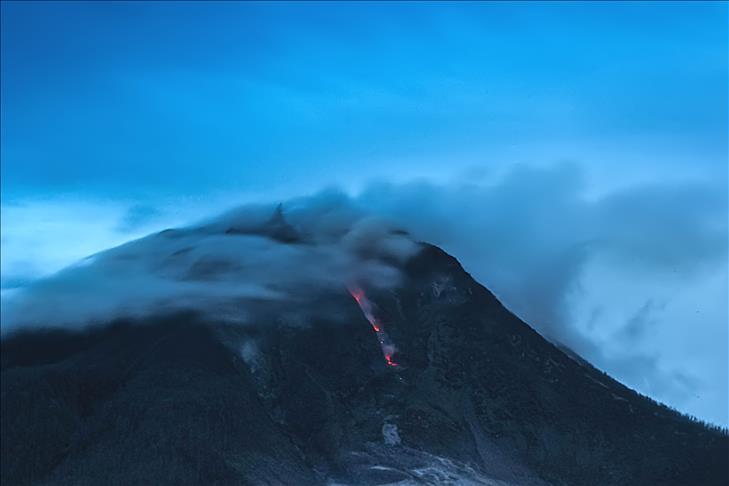
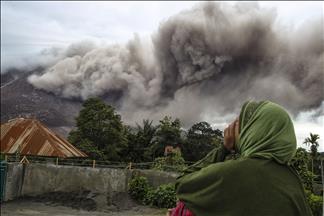
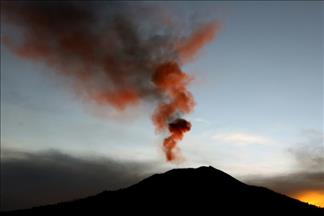
Mt. Shindake on the remote Japanese island of Kuchinoerabu erupted in a dramatic fashion Friday, sending a massive black plume of smoke, rocks and ash some nine kilometers in the air.
No casualties from the eruption – whose pyroclastic flow reached the northwest coast - were reported as of press time.
The tiny island has only 147 permanent residents, who were evacuated by a ferryboat to the neighboring island of Yakushima, around an hour’s journey across the East China Sea.
The residents of Kuchinoeruba and other parts of Japan’s southwestern coastline are used to living with volcanoes, and were moving to a pre-planned evacuation area as soon as they heard the enormous bang of the volcano’s explosion.
The national government immediately dispatched a coast guard vessel, helicopters and some members of the Self-Defense Forces to the area to assist in the evacuation. Commercial airlines diverted flights from flying over the island.
Kuchinoerabu, the whole of which is part of the Kirishima-Yaku National Park, is located around 100 kilometers (62 miles) from the southern tip of Kyushu, Japan’s southernmost main island.
Its small population makes a living primarily from fishing and tourism.
Mt. Shintake had erupted Aug. 2014, and the area of the pyroclastic flow was placed off limits. Before that, the mountain erupted in 1980 and records show of earlier blasts.
The whole region is laced with active volcanoes. Mt. Sakurajima opposite the prefectural capital Kagoshima routinely emits plumes of steam and gas.
The national government has tightened restrictions on people entering active volcano zones since last year’s surprise eruption of Mt. Ontake killed 57 hikers who were climbing the mountain.
Setsuya Nakata, a professor at Tokyo University, told the NHK broadcaster he thought the force of the eruption exceeded that of Mt. Ontake.
Some parts of the Hakone recreation area near Tokyo have been placed off limits in the wake of recent signs that Mt. Hakone might erupt.