By Cristian Hernández & Ben Tavener
CARACAS
The Bicentenary Market is an enormous food warehouse stretching nearly an entire block in the heart of the Venezuelan capital of Caracas.
The food store sits next to a wasteground with a path snaking through it to waiting taxis and carts on Plaza Venezuela.
"None shall pass! They won't come back! We swear they won't come back!" a chorus of voices plays out repeatedly on loudspeakers while shoppers finish their purchases, their hands, shoulders and backs all bearing the weight of the basic products they have bought.
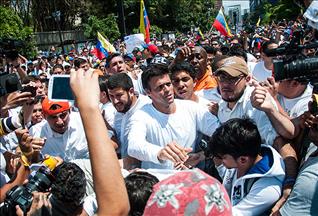
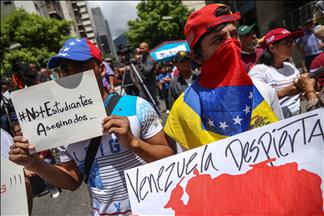
The voices are a reminder of the government's tough stance against the country's fractured and frail political opposition parties and anyone it sees as attempting to destabilize the nation. Mass opposition street protests across the country earlier this year left more than 40 people dead and many more in the country's jails.
Among the protesters' grievances were the dismal state of the economy and the lack of basic goods in shops.
Now, before shoppers can even start filling their carts, there is a new hurdle to be cleared -- all in the name of keeping shelves stocked.
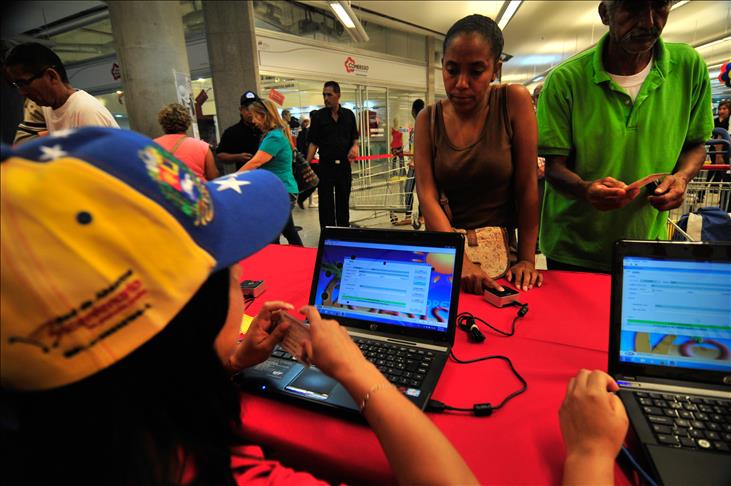
In the lobby of the store there is a line with about 60 people waiting patiently. Before them is a red table with a line of laptops and government workers in red shirts with Venezuelan flags on their sleeves.
Shoppers must now give their IDs and personal details, including their fingerprint via electronic readers. The process takes time, and workers have to occasionally stop to ensure the system doesn't crash.
Now registered and their purchases logged, the shoppers can go back into the store if they wish, but they will not be able to buy more of certain stable products if they have reached a fixed limit.
The government says the new program, which tracks what citizens buy and in what quantities, is the best shot they have at stifling the spate of smuggling of state-subsidized produce across the border to Colombia that it blames for Venezuela's empty shelves.
Contraband has become a viable business for many, the government says, particularly those in states bordering the neighboring country, such as Táchira and Zulia. In August, Venezuela began a trial of nightly border closures and stationed 17,000 troops along its porous 2,200-kilometer (1,370 mile) frontier with Colombia.
The one-month trial was extended for three months, after hundreds of arrests were made and tons of contraband seized.
Food stores in those bordering states, already have the system in place, but Sept. 25 it arrived in the capital, and President Nicolás Maduro says he wants it nationwide by mid-November.
Exactly what the limits on staples are, and how long they will last is still unclear. The supermarkets says the limit on 23 staple products will be in place for 12 hours, but Venezuela's Minister for Food Yván Bello, touring the food warehouse on the first day of the fingerprint registration program in Caracas, said consumers would be barred from buying the product again for four days.
Bello told reporters that the system was integrated with public food warehouses to enable data and sales control, eventually allowing the government to track and pinpoint where the system is failing on certain basic goods.
Staple products that make up the "basic basket" of goods have their prices controlled by the government. They include corn flour, cooking oil, milk, sugar and meat.
These are the products that have become scarce in Venezuela. Bare shelves have plagued many corners of the country, and Venezuelans can easily pay triple the government-controlled price to get the same produce on the black market.
The food minister said 785,000 people were already registered in the system as of Sept. 25, and the fingerprinting program is next set to be rolled out to private markets.
A new reality is dawning on Venezuelans' daily shop, and while many support the government's plan, there are also many opposed.
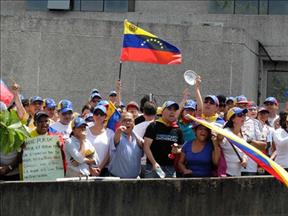
Opposition parties have accused Maduro's government of imposing "rationing" on the population. Some have taken to the streets to protest, outraged by the introduction of the fingerprinting program, including in the western city of San Cristóbal, where demonstrators clashed violently with police.
Skeptics say Venezuelans have always found ways around controls implemented by the Socialist government, and have already began speculating about the likelihood of shoppers "renting fingers" to dodge the fingerprint test in the future.
The government says smuggling is the reason Venezuela's shelves have been left bare, and believes about 40 percent of subsidized goods end up abroad.
But the opposition say the government's economic policies are what's really behind the dearth of staple products, and with annual inflation in the South American nation running above 63 percent last month, the situation will remain precarious for the foreseeable future.
www.aa.com.tr/en