ANKARA
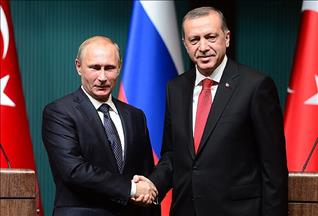
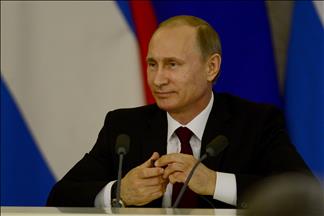
Turkey has condemned Friday Russian President Vladimir Putin's use of the word "genocide" to qualify the 1915 events.
Putin used the word "genocide" to qualify what happened to Armenians during the First World War in a statement released on the Kremlin's website Thursday.
“April 24, 1915, is a mournful date, related to one of the most horrendous and dramatic events in human history, the genocide of the Armenian people,” Putin said in a letter called "World Without Genocide."
"We reject and condemn the labeling of the 1915 events as 'genocide' by the President of the Russian Federation, Vladimir Putin, despite all our warnings and calls,” said the Foreign Ministry in a statement Friday. "Such political statements, which are flagrant violation of law, are null and void for Turkey."
"Taking into account the mass atrocities and exiles in the Caucasus, in Central Asia and in eastern Europe committed by Russia for a century, collective punishment methods (...) as well as inhumane practices especially against Turkish and Muslim people in Russia’s own history, we consider that Russia is best-suited to know what exactly “genocide” and its legal dimension are," the statement added.
Putin was among the leaders, along with French President Francois Hollande, who were in Armenia's capital, Yerevan, to participate in the events marking the 100th anniversary of the 1915 events.
"(Russia's) insistence on wrongdoing will not help peace, prosperity and welfare in our region. The only thing that Russia can do in this issue is to leave its biased attitude aside and encourage Armenia and the Armenians to respond positively to the calls of Turkey for peace and friendship," the statement also said.
Meanwhile Turkey's Foreign Ministry also criticized German President Joachim Gauck after he referred to the 1915 incidents as a "genocide".
The response from the ministry came in a statement on Friday a day after Gauck referred to the tragedy of a century ago as a "genocide" in remarks he made at a memorial service at the historical Berlin Cathedral.
The ministry said in a statement his comments were "baseless allegations directed towards Turkish identity, history and society."
It added: "Contrary to law and historical facts, President Gauck has not the right to attribute on the Turkish people a crime which they have not committed."
"It is expected from the authorities who represent social unity, integrity and harmony, to take the sensitivities of all the members of the society into consideration and express a more embracing approach."
The statement went on: "In this sense, it is astonishing that President Gauck has also disregarded the opinions of hundreds of thousands of Turkish-German citizens whom he also represents."
"Turkish history and identity is an integral part of Turkish-German society. Members of this community will not remain silent against initiatives aimed at defaming their identity. Turkish nation will not forget and forgive President Gauck’s statements."
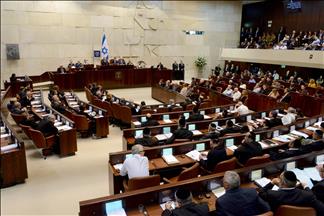
German lawmakers from governing parties and the opposition submitted Friday draft parliamentary motions to parliament which labeled the incidents in 1915 as “genocide”.
The statement added: "We hope that Bundestag, which plans to discuss a resolution on the events of 1915 in the forthcoming days, takes a neutral and constructive stance and does not present an approach which would have long term negative repercussions on Turkish-German relations."
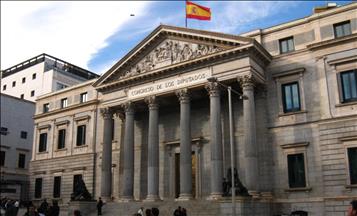
On Wednesday, Turkey summoned its ambassador in Vienna hours after the Austrian Parliament described the 1915 events as "genocide."
Last week, the European Parliament adopted a resolution recognizing the 1915 events as "genocide." It came three days after Pope Francis also called the 1915 incidents a "genocide," drawing sharp criticism from the Turkish government.
The 1915 events took place during World War I when a portion of the Armenian population living in the Ottoman Empire sided with the invading Russians and revolted.
Turkey has called for the establishment of a joint commission of historians and the opening of archives to study and uncover what happened between the Ottoman Empire and its Armenian citizens.
The relocation by the Ottomans of Armenians in eastern Anatolia following the revolts resulted in numerous casualties. Turkey does not dispute that there were casualties on both sides, but rejects the definition of "genocide."