BANGKOK
The day after a 6.3 magnitude earthquake struck Thailand, residents of the country's north are coming to terms with the devastation wreaked by the country's largest ever tremor.
An 83-year-old woman was the only casualty in the quake when a wall fell on her during the 6.3 magnitude quake, however around the region roads were wrecked, temples crumpled, and people ran from cover.
Aftershocks, meanwhile, continued to rattle northern Thailand and Myanmar Tuesday.
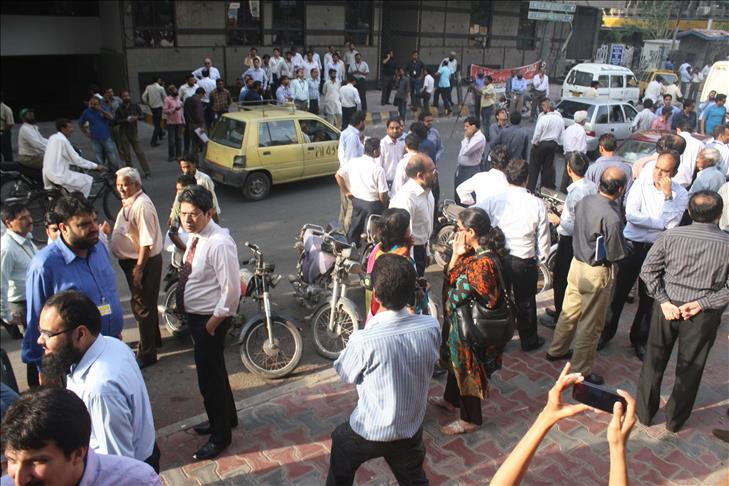
At the height of the tremor, people rushed from department stores and hotels in Chiang Rai - a hub and departure point for foreigners seeking to visit the region's famous northern hilltribe villages. The provincial airport was also evacuated after pieces fell from the ceiling, but suffered neither structural damage to its runway or flight disruption.
Some roads suffered large cracks, in the process becoming unusable, while several Buddhist temples - including the city’s white Wat Rongkhun temple, whose spire partly collapsed - were severely damaged. A large Buddha statue’s head also fell off at the province’s Wat Udomwaree Temple.
After the first tremor, 109 aftershocks were registered Monday night- five of those recorded Tuesday between 5.0 and 5.2 on the Richter scale, according to the National Disaster Warning Centre.
The quake’s effects were even felt in capital Bangkok, where some people in high-rises said the buildings shook for 20 seconds.
The quake struck at a depth of 7.4 km with an epicenter in Chiang Rai province’s Mae Lao district.
Minor quakes are not uncommon in northern Thailand, but they seldom approach 6.0 on the Richter scale. Unlike western neighbor Myanmar, Thailand does not sit on any major fault lines.
englishnews@aa.com.tr