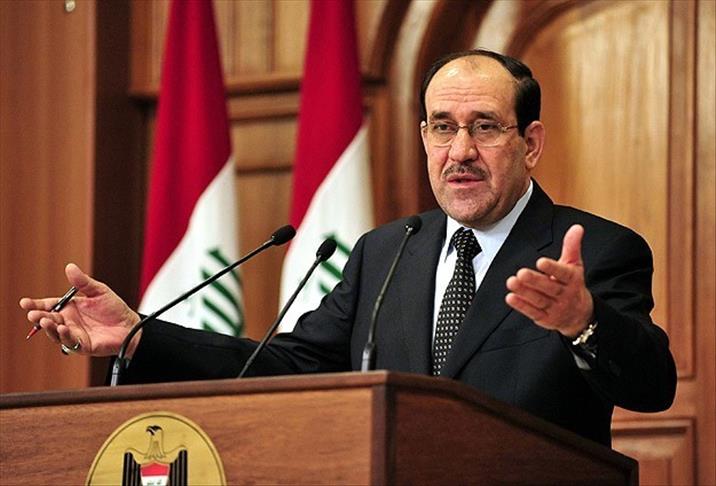
While Maliki receives positive feedback from the US administration for getting military assistance, he hardly seems convincing to some US officials, especially the wing which takes a harder stance than the Obama administration on many foreign policy issues.
US officials say they closely cooperate with Iraqi's government and are open to discussing his request for military assistance only if Baghdad makes significant changes in the struggle against militant groups such as Al-Qaeda. They state their willingness to help Maliki in targeting threats effectively.
On the other hand, leaders of the Senate's defense and foreign affairs committees said in a letter to President Obama timed for Maliki’s visit that he is contributing to what the lawmakers called an alarming slide toward sectarian violence aroused by the Syrian civil war next door.
“This failure of governance is driving many Sunni Iraqis into the arms of Al Qaeda in Iraq and fueling the rise of violence,” the letter said.
McCain was among the six Republican and Democratic senators who wrote the letter on Tuesday, pushing Obama to take a harder line against Maliki and holding his government responsible for the increasing violence.
“Prime Minister Maliki’s mismanagement of Iraqi politics is contributing to the recent surge of violence,” Sens. Carl Levin (D-Mich.), John McCain (R-Ariz.), Robert Menendez (D-N.J.), Bob Corker (R-Tenn.), James M. Inhofe (R-Okla.) and Lindsey Graham (R-S.C.) wrote.
Maliki "too often" takes a sectarian and authoritarian position, resulting in increased Al-Qaeda attacks while inciting violence between Sunni and Shi'ite Muslims, the senators said.
The senators urged Obama to advance American efforts to help Iraq’s security force fight terrorist groups by means of increased sharing of intelligence.
Maliki's visits in Congress included his talk with McCain as well as leaders of the Senate Foreign Relations Committee and House Foreign Affairs Committee.
Senator Bob Corker, a signatory of the letter and top Republican on the Senate panel, said Maliki's visit had not been as productive as most with other international leaders.
"I don't think he seemed to internalize the concerns that we have about what's happening there. He didn't seem to digest that they are important to us, and I don't think it was a particularly healthy meeting," Corker said.
Maliki made clear in his remarks before flying to Washington that his priority was to secure support for the sale of American arms and other forms of security assistance. “We will discuss security and intelligence in addition to the arms needed by the military to fight terrorism,” he said.
Maliki is leading a large delegation to Washington and is also scheduled to meet with Vice President Joseph R. Biden Jr., Defense Secretary Chuck Hagel and other senior officials.
Obama will meet Maliki at the White House on Friday.