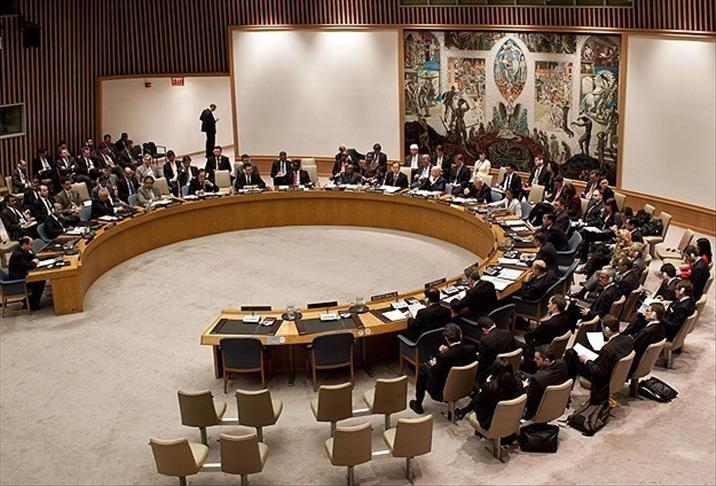
ANKARA (AA) - UN reform debate once again flared up as Security Council remains troubled with the humanitarian crisis in Syria.
Reform proposals focus on an increase in the number of permanent seats in UN Security Council. However it would only strenghten the existing "power club" structure of the Council, as well as obstructing easy decision making, thus not leading efficient response to global crisis.
About the inclusion of most potential members, Brazil, Germany, India and Japan's tothe UNSC, "The same structure... It is basically saying that if you can prove yourself to be big boy, then we will bring in you to the big power club," said John Esposito, ambassador for the UN Alliance of Civilizatons Professor of International Affairs and Islamic Studies at Georgetown University.
Citing the elit-power structure as the core problem, Esposito said the only way to reform would be a majority vote in the Council.
Esposito also underlined that bringing in more permanent members would not guarantee there was going to be any greater effetiveness for UN.
"A structure with a much more power ends up in the general assembly, a system like majority vote or some kind of system about how many votes necessary to move on a specific issue might be the solution."
- Sovereign equality of states principle as an excuse
UN system is based on sovereign equality of states principle which the permanent members of UNSC capitalize on when explaining their non-interference to cross-border humanitarian crisis. They also defend their veto right by this principle.
David Bosco, Assistant Professor of International Politics at American University told AA that the UN Charter made clear that a threat to peace and security may emanate from activities within the borders of a state.
"But the notion of sovereignty and non-interference remains an important norm, and there is clearly a higher barrier to international action when it comes to internal matters," said Bosco.
Highlighting the need for more cooperation among permanent members of UNSC for more efficacy, "This requires political will, and for members to look beyond their narrow self-interests," said Wilson Center's Tamar Gutner.
In addition Gutner said the concept of sovereignty had been challenged, and pointed at "Responsibility to Protect" norm.
"Sovereignty is responsibility, not a right. The Security Council can use this norm as a reason to act in cases where crimes against humanity are taking place."
By Selen Tonkus
englishnews@aa.com.tr