- Before signing START, Moscow and Washington had more than 10,000 nuclear warheads
- Putin proposes to extend agreement for 1 year, Trump insists on drafting new treaty that includes China
MOSCOW
The New Strategic Arms Reduction Treaty (New START) – the last remaining, legally binding agreement limiting US and Russian strategic nuclear forces – is set to expire this week, raising fears of a new era of unregulated nuclear competition.
The treaty builds on the first START, which became one of the defining symbols of the end of the Cold War and a cornerstone of international arms control and strategic stability.
Signed in 1991 between Washington and Moscow, it marked a breakthrough in transparency and mutual trust. Under its provisions, the two sides committed to reducing strategic nuclear forces and opened the door to extensive on-site inspections to verify compliance.
The treaty envisioned reducing each side’s strategic nuclear forces to 1,600 strategic nuclear delivery vehicles, including intercontinental and submarine-launched ballistic missiles and heavy bombers, and around 6,000 accountable warheads.
Verifications went far beyond declarations – including extensive on-site inspections, continuous monitoring, and detailed data exchanges, creating one of the most thorough arms control regimes ever implemented.
The treaty was highly praised by the leaders who signed it. Soviet President Mikhail Gorbachev said START opened the path toward “a new world order of peace and cooperation,” while US President George HW Bush hailed START I as reversing half a century of nuclear buildup and "dispelling a half-century of mistrust," crediting it as a "moral accomplishment" born of cooperation.
In his later memoirs, Gorbachev even talked about hopes of complete elimination of nuclear weapons.
Although START was signed in 1991, it entered into force only after the collapse of the Soviet Union. Boris Yeltsin, as president of the Russian Federation, confirmed adherence to the treaty.
In 1994, START formally took effect, with Ukraine, Belarus and Kazakhstan, states that had inherited Soviet strategic nuclear weapons, also joining the process and committing to denuclearization.
Collapse of Soviet Union and nuclear question
The dissolution of the Soviet Union reshaped the global nuclear landscape. Its nuclear arsenal was suddenly spread across four newly independent states – Russia, Ukraine, Belarus, and Kazakhstan.
Ukraine inherited the second-largest share of Soviet nuclear weapons – approximately 1,900 strategic warheads and 2,500 tactical nuclear weapons, making it the world’s third-largest nuclear power at the time.
Kazakhstan was left with about 1,400 warheads, largely due to its role as a major Soviet nuclear testing and training ground, while 81 warheads were deployed in Belarus.
To preserve START and prevent nuclear proliferation, the Lisbon Protocol was signed, naming Russia, Ukraine, Belarus and Kazakhstan as successor states to START I and committing the latter three to accede to the Non-Proliferation Treaty as non-nuclear-weapon states.
Belarus, Kazakhstan and Ukraine agreed to transfer strategic nuclear warheads on their territory to Russia.
In return, Moscow and Washington provided security assurances along with financial and technical assistance for disarmament.
Belarus and Kazakhstan viewed nuclear weapons primarily as a security risk and economic burden. Ukraine, after resisting denuclearization, ultimately agreed in exchange for formal security assurances associated with the 1994 Budapest Memorandum, signed by Russia, the US and the UK.
The physical removal of nuclear weapons was carried out under the Nunn-Lugar Cooperative Threat Reduction (CTR) Program, sponsored by US Senators Sam Nunn and Richard Lugar. It was completed by 1996.
Last major arms control treaty
START expired in 2009, but both the US and Russia continued to observe limits until New START entered into force, marking a new phase in nuclear arms reduction.
The new agreement was signed on April 8, 2010 in Prague by Russian President Dmitry Medvedev and his US counterpart Barack Obama after eight rounds of negotiations. After ratification, it entered into force on Feb. 5, 2011.
The agreement was concluded for a 10-year term, with an option for a one-time extension of up to five years. That option was exercised in early 2021, when Joe Biden and Vladimir Putin agreed to extend the treaty until February 2026.
New START imposed tighter limits of 1,550 deployed strategic warheads, 700 deployed delivery systems and 800 total deployed and non-deployed launchers – focusing on operational, deployed strategic forces rather than total stockpiles.
The agreement preserved a robust verification regime, including inspections, notifications and regular data exchanges.
New START did not cover tactical nuclear weapons or emerging systems such as hypersonic weapons, cyber capabilities, artificial intelligence-enabled systems or space-based weapons.
In February 2023, Russia announced that it was suspending its participation in New START, citing hostile actions by the US. Moscow said it would continue to observe the treaty’s numerical limits but halted on-site inspections and some data sharing.
What START achieved – cutting arsenals, building trust
The implementation of the START treaties led to an unprecedented reduction in global nuclear arsenals. In 1991, each side possessed more than 10,000 nuclear warheads. By the mid-2010s, there were roughly 1,500 and 2,000 deployed strategic warheads.
Thousands of delivery systems were eliminated. According to expert estimates, START alone resulted in the dismantlement of thousands of intercontinental ballistic missiles and the retirement of several hundred strategic bombers.
Numerous silo-based and mobile launchers were either destroyed or converted for peaceful purposes.
The treaties established comprehensive verification mechanisms that significantly reduced mistrust and lowered the risk of accidental or unauthorized nuclear use.
The dismantlement of aging nuclear systems also reduced environmental and safety risks, including radioactive leaks.
Crucially, the success of START agreements laid the foundation for later arms control initiatives and broader cooperation in the nuclear sphere, reinforcing global strategic stability.
What happens after New START expires?
With the treaty in force only through Feb. 4, Russia and the US have not agreed on an extension or a replacement.
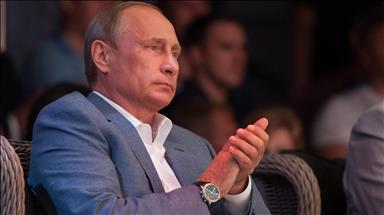
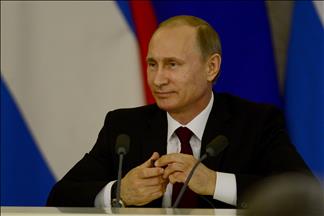
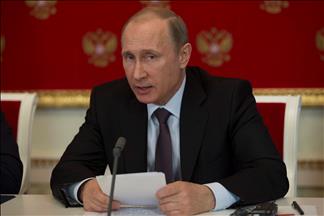
Putin has proposed a temporary one-year extension of the treaty’s quantitative limits following its expiration, arguing that such a measure would allow time to negotiate new agreements. He stressed that the proposal would be effective only if Washington acted reciprocally.
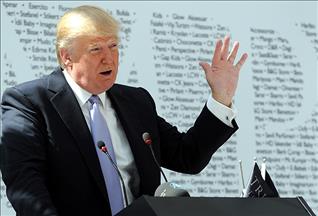
The US administration has yet to issue an official response. While President Donald Trump described Putin’s proposal as a “good idea,” no concrete negotiations have followed.
Trump has insisted on pursuing a new, “better” agreement that would also include other nuclear powers, particularly China.
In response, Moscow said any future framework should also address other nuclear-armed states, including European powers, and Kremlin spokesman Dmitry Peskov said drafting such a comprehensive treaty would take time.
Arms control specialists, including former US Deputy Secretary of State Rose Gottemoeller, warn that allowing New START to expire without replacement would heighten risks and could accelerate a new arms race.
Experts also warn of an era of unregulated competition and worst-case scenario planning as both countries modernize their nuclear programs.
If the treaty lapses, there would be no major, verifiable arms control agreement limiting US and Russian strategic nuclear arsenals for the first time since 1972.