HONG KONG
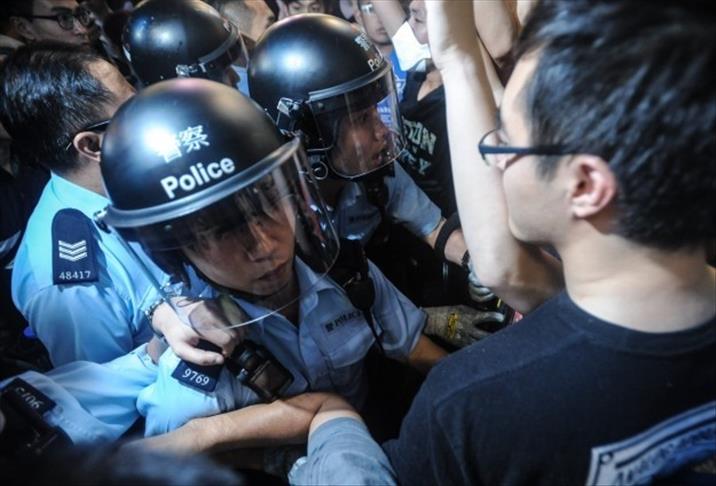
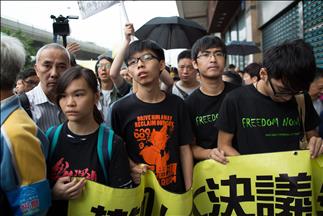
A former Hong Kong leader has raised fresh concerns that Beijing is cracking down on opposition in the wake of last year's 79-day-long democracy protests, suggesting Wednesday the Chinese government could impose a national security law on the semi-autonomous city.
"I think Beijing will act if it becomes necessary," said 77-year-old Tung Chee-hwa, the first chief executive after the 1997 handover, according to local English-language newspaper The Standard.
"I am not running Hong Kong," he added. "I don't know when it will happen, I just have this feeling."
Pro-Beijing figures have called for China's oppressive national security laws -- used by Communist Party authorities to eliminate dissent in mainland China -- to be enacted in the city following the street demonstrations that ended only last month.
Over the weekend, Stanley Ng Chau-pei - a Hong Kong delegate to the national legislature in Beijing - suggested mainland China's security laws be applied.
It was only a matter of time before Hong Kong would draft its own national security laws as Article 23 of its mini constitution, the Basic Law, required it to pass legislation prohibiting acts of "treason, secession, sedition, or subversion," Tung said, according to the South China Morning Post.
"Our nation is starting to become strong, and its importance is growing on the international arena. From a Hong Kong perspective, we cannot act like outsiders. We should know this is important, and we have to make the legislation one day," Tung added.
Tung tried to enact the so-called "Article 23" national security laws in 2003 amid widespread public opposition.
Many Hongkongers saw the proposed laws as a threat to the city's autonomy. Tung backed down after public anger climaxed July 1 that year as half a million took to the streets to protest.
Tung's raising of the sensitive Article 23 issue comes on the heels of a move by the government to establish a new "army cadet group" modeled on the Chinese military, the People's Liberation Army.
Critics, including pro-democracy lawmakers, see the organization as a sign Beijing is tightening its control over the city following last year's student-led protests through the "brainwashing" of students with military-style training.
Tung, the son of a shipping magnate who China anointed as Hong Kong's first leader after the territory returned to Chinese sovereignty from Britain in 1997 under a "one country, two systems" formula, won a second five-year term in 2002 after a nomination period expired and no other names were put forward.
A pro-democracy leader told the New York Times at the time "There was never even the possibility of a contest," since China's president, Jiang Zemin had said he deserved another five-year term.
"This isn't an election, it's a farce," said Emily Lau.
The central demand of last year's protests is for the 2017 chief executive election to be open to all candidates.
The central government, backed by the Hong Kong executive, proposes a pro-Beijing committee screens candidates.