Berk Kutay Gokmen
07 July 2026•Update: 08 July 2026
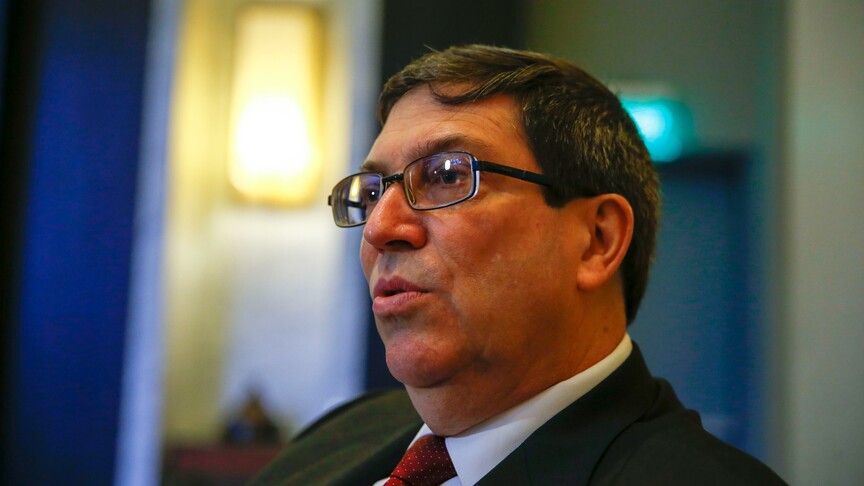
Cuba’s foreign minister on Tuesday accused the United States of carrying out an “energy siege” on Cuba and urged the United Nations to take action against the “ruthless” US sanctions on the island country.
Addressing the UN General Assembly during a debate on the US embargo, Bruno Rodriguez Parrilla said that for decades the US has been carrying out "a multidimensional nonconventional warfare" against Cuba that has grown “ever more cruel and more ruthless.”
"There is now an energy siege, which is equivalent to a naval blockade, which is an act of war," he said, alleging that Cuba's fuel imports are being obstructed through “direct threats, unilateral coercive actions, and even harassment or intimidation of oil tankers.”
Parrilla accused Washington of using secondary sanctions and other measures to deepen Cuba's economic woes, saying they were intended to “provoke in Cuba a humanitarian crisis and the complete destabilization of the country.”
He said the sanctions had worsened shortages of fuel, medicines, and food, leading to prolonged blackouts and deteriorating living conditions. "The blockade asphyxiates and kills silently," he said, urging the UN to address what he called “this ruthless crime.”
Parrilla said damages caused by the embargo between March 1, 2025, and Feb. 28, 2026 totaled a record $8 billion, up 7% from the previous year, and estimated cumulative losses since the embargo began at $178.7 billion.
He rejected US arguments that Cuba poses a security threat, saying, "Cuba is not a threat. Cuba is the nation that is under threat," while reaffirming Cuba's commitment to “peace, international law, multilateralism, truth and justice.”
His remarks came shortly after US Ambassador Mike Waltz objected to holding a second General Assembly debate, calling it a misuse of UN resources, adding that the cost of the meeting “could feed 3,500 Cuban children for a month” or provide other humanitarian assistance.
Waltz said Cuba sought to use the debate to shift blame for the country's problems onto Washington, saying: “Colleagues, that is the real Cuban embargo. It is not the one Havana pretends exists. It is the embargo the regime imposes on its own people.”
Meanwhile, Ahmet Yildiz, Türkiye’s envoy to the UN, said the Organization of Islamic Cooperation (OIC) is concerned about the growing impact of the US embargo on Cuba and, on the bloc’s behalf, called for its removal.
Yildiz emphasized that the US embargo has not only affected Cuba’s commercial sector and national economic activity but has also had devastating humanitarian consequences for the entire Cuban population.
The UN General Assembly on Tuesday overwhelmingly voted to carry out its debate on the "necessity of putting an end to the economic, commercial, and financial Blockade imposed by the United States against Cuba," with 136 votes in favor against nine and 30 abstained.
In a news conference, UN spokesman Stephane Dujarric said that Secretary General Antonio Guterres “has been following very closely the humanitarian situation in Cuba,” adding that the UN has been "involved in efforts to get fuel into Cuba for humanitarian purposes.”
“We continue to be very concerned about the situation on the ground and the impact of the ongoing energy shortage and knock-on impact it has on healthcare, education, and just basic services,” he said.
Dujarric added that Guterres believes that “there is a broader need for dialogue, cooperation, respect for international law, and he recalls the longstanding position of the General Assembly … for an end to the embargo imposed by the US on Cuba.”