By Alex Pashley
LIMA
Pledges by Australia and Belgium on Tuesday surpassed the 2014 target of the world’s largest climate fund, signaling progress as nations hammer out a global climate pact.
The Green Climate Fund stood at $9.95 billion after the first week of UN climate talks, with cash from 22 countries ranging from Mexico to Mongolia.
Prior contributions by big players such as the United States and Japan last month, and earlier refusals to contribute by Australia, prompted concern of the fund falling short.
Nevertheless, Belgium put up $62 million Tuesday morning, achieving one of the Lima summit’s main aims for the year, with Australia later following with $166 million over four years.
“Crossing the $10 billion threshold is a major milestone that demonstrate commitment to help vulnerable countries confront climate impacts,” said Athena Ballesteros, Finance Director at the World Resources Institute, a non-profit research body based in Washington.
“These contributions should build trust in the negotiations and propel action to a global agreement,” Ballesteros said in a statement.
But Australia’s contribution came under criticism for being disproportionate to its size.
“We welcome Australia’s initial pledge of support to the Green Climate Fund but this can only be called a first step and falls short of its fair share,” said Kelly Dent, policy advisor for Oxfam Australia.
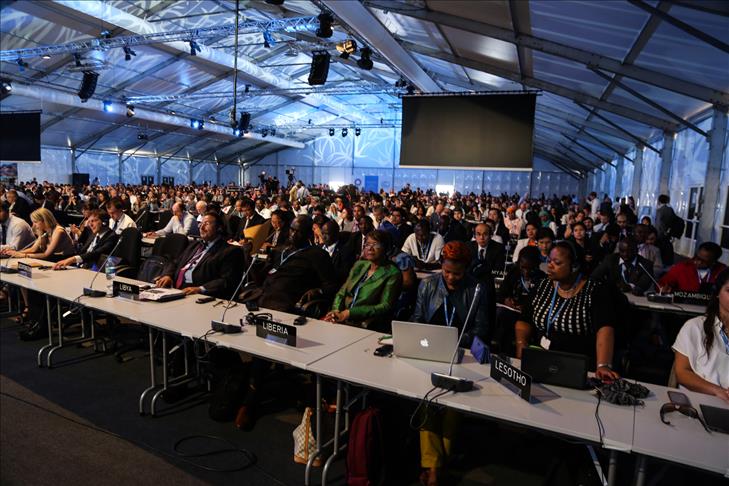
Delegates from almost 200 nations are negotiating a draft text to reduce global greenhouse emissions to be signed in Paris next year.
Climate finance is a key plank in sharing the burdens of climate change.
The South Korea-based GCF set up in 2011 has said monies disbursed will be divided between mitigation and adaptation efforts.
Developed countries have committed to provide $100 billion a year beginning in 2020, though the details have yet to be hammered out.
Samantha Smith, head of the World Wildlife Fund’s climate and energy initiative, said the current pledges amounted to “seed money.”
“If you look at the totality of needs – not only for energy transition, for forests, for adaptation – that number can be very big indeed. Obviously that $100 billion may not be enough,” Smith said.
Small island states battered by rising sea levels do not have time to wait for the Green Climate Fund to begin disbursing funds next year, said a UN representative for the Seychelles islands.
The funds applied to only 30 percent of the negotiating bloc that were classed as “less developed countries,” said Ronald Jumeau, also chief negotiator for the Alliance of Small Islands States, comprising more than 40 nations at risk from rising sea levels.
“We’re not waiting for the GCF to fund it, so we’re going to our private partners to see if they would. We’re already suffering on the front lines of climate change,” said Jumeau.
The Pacific island state of Tuvalu, with its highest elevation at just 15 feet (4.6 meters), is at grave risk from the onset of climate change if countries continue to emit at current rates.
www.aa.com.tr/en