BANGUI
By Hassan Isilow
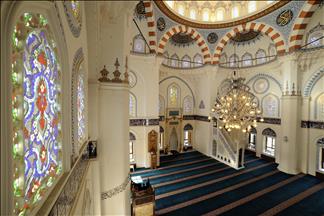
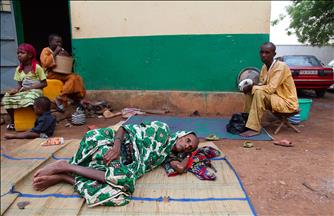
A central mosque in Kilometer 5, a predominantly Muslim district of Bangui, capital of the Central African Republic (CAR), has become a safe haven for several hundreds of Muslims fleeing attacks by Christian mobs and anti-balaka militiamen.
"We used to live in harmony with the Christians in this country for many years," an elderly woman who identified herself only as Marriam, told Anadolu Agency as she sat under a tree surrounded by her belongings.
"We don't know who poisoned their minds to start these [sectarian] murders," she said.
Muslims of CAR have increasingly been targeted in recent weeks.
On Sunday, two Muslims were lynched by a mob of angry Christians in Bangui before the Rwandan contingent of African peacekeeping force MISCA intervened to save others from similar fates.
On Friday, a Muslim man was pulled off a truck heading to Chad and lynched by a Christian mob that later set his body on fire.
Two days earlier, no sooner had interim president Catherine Samba-Panza left an official ceremony than hundreds of army personnel dragged a civilian from the crowd and lynched him on suspicion of being a former seleka fighter.
Christians, who constitute the majority of CAR's population, accuse Muslims of supporting former seleka rebels who ousted Francois Bozize, a Christian, last March and installed Michel Djotodia as interim president.
For months, the country has been plagued by tit-for-tat sectarian violence between the anti-balaka and former seleka fighters.
In January, Catherine Samba-Panza, a Christian serving as Bangui mayor at the time, was elected by the country's interim parliament as new interim president.
"This is our country, but they're telling us to leave or they will kill us," Marriam said tearfully.
Many of the Muslims in the Bangui mosque compound speak Sango, CAR's official language.
Muslim families having lunch in the shade ate traditional Central African dishes, such as cassava and pounded green vegetables.
-Safety-
When AA visited the mosque compound, it was filled with children playing, women cooking and men performing ablutions before Muslim afternoon prayers.
Imam Ahmed Tijani said the number of people taking refuge at the mosque keeps fluctuating.
"Sometimes the numbers go up if there is an attack in the area. But at most there are about 500-700 people living here," he told AA.
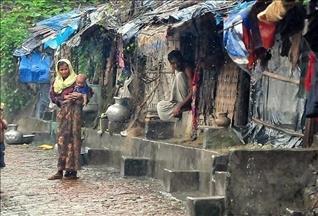
Many displaced Muslims have brought their belongings to the mosque; some have even parked their cars inside the compound, which now resembles a full-fledged refugee camp.
"I feel safe here," Fatima Mahamat, a middle-aged woman, told AA.
"I used to live in Miskine. Then one evening Christian mobs attacked my home," she recalled. "We fled and they looted everything."
The same fears were echoed by many Muslim refugees, some of whom had witnessed the murder of family members and close friends.
"Many families have come from the countryside, where there is increasing violence, to seek safety here," said one man who identified himself only as Ramadan.
African peacekeepers are stationed in the Koudouku Primary School, located across the street from the central mosque.
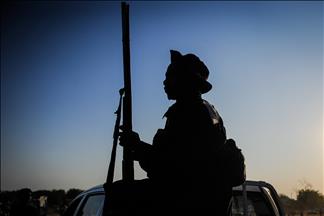
They routinely patrol the area to ensure that anti-balaka militiamen and rowdy Christian mobs don't attack the Muslim refugees holed up inside the compound.
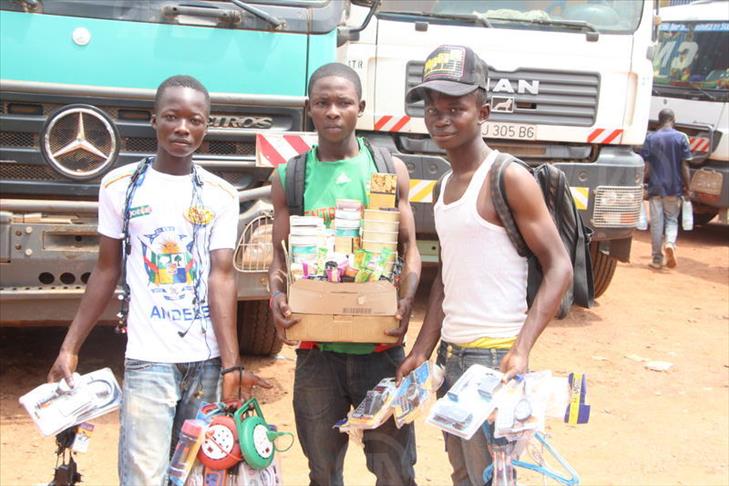
Outside the mosque, trucks loaded with household goods wait to set out for Chad and Cameroon – both favored destinations for CAR's fleeing Muslims.
Mahamat, for her part, hopes to soon be able to leave the country.
"I've been taking refuge at the mosque since January 4 while waiting for transport to travel back to my home country, Chad," she said.
englishnews@aa.com.tr