Sebnem Coskun
08 February 2026•Update: 09 February 2026
HORSESHOE ISLAND, Antarctica
Turkish scientists have reached the Turkish Scientific Research Camp on Horseshoe Island in Antarctica, marking the 10th arrival of the National Antarctic Science Expedition to the White Continent.
Organized under the auspices of the Turkish presidency, led by the Industry and Technology Ministry, and coordinated by the TUBITAK Marmara Research Center Polar Research Institute, the expedition marks a decade of Türkiye’s continuous scientific presence in Antarctica.
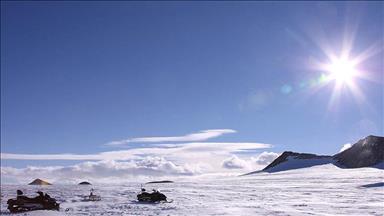
After an 11-day journey, the research team arrived at the camp located at 68 degrees south latitude on Horseshoe Island.
This year’s expedition includes 17 researchers, 16 from Türkiye and one from Bulgaria, who will conduct studies in life sciences, physical sciences, earth sciences, and environmental research.
During the expedition, scientists will collect ice samples, and lake and marine water samples to study the impacts of climate change.
Research will also focus on aquatic ecosystems, biodiversity, geology, and near-space sciences in the region.
The research vessel Sola, which serves as the team’s living quarters for approximately one month, completed its journey from King George Island and anchored off Lystad Bay near Horseshoe Island after four days at sea.
The scientists then reached the camp by boats and officially began their mission by raising the Turkish flag and singing the national anthem.
Expedition leader Ersan Basar said returning to the same region for the 10th time was a source of pride, emphasizing the continuity of Türkiye’s scientific work in Antarctica.
“Being here for the 10th time is extremely meaningful for us,” Basar said. “Despite being 14,000 kilometers away from Türkiye, once we opened the doors of our base, we felt as if we were at home.”
As part of the expedition’s first phase, the team also completed maintenance and data backup operations at the Global Navigation Satellite System (GNSS) station on Dismal Island, which was established six years ago.
The station plays a critical role in monitoring tectonic movements in the region.
Basar noted that the GNSS system was functioning efficiently and that new systems were installed to ensure continued data collection.
Team members from the General Directorate of Mapping carried out static measurements at several geodetic points on Horseshoe Island after completing work on Dismal Island.
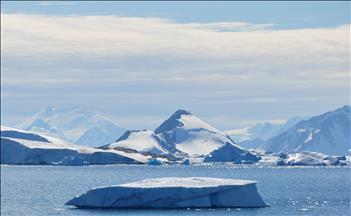
Throughout the voyage, scientists also observed icebergs, glaciers, and Antarctic wildlife, contributing additional observational data to ongoing research efforts.
The 10th National Antarctic Science Expedition will continue its scientific activities in the region over the coming weeks.