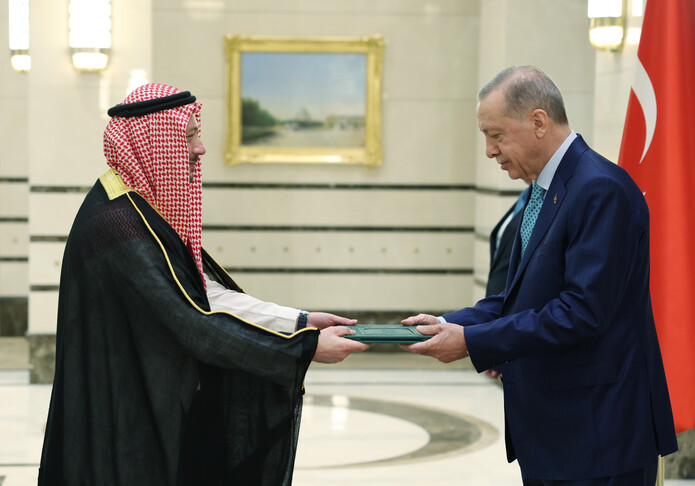
Saudi Ambassador to Türkiye Fahad bin Assaad Abu Al-Nasr said cooperation between Riyadh and Ankara is crucial to de-escalate regional tensions and prevent a spiral of crises across the region.
In an interview with Anadolu, the ambassador said the Saudi-Turkish relations see “accelerated qualitative development” driven by a shared political will to expand cooperation and deepen ties between the two regional heavyweights.
Q: How do you view the path of Saudi-Turkish relations?
A: The Saudi-Turkish relations are currently witnessing a rapid qualitative development that reflects the commitment of the leadership of both countries to elevate ties to broader and more solid levels.
Mutual official visits have contributed to this progress, most recently the visit of President Recep Tayyip Erdogan to the Kingdom in February 2026, which helped solidify a stronger and deeper relationship.
The joint statement at the conclusion of the visit emphasized the importance of enhancing cooperation in priority sectors, benefiting from investment opportunities provided by Saudi Vision 2030 and Türkiye’s Century Vision, building on the achievements of the Saudi-Turkish Coordination Council, and developing partnerships across multiple fields that serve the interests of both countries.
Saudi Arabia views brotherly Türkiye as a key partner with which it shares strong ties and growing political and economic relations. The Kingdom is keen to continue this positive path, reflecting a shared will to expand cooperation, strengthen mutual trust, and advance relations to broader horizons in the coming phase.
Q: What are the most promising areas for Saudi-Turkish partnership, especially within the framework of Saudi Vision 2030?
A: Economic cooperation between Saudi Arabia and Türkiye holds wide and growing opportunities, particularly given the attractive environment created by Saudi Vision 2030 for high-quality projects and value-added investments.
There is increasing interest in expanding partnerships in investment, renewable energy, industry, construction, tourism, logistics services, and modern technologies. Turkish companies possess strong expertise in these sectors, which are also priorities in the Kingdom’s economic transformation.
Our ambition is not limited to increasing trade volume alone but extends to building sustainable partnerships based on knowledge transfer, stimulating mutual investments, and developing joint projects that benefit both countries.
Q: How does the Kingdom view its role in supporting regional stability and reducing tensions in the region, and where does cooperation with Türkiye fit within this broader framework?
A: Saudi Arabia approaches regional issues based on a consistent vision that emphasizes supporting stability, preventing the escalation of crises, and prioritizing political and diplomatic solutions.
The Kingdom believes that regional security and prosperity can only be achieved through dialogue, respect for state sovereignty, and addressing crises at their roots in a way that preserves the interests of peoples and prevents further escalation.
Within this framework, cooperation with Türkiye reflects a shared understanding of the importance of coordination and consultation regarding regional developments. This includes intensifying political communication, exchanging views on regional crises, and supporting de-escalation and diplomatic solutions to enhance regional stability.
Saudi Arabia is committed to advancing this relationship to broader horizons in a way that serves both countries and strengthens regional security and prosperity.
Q: How do you assess the Saudi position regarding recent Iranian assaults on countries in the region, and what message does Riyadh emphasize regarding the protection of sovereignty and preventing escalation?
A: The Saudi position is clear and firm. Saudi Arabia condemns these aggressive Iranian assaults targeting the Kingdom, Gulf countries, and Jordan, considers them unacceptable violations of sovereignty and a direct threat to regional security and stability. The Kingdom categorically rejects any justifications, including claims that the attacks targeted American sites or facilities.
Saudi Arabia has officially stated that it will not allow its airspace or territory to be used to attack Iran; therefore, such claims are entirely rejected. At the same time, the Kingdom continues to act with the utmost wisdom and restraint.
Saudi Arabia is working, in coordination with Türkiye and other countries, to support efforts to reduce escalation, end the war, and restore regional stability. Joint statements have emphasized the need to avoid actions that fuel tensions and to strengthen international efforts to maintain stability.
The Kingdom has also clearly condemned recent Iranian assaults on the Republic of Türkiye, and reaffirmed its rejection of any threat to Türkiye’s security and sovereignty.
These unjustified assaults target countries not party to the ongoing conflict and affect civilian infrastructure, energy facilities, and residential areas, directly impacting citizens and residents.
Therefore, the Kingdom calls for an immediate halt to these assaults, preventing further escalation, and adhering to international law and principles of good neighborliness.
Q: How does Saudi Arabia contribute to protecting energy stability and maritime routes at this sensitive stage?
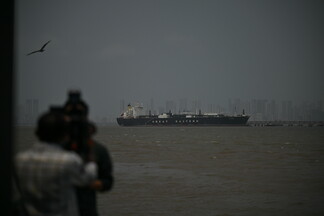
A: The Kingdom addresses energy market stability and the protection of vital routes in accordance with international law. It emphasizes the importance of the safety of maritime routes and freedom of navigation, including the Strait of Hormuz and Bab al-Mandab. Any threat to these routes affects not only the global economy and energy security but also trade flows and essential goods, including food supplies.
In this context, the Kingdom’s East-West pipeline stands out as a strategic route that enhances global supply stability, especially amid rising military tensions affecting navigation in the Strait of Hormuz. This pipeline provides flexibility in transporting supplies to the Red Sea through secure alternative routes, ensuring continuity and reliability of supply while mitigating the effects of regional tensions.
Q: How does the Kingdom view developments in the Middle East amid current regional tensions, particularly the war in Gaza and Israeli attacks?
A: Saudi Arabia adopts a responsible political approach focused on containing crises, respecting sovereignty, protecting civilians, and preventing the expansion of conflicts. It consistently expresses clear rejection of Israeli attacks and ongoing violations against the Palestinian people, while engaging diplomatically with regional and international partners to promote a more effective response.
A recent example is the joint stance of the foreign ministers of Saudi Arabia and several Arab and Islamic countries, including Türkiye, rejecting a Knesset decision to allow the death penalty for Palestinians in the occupied West Bank, considering it a dangerous escalation undermining stability.
At the same time, the Kingdom continues to play an active political role, in partnership with France, in leading international efforts to implement the two-state solution. This effort has been strengthened by the adoption of the New York Declaration with overwhelming support from the UN General Assembly (142 votes), aiming to achieve irreversible steps toward establishing an independent Palestinian state and a just, comprehensive peace.
The joint statement also welcomed recognition of Palestine by France and other countries and called on others to follow suit, reflecting growing international momentum.
In parallel, the Kingdom continues its humanitarian support for the Palestinian people through the King Salman Humanitarian Aid and Relief Center. Official data indicate 78 flights and 8 ships delivered over 7,706 tons of aid, along with 914 relief trucks, 20 ambulances, and agreements worth $90.35 million.
More broadly, the Kingdom plays a leading humanitarian role through over 4,000 projects in 113 countries, exceeding $8 billion in value. These efforts provide urgent aid and support development programs that enhance stability and quality of life. Saudi Arabia ranked second globally and first in the Arab world among donor countries for humanitarian aid in 2025.
news_share_descriptionsubscription_contact