By Hader Glang
ZAMBOANGA CITY, Philippines
Turkey's ambassador to the Philippines was among a group of envoys that met Thursday with senior leaders of the Moro National Liberation Front and government officials in the country's Muslim south to determine if both parties had stayed loyal to the provisions of a 1996 peace deal.
The deal was signed in 1996, but has since been usurped by a 2013 agreement by a breakaway organization, causing the splitting of the MNLF - a secessionist political organization - whose original signatory is now wanted on charges of rebellion and violation of international humanitarian law.
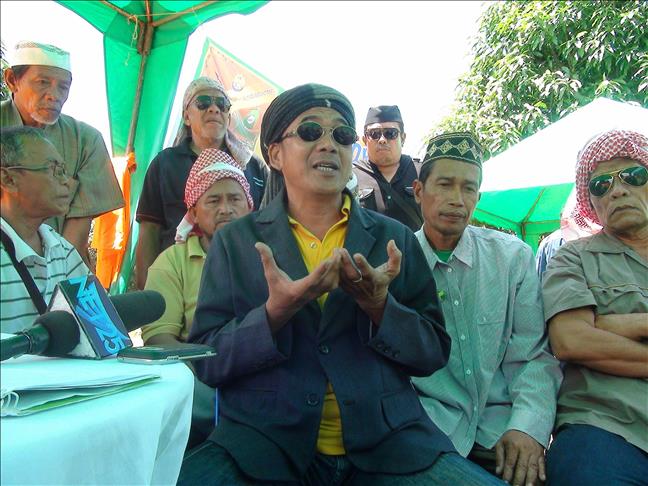
The Office of the Presidential Adviser on the Peace Process said in a statement that around a dozen envoys visited three projects implemented by the government for Moro National Liberation Front (MNLF) communities under a program to promote peaceful and resilient communities, while observing its impact on local people.
Among the participants were Turkey's Ambassador to the Philippines Esra Cankorur, Egyptian Ambassador Mahmoud Mostafa Ahmed Mohamed - the current chair of the Organization of Islamic Cooperation (OIC)'s Peace Committee for the Southern Philippines - and OIC Ambassador Dato’ Mohd Zamri Bin Mohd Kassim of Malaysia.
They were accompanied by the Philippines' Presidential Peace Adviser Teresita Quintos Deles, and Representatives from the embassies of Brunei, Indonesia and Libya.
The OIC brokered the first peace talks between the two sides in the Southern Philippines in 1976, after then President Ferdinand Marcos sent his first lady to Libya to request the assistance of Muammar al-Gaddafi to broker a ceasefire and peace negotiations.
Gaddafi helped foster an international treaty between the government and the MNLF, headed then by chairman Nur Misuari, which was witnessed and recognized by the OIC.
At a press conference in Tawi-Tawi - a Philippines island province located in the Autonomous Region in Muslim Mindanao - Egyptian ambassador Mohamed told local reporters that the projects they had seen were encouraging and represented "good steps ahead."
"I see people are happy from the inside. We were very much touched by their emotions, which encourage us to visit other MNLF communities in the near future,” he said.
He lauded the Philippine government for its continuing efforts to improve the plight of Muslims in the country's south in line with the implementation of the 1996 peace agreement.
The agreement, however, has not been without problems. A September 2013 meeting of the government, the OIC and the MNLF was postponed upon the request of MNLF chairman Misuari, as his armed faction were in the process of laying siege to the southern Philippines Christian majority city of Zamboanga.
The MNLF action was to protest a new peace deal being signed by MNLF breakaway group, the Moro Islamic Liberation Front. Misuari claims the new deal - signed March 27, named the Comprehensive Agreement on the Bangsamoro - is a betrayal of the 1996 agreement, has left his organization shortchanged, and granted Muslims in the region lesser autonomy.
The latest deal pushes for an agreement that grants the largely Muslim areas of Mindanao, or the southern Philippines region, full autonomy, but short of independence. The existing five-province Muslim autonomous region, a product of the MNLF struggle and the September 1996 peace deal, is to be replaced by a potentially larger region to be called Bangsamoro state.
The Egyptian ambassador said Thursday that the OIC delegation was impressed with the impacts of a school, health center and road projects it had visited, and that they had clearly benefited MNLF communities.
“[This is what you get when there is] no more fighting,” he stressed, noting Tawi-Tawi is prospering with still great potential particularly in fishery or aquaculture.
The Tawi-Tawi village of Karundong – the site of one of the bloodiest battles between MNLF fighters and government troops in the mid-1970s - is now a thriving fishing community with most of the former MNLF combatants engaged in the buying and selling of marine products.
Misuari -meanwhile - is currently in hiding on charges of rebellion and violation of international humanitarian law, genocide and other crimes against humanity.
The charges are in connection with the Zamboanga siege, which displaced more than 120,000 civilians, left nearly 200 people dead, and scores of others wounded.
www.aa.com.tr/aa