ANKARA
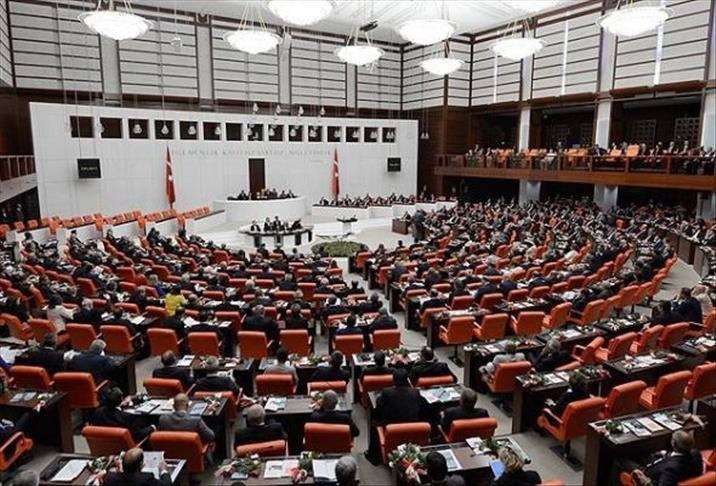
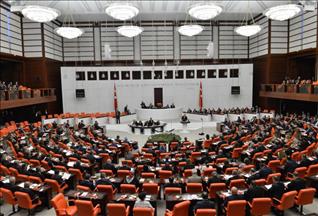
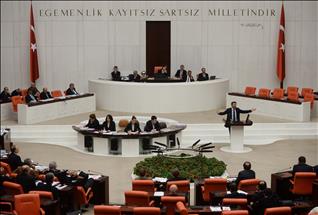
The Turkish parliament’s general assembly approved Friday a part of the new internal security bill after a three-week long intense debate.
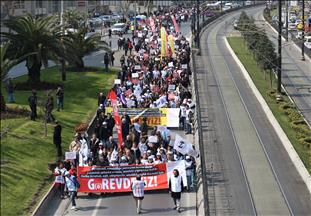
The reform package, which has been debated in parliament and approved bit by bit, criminalizes participation in protests with covered faces and makes the possession of Molotov cocktails punishable with up to five years behind bars. It has been criticized by the opposition for allegedly curbing down individual rights and freedoms.
Discussions on the 132-article bill began on Feb. 17. On Friday, 67 of the 132 articles were approved by the parliament. On Thursday night, 65 articles of the bill were referred back to Turkish parliament's lower committee.
According to the approved parts of the bill, possessing fireworks, Molotov cocktails, iron balls, slingshots and other handmade explosives during demonstrations will now be banned. A person found in possession of such banned items can be jailed between two-and-half years and four years.
Also, protesters now cannot wear any clothing that depicts emblems of banned organizations; similarly no such emblems and symbols can be displayed on placards or banners. The punishment for displaying such illegal symbols is six months to three years in prison.
A protester will also not be allowed to cover his or her face partially or fully during a demonstration. Violators can face between three to five years imprisonment.
Also, all transactions involving the “bonsai,” a cheap, addictive and a potent form of a marijuana-like substance, will be considered as illegal as conducting deals for other banned drugs. The use or selling of illegal drugs within 200 meters around school or military buildings or public cafes is banned and those who break such a rule could face punishment of up to seven and half years imprisonment.
Moreover, security officials will now have enhanced powers. According to the bill, officers will now have the power to search a person, their belongings and private vehicles based on oral instructions by their police chiefs. The person being searched will be informed of the rationale behind such a procedure.
In cases that create an uproar in the society, such as manslaughter, trafficking or sexual abuse, Turkish police will now have the authority to hold a suspect in custody for 24 hours with the approval of the public prosecutor or the deputy governor and under supervision of their superior officers. Security officials can also detain a person for up to 48 hours if he or she attends social events that may lead to a serious disruption of public order or crime.
Also, the bill calls for the shutting down of a police college; students currently enrolled there will be placed at other schools run by the Ministry of National Education. The police vocational high schools will be converted into vocational training centers with the approval of the Interior Ministry.
The parliament has decided to remove Article 36 of the bill, which allowed the dismissal of head of the National Police Academy before the end of the four year in office term. The new president of the police academy will be chosen in 20 days after the bill comes into force. The rest of the academy’s staff will be proposed by the new president and assigned within two months.
Also, the academy’s Security Units Institute will now be converted into Police Chief Training Center.
On Thursday night, parts of the government-backed domestic security bill were sent back to the Turkish parliament's lower committee. Acting parliament speaker, Meral Aksener, announced late Thursday that some 65 articles of the bill were referred back to the committee.
Also Thursday, Selahattin Demirtas, the leader of the pro-Kurdish Peoples’ Democratic Party, or the HDP, dismissed the bill, saying that it was against social peace and the development of democracy in Turkey. "The security bill is a big mistake. It is an incredible, anti-democratic law that will cause distress to people in the street," he said in Ankara.
The security bill came to the table following extensive rioting in Turkey last autumn. Protests in Turkey's southeastern provinces in October 2014 resulted in over 40 deaths that were sparked because of the Turkish government allegedly not doing enough to save the Syrian Kurdish town of Kobani from the terrorist group Daesh.