By Esra Kaymak
DOHA
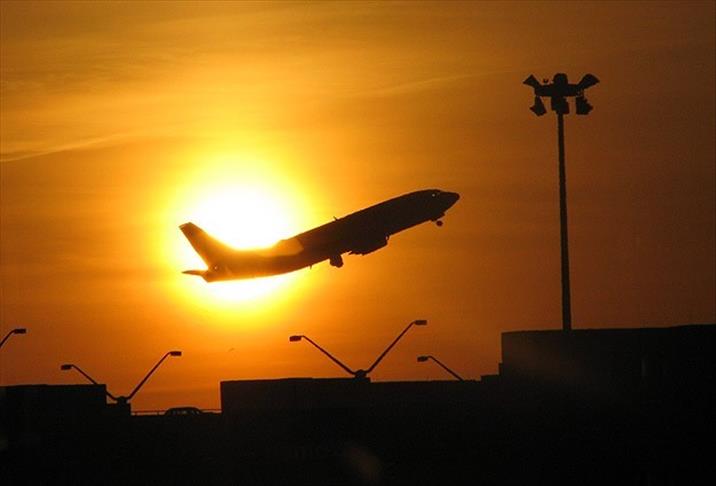
Istanbul is expected to break ground on a third airport on Saturday, amid concern for environmental damage from the loss of seventy lakes which make up Istanbul's fresh water reservoir and which lie in the zone affected by the airport's construction.
Despite these concerns, Turkish Airlines CEO Temel Kotil says the third airport will play a crucial role in making Istanbul a regional hub. Turkish Airlines is one of the fastest growing airline companies, flying currently to 208 international destinations.
"Istanbul will be a strong transit hub, thanks to Turkish Airlines and the third airport. This strength does not exist today, as Ataturk airport is too crowded," Kotil said. "With the new airport and our ongoing codeshare agreements with other national airplane companies, we will have more transit passengers, which would also increase tourists in Turkey."
Asked whether the company was looking for a new celebrity face, with former 'brand ambassadors' including American basketball player Kobe Bryant and world-renowned Argentinian football player Lionel Messi, Kotil stated they were now looking for someone with a connection to Africa, where the "continent was helping Turkish Airlines to grow" with both direct flights to Istanbul and transit flights to Europe and Asia - two regions which are well-served.
Turkish Airlines is one of the fastest growing airline companies, flying currently to 208 international destinations. Yet Istanbul's two airports on its European and Asian sides are insufficient in capacity to host more direct or transit flights.
Kotil emphasized that the new airport would contribute 2.5 billion euro to the Turkish economy each year. 48 million passengers made transit flights in Istanbul in 2013, planned to reach 120 million in 2023 - hundredth anniversary of the founding of the Turkish Republic - and a capacity increase of 25 percent in only 2014's Africa, says Turkish Prime Ministry's office for Public Diplomacy. The new airport will cover an area of 492 hectares. Kotil added Turkish Airlines were waiting on the delivery of 256 more airplanes.
Kotil added that Turkish Airlines had recently added ten new destinations in Africa such as Eritrea and Angola, ranked fourth in the world amongst airlines for varied destinations, and aimed to rank third in 2014.
Kotil noted Qatar's new Hamad airport had eased travel. Qatar is a small country in the Persian Gulf with a population of almost 2.15 million, one of the richest countries in the world with a per capita income of $93,825 - nine times bigger than Turkey.
The new airport will have 165 passenger bridges, four separate terminal buildings connected via rail system, three technical blocks, an airport traffic control tower, eight control towers, six airfields for all kinds of airplanes, sixteen taxi roads, a 6.5 million square meter apron with parking capacity for five hundred airplanes, cargo and general aviation terminal, governmental guest house, a parking garage with capacity for around 70,000 cars, medical aviation center, hotels, fire station and garage centers, prayer rooms, a congress center, power plants and refining and garbage disposal plants.
The new airport is promoted by the Turkish government. It comes with concern over damage to the natural environment. The government plans to plant nearly 1400 hectares of trees, an area three times bigger than the area used for the airport, within three years.
Despite these issues, it's hoped that the third airport will relieve the heavy air traffic in Istanbul and scenes of people waiting for long hours in terminals for delayed international flights will hopefully fade.
www.aa.com.tr/en