ISTANBUL
As Turkey faces into a new year, the nation has been watching one of the largest police operations in its recent history which is reportedly unfolding an organization widely nestled in Turkish state.
Hundreds of police officers were questioned while a number of judiciary members were reshuffled during the operations against a “parallel state,” the name given to a purported pseudo power center within the state which orchestrated a corruption probe targeting high-ranking Turkish officials in Dec. 2013.
Turkish government sources described the probe as a "dirty plot" to topple the administration, organized by a group of police officers and judiciary members who are "taking orders" from Fethullah Gulen, an influential U.S.-based Islamic cleric.
The allegations run from illegal wiretapping to military espionage.
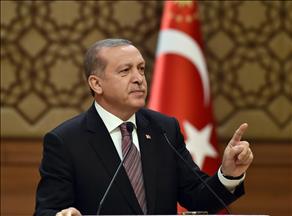
Turkish president Recep Tayyip Erdogan vowed victory over this network in December.
His speech was delivered in Ankara at an awards ceremony of Turkey's science institution, TUBITAK, which Erdogan said had been cleared of members of this parallel structure.
The president had suggested that “parallel” elements in TUBITAK had produced “crypto phones” which were compromised and issued them to Turkish officials.
Talking in October, Science and Industry Minister Fikri Isik said that former president Abdullah Gul was also among the high-ranking officials whose phone calls were wiretapped.
Isik added that the chief public prosecutor's office was running an investigation into the alleged wiretapping.
He said that the wiretappings were organized in cooperation among state institutions, from TUBITAK to the Presidency of Telecommunication and Communication.
The minister claimed that the telecommunication presidency had the infrastructure to enable such wiretapping and that officials within the body had abused their powers, suggesting that some were also linked with the Gulen movement.
Drawing links between different groups, Isik said that eavesdropping would not be possible if “the one who programs crypto phones, the one wiretapping at the telecommunication presidency“ were not tied to parallel elements in the police.
The telecommunication presidency is the body in Turkey which issues permissions for legal wiretapping for law enforcement.
An internal investigation by the telecommunication presidency last March revealed that more than 500,000 people's phone calls in 2012 and 2013 have been wiretapped, including via illegal means, while records earlier than 2012 had been deleted.
The alleged illegal wiretappings did not just target Turkish officials, but also military members who were working on projects, names close to opposition parties and TUBITAK staff as well.
On Dec. 12, an Ankara high criminal court agreed to hear a case over "military spying" by obtaining classified information of state institutes.
Victims in this case included: an army member who worked on military projects and former high officials from TUBITAK related to the same schemes; former general secretary of the opposition Nationalist Movement Party; and former Republican People's Party Istanbul chairman.
The prosecution has named several high-ranking police officers, including the intelligence head of Turkey’s Security General Directorate, Omer Altiparmak.
Ongoing operations
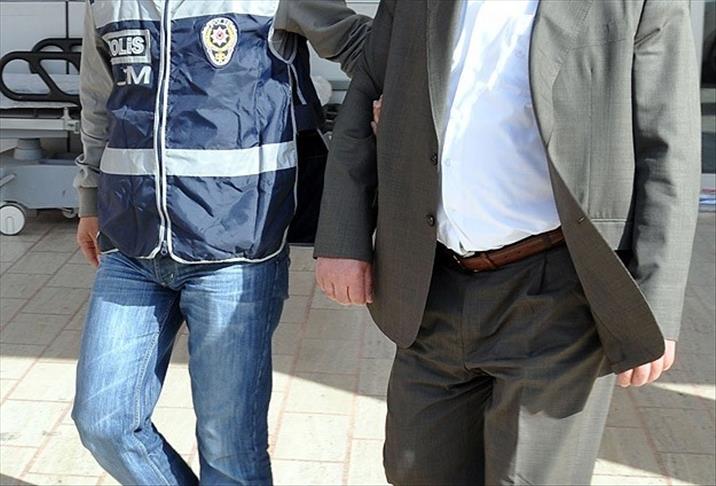
Turkish security forces continued operations against other police for alleged participation in an organization that illegally wiretapped officials and conducted espionage.
Operations on Jan. 5 centered in southeastern Turkey. Two operations, based in Gaziantep and Sanliurfa – spanning more than 10 provinces – saw more than 30 police officers detained.
On Jan. 2, 13 former officials – including then-premier Recep Tayyip Erdogan’s former top bodyguard – appeared in court on charges of placing electronic bugs to illegally wiretap Erdogan’s office.
One operation on Dec. 14 attracted widespread international interest as it included two media outlet managers – Zaman newspaper’s editor-in-chief Ekrem Dumanli and Samanyolu Broadcasting Group's chairman Hidayet Karaca – both affiliated with the Gulen movement.
Karaca and three former senior police officers were arrested, while Dumanli was released pending trial.
Tufan Erguder, Ertan Ercikti and Mustafa Kilicarslan were three senior police officers among those arrested, based on their role in an operation which targeted a religious group between 2009 and 2010.
This wave of arrests started on July 22 last year when an Istanbul-based operation was launched, focusing on charges of espionage and illegal wiretapping. Over 100 police officers were detained.
High-profile suspects included Istanbul deputy police chief Ali Fuat Yilmazer, former anti-terror branch chief, Yurt Atayun and former intelligence branch head, Hayati Basdag.
On July 31, Interior Ministry inspectors released a report that said illegal recording was viewed as "systematic, planned and organized."
The report included testimonies from journalists, judges, politicians and businessmen who were illegally recorded.
In three Istanbul-based cases so far, including that of Dec.14, some 48 people, who are mainly high-profile police officers, are still facing prosecution.
On Sept. 1, 2014 a court dropped charges against 96 suspects from the Dec. 25, 2013 probe in a ruling, which said that the original graft case prosecutors had aimed to topple the government – itself prompting a judicial investigation.
Moreover, on Sept. 11, the Interior Ministry dismissed 11 police officers; including former police chief Omer Kose.
Interior Minister, Efkan Ala, announced in November that the total number of dismissed police had reached 155, while 1,181 others had faced disciplinary action.
Many other provinces in Turkey saw similar operations against what the government calls a "parallel structure" within the state, including southern provinces of Antalya, Mersin, eastern Erzurum and western Kocaeli.
In October, 51 arrested police officers were moved to prison in Silivri Penal Institution Campus in Istanbul – where cases against military members for allegedly attempting a coup had been tried in the past.