ABIDJAN
Ivory Coast was knocked out of the 2014 World Cup on Tuesday night after a painful injury-time 2-1 loss to Greece in Fortaleza in Brazil, plunging the entire West African nation into a mood of despondency.
Commercial capital Abidjan quickly turned into a ghost town after the match, with beer parlors and nightclubs shutting their doors and drivers parking their taxis to go home in frustration.
"It is a black Tuesday for Ivory Coast. Everybody is going to bed earlier than usual due to deep frustrations caused by the loss of the Elephants and their elimination from the World Cup," Aristide Doudou, a former lawmaker, told Anadolu Agency at his home in Abidjan's Yopougon district.
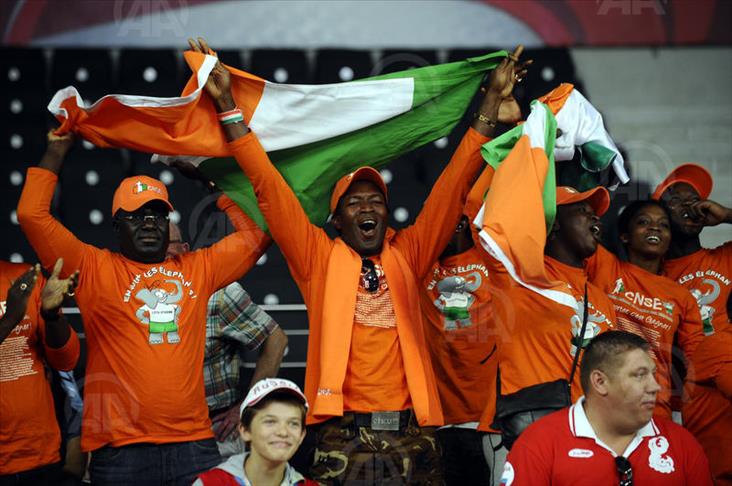
"I really feel sad for my people – men, women and children – who had bought jerseys, caps, flags, trumpets and other gadgets to support the national team, and are now in tears," he said.
"The team has broken their hearts once again; you can see and feel the pain on the faces of almost every passerby," he added.
With three points ahead of Tuesday's encounter, Ivory Coast could have sailed through to the World Cup knockout stage – for the first time – with a draw against Greece. But a lackluster first-half performance forced the Elephants to concede a goal in the 42nd minute through Andreas Samaris.
"The problem is our players refused to kick the ball in the first half. They were rigid, slow and lacked inspiration. I was asking myself if they were conscious of the fact that they would crash out if they eventually lost to Greece and break the hearts of millions of Ivorians," Cynthia Doukoure, a doctor at Abidjan's University Teaching Hospital in Treichville, told AA.
However, many people had expected the Didier Drogba-led outfit to come from behind in the second half to snatch the much-awaited point and book a place in the next round.
When the team began finding its footing, with strikes from the likes of Gervinho and Serge Aurier hitting the target several times, hopeful Ivorians started cheering.
"My wife, kids and myself were screaming to every scary action the Ivorian players were displaying in front of Greece's goal. We had strong hope and faith that the equalizer would come," Kevin Golou, a 59-year-old father of five, said.
The equalizer did eventually come – in the 74th minute through Wilfried Bony – and was greeted by a roar of applause citywide. Smiles replaced stern faces; drumbeats resumed and could be heard far and near.
But although the entire nation had resigned itself to a passable 1-1 draw, which would have meant qualification to the round of 16 at fulltime, the unexpected happened three minutes into added time.
Greece were awarded a penalty, which was successfully converted by Georgios Samaras, sealing their 2-1 win and derailing the Ivorian team's expected qualification to the knockout round.
"It was like I was stabbed with a knife in my back when the referee gave Greece that penalty... It was a pure misjudgment. We missed it all, just seconds before claiming a historic qualification," Kone Issiaka, an interior decorator, told AA.
Ivory Coast coach, Frenchman Sabri Lamouchi, has since announced his resignation. But locals are still calling for Football Federation President Sidy Diallo to quit as well, in order to start again with a clean slate.
"I think the way forward is to disband the team and set up a new one with younger players. Drogba, Didier Zokora, Kolo Toure, Salomon Kalou and a few others should resign from the team to allow others to have a chance," Issiaka said.
By Kingsley Kobo
englishnews@aa.com.tr
www.aa.com.tr/en