- October 2025 military takeover has raised political and financing risks for graphite projects, but production has continued, with dominant market response being ‘diversification rather than disengagement,’ expert says- EU and US rules and US-China trade tensions are boosting the appeal of Madagascan graphite for Western supply chains, but the island sees limited value addition, according to SoyocakISTANBUL
In the quiet, humming guts of nearly every electric car, a black, lustrous mineral does the heavy lifting.
Natural graphite, the carbon that forms the battery’s negative electrode, absorbs and releases lithium ions, storing the electricity that powers the vehicle.
Though it accounts for nearly a third of a battery’s weight, it contributes only a fraction of its climate footprint, a gap that has become critical as new carbon rules hit automakers.
Madagascar’s share of global natural graphite has risen from about 2% in 2018 to roughly 12% today, as new industrial mines ramp up and African output more than doubles to around 559,000 tons by 2029, according to SFA (Oxford), a global consultancy on critical minerals.
China still accounts for roughly 77% of global mine production and an even larger share of processing, and in 2023 introduced export licenses for high-purity synthetic and natural graphite, requiring exporters to specify end users and applications.
In this context, the growing supply of high-quality, lower-carbon graphite from the Indian Ocean island of Madagascar, outside Chinese control, is emerging as a key alternative for automakers navigating EU and US battery regulations.
A closer look at Madagascar’s graphite industry
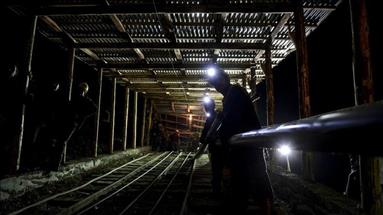
For years, graphite mining in Madagascar was mostly small-scale and scattered, with basic operations producing material mainly for industrial uses, not high-tech applications, Ismet Soyocak, a critical minerals expert at SFA, told Anadolu.
In the last 15 years, the booming global demand for batteries has transformed the industry, Soyocak explained. Foreign companies from Canada, Australia, Britain, and India have bought up mining rights, invested in modern equipment and exploration, and built advanced processing plants that can upgrade raw graphite into high-purity flake suitable for battery anodes and other premium uses.
He said graphite projects are moving away from just exporting raw graphite and are instead building projects that include more processing steps.
Madagascar’s graphite industry is led by foreign-listed companies supplying the battery market.
The largest, Molo in the south, is run by Canadian-listed NextSource Materials. On the east coast, Indian-listed Tirupati Graphite operates the Sahamamy and Vatomina mines, while Australian-listed Greenwing Resources owns the Graphmada project, currently on hold. In the southwest, the Maniry project, run by Australian-listed Evion Group, has EU strategic status to accelerate approvals and funding.
New EU rules are also changing how graphite is sourced and tracked, the expert noted.
Companies must now demonstrate that natural graphite meets strict environmental, social, and labor standards across the supply chain and report their full carbon footprint, pushing Madagascar producers to strengthen practices, improve worker protections, and adopt better traceability despite limited local oversight.
Together, these projects mark a “progression from extraction-focused investment to value chain-oriented strategies, aligning Madagascan mines with Western efforts to build non-Chinese midstream capacity,” according to Soyocak.
Post-coup outlook for Madagascar’s graphite sector
Madagascar’s October 2025 military takeover, triggered by protests over electricity shortages, poverty, and alleged corruption, sharply raised political risks for graphite projects, including uncertainty over contracts, taxes, royalties, and potential resource-nationalist measures.
Publicly, operators like NextSource report uninterrupted Molo mine operations, ongoing shipments, no investor pullouts, and continued financing with tougher terms such as political risk insurance, Soyocak said.
The October coup has heightened country risk and complicated Western funding, he explained, while the EU and US due diligence rules on lithium, graphite, cobalt, and nickel add compliance costs and supply-chain obligations.
“These compliance costs are justified by responsible sourcing objectives but can slow project development compared with competitors that focus primarily on domestic or less regulated markets,” he noted.
“The dominant response so far has been diversification rather than disengagement,” as investors balance exposures across Mozambique, Tanzania, and Madagascar and press Malagasy authorities and multilateral partners to guarantee that existing contracts and export flows are respected.
US policies, Chinese controls shape future economics of Madagascar’s graphite
According to the United States Geological Survey (USGS) Mineral Commodity Summaries in 2024, the US produced no natural graphite in 2023, consumed around 76,000 tons, and imported about 84,000 tons, with 42% coming from China, 16% from Mexico, 15% from Canada, and 12% from Madagascar.
“This confirms that Madagascar is already one of the top non-Chinese suppliers to the US market,” Soyocak said.
There is, however, no public evidence that a specific US government financing package exists for Madagascan graphite projects, he explained, unlike the support the US International Development Finance Corporation gave Mozambique’s Balama mine and US processing.
The US policy toward Madagascar works through broader measures rather than direct financing, designating graphite a critical mineral and using the Inflation Reduction Act to incentivize domestic and allied processing while limiting electric vehicle credits for minerals from Foreign Entities of Concern, according to the expert.
In addition, investment and trade policies favor natural graphite producers outside China, with raw imports to the US remaining duty-free, while Chinese synthetic and processed graphite face stricter scrutiny and higher tariffs, boosting the appeal of Madagascan supply for the US and allied plants.
He said the US Commerce Department’s July 2025 decision to impose a preliminary 93.5% anti-dumping duty on Chinese anode-grade graphite, which could lift total tariffs on some products to about 160%, sharply raises landed costs in the US and improves the economics for Western miners with assets in Madagascar to supply non-Chinese anode plants, since Chinese material now carries a “substantial price penalty” while raw natural graphite imports remain duty-free.
The US tariffs and subsidies favor Western-aligned supply chains linked to places like Madagascar and weaken Chinese processors’ advantage in the US market, he explained.
“Chinese policy has moved in the opposite direction on the export side,” the expert noted, citing the 2023 export licensing requirements.
“These controls underscore the strategic value of graphite to China and increase the perceived risk of relying on Chinese midstream capacity,” he added.
Hurdles facing Western firms amid China’s grip
“Western firms in Madagascar face structural challenges that stem primarily from China’s dominance of the graphite value chain,” Soyocak said.
He said Chinese companies have processing expertise, established customer networks, and integrated mine-to-anode operations that “Western miners cannot yet match.”
“When negotiating for offtake or investment in Madagascan projects, Chinese buyers can offer guaranteed conversion into battery-grade material at established plants, while Western groups still need to build or expand non-Chinese processing capacity,” the expert said.
He said access to capital and risk tolerance also distinguish Chinese and Western miners, with state-backed Chinese firms able to invest in riskier jurisdictions, while Western juniors and mid-tiers rely on commercial markets sensitive to prices and political risks.
“China’s control over graphite processing significantly constrains Madagascar’s ability to capture value,” said the expert.
He said Madagascan concentrate is mostly exported for processing in China or aligned hubs, with high-value steps such as purification, shaping, coating, and cell integration handled abroad.
“Madagascar mainly earns mine gate revenues and does not develop a domestic cluster of processing expertise and technology.”
The EU and US rules and US-China trade tensions are driving non-Chinese graphite processing, with the EU Battery Regulation mandating carbon reporting and due diligence, as natural graphite from Madagascar offers lower carbon dioxide emissions, Soyocak said.
He added that projects like NextSource’s anode facility and Evion’s planned plant in Germany are built around Madagascan feedstock, despite being located in third countries.
“Over time, this rivalry could support the development of more local or regional processing in or near Madagascar, provided domestic governance and infrastructure constraints are addressed,” he said.
“There is a credible scenario” in which the EU and US critical minerals programs fund in-country or nearby processing of Madagascan graphite, according to the expert.
“At present, however, the bulk of value addition still occurs outside Madagascar, and the country’s main leverage lies in its growing share of high-quality natural graphite supply.”