Anadolu Ajansı © 2026


By Rafiu Ajakaye
LAGOS
Daunting tasks await Nigeria's president-elect, Muhammadu Buhari, when he assumes office on May 29 – from dealing with a perceived culture of official corruption and fixing the country's economic woes to defeating the Boko Haram insurgency in the restive northeast.
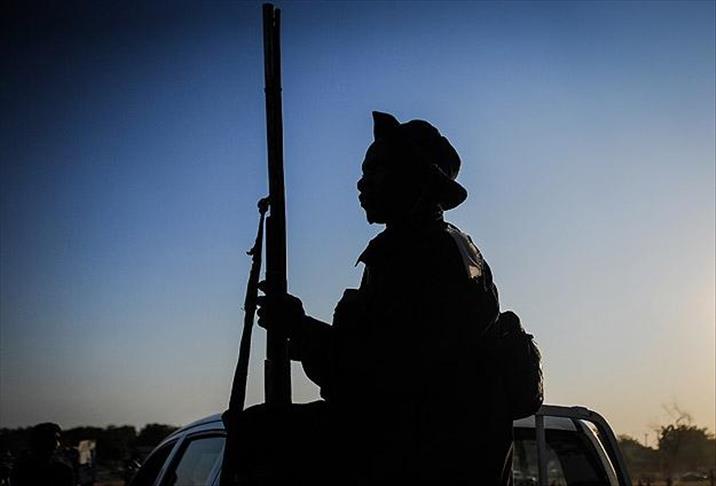
But analysts are also drawing attention to a possible return of militancy to the oil-rich delta region.
Last week, a number of militants addressed the press to warn against tampering with the country's amnesty program, which, they said, had brought stability to the once-volatile region.
It is feared that former militant commanders, now excessively rich and better connected, could cause serious upsets in the region if their interests are threatened.
This comes in reaction to calls to scrap the amnesty program, unveiled in 2009 by then-President Umaru Yar'Adua to end militancy in the delta region.
At the height of the violence in the region between 2006 and 2009, Nigeria's daily oil production – and revenue – was cut by more than half, leading to a nationwide financial crisis.
"Daily production decreased to 900,000 barrels per day from 2.5 million barrels per day," recalled Otive Igbuzor, a leading civil right activist.
Not to mention the cost in human lives and the wanton destruction of the region's infrastructure.
Under the multibillion-naira amnesty program, thousands of former militants are paid monthly salaries, trained in various vocations and sent to school abroad.
The monthly payouts accounted for at least 63 billion naira in the country's 2014 budget.
Some commanders are rewarded with juicy government contracts, like providing security for oil installations in the creek.
Shehu Sani, a prominent civil rights activist and a senator-elect, wants the amnesty program scrapped.
Critics say the program pampers those who once took up arms against the Nigerian state.
The program, they argue, has not addressed the problem of marginalization, underdevelopment and environmental degradation associated with oil-dredging activities.
The incoming Buhari government is expected to have an official position on the program after assuming office.
The former military ruler has already assigned his transition committee to scrutinize several tip issues – including the Delta amnesty – and advice on what his government policies should be.
Incomprehensive
Igbuzor, who is an executive director at the African Center for Leadership Strategy and Development, dismissed the argument that the amnesty program had not achieved anything.
"It will be sheer ignorance to say the amnesty program only served to enrich 'some militants to the tune of several billions,'" he told Anadolu Agency.
"There is a big problem in this country. We either practice selective amnesia or we deliberately forget and rewrite history," said Igbuzor.
He recalled that, when the amnesty program was introduced, the federal government could not access the Niger Delta's oil resources.
"The gain for Nigeria from the amnesty program is therefore monumental," he insisted.
Nigeria produces a maximum of 2.5 million barrels of crude oil daily, according to official figure of the Nigerian National Petroleum Corporation. All that comes from the Niger Delta.
Igbuzor said the government could not "arbitrarily" stop the monthly payouts to the militants.
"Ex-militants must be settled in jobs after training or be in business before the stoppage of payments," he asserted.
But Ledum Mitee, a renowned Niger Delta activist and chairman of the Niger Delta Technical Committee that recommended the amnesty program, believes there is a need to modify the initiative as it is currently implemented.
"The version of what we recommended differs from what was implemented," Mitee told Anadolu Agency. "We saw the amnesty as part of the process and not an end in itself."
"What seems to have happened has been just some appeasement and payment of money, which I think is not sustainable in the long term," he said.
"Apart from the fact of its unsustainability is the fact it creates a worrying culture [in which] people can earn money without work. I think a thorough review of the program is required," he said.
The Delta activist added: "It would have been different if you had people who repented genuinely and you asked them to look for a job and then they were paid for the job they were doing."
"That's different from just giving them handouts at the end of the month that is not tied to any productive venture," he noted.
The activist is opposed to appeasing only the violent segment of the community.
"If you exclude those who do not carry arms, you are indirectly saying that you only reward those who carry arms and thus you create a very misplaced role model out of the militants you have rewarded," he told Anadolu Agency.
While Mitee acknowledges the flaws in the implementation of the amnesty initiative, he does not supporting scraping it.
"I call for a review to tie payments to actual work," he insisted.
Address root causes
Many experts believe the incoming Buhari administration will need to chart a new course on the delta region to address the root causes of the militancy.
"What I seem to have seen is that we recommended a holistic treatment of the issues in the Niger Delta: it covers infrastructure, human capital development and several other areas," Mittee told Anadolu Agency.
"Now, it is wrong in my view to think that the problem of the Niger Delta was militancy," he insisted.
"The problem was of development, environmental pollution and marginalization. Now, militancy was what I would call an extreme expression of people's reaction to that state of affairs," said the activist.
He suggested it was like someone having malaria and later developing headache.
"If you just teat the headache and leave the problem itself, which is malaria, it cannot work," added the prominent activist.
Nnimmo Bassey, Nigeria's leading environment rights activist and executive director at Health of Mother Earth Foundation, agrees.
"It is doubtful if the amnesty program addressed the fundamental roots for conflicts in the Niger Delta," he told Anadolu Agency.
He insists that all Niger Delta issues preceding the declaration of the amnesty remain - except the militancy.
Bassey cited a 1958 report which described the Niger Delta as poor, backward and neglected.
"If that report were to be written today it would have added 'heavily polluted zone where life is truly short and brutish.' Life expectancy here is merely 41 years," he lamented.
"The Niger Delta is still a neglected area," insisted the environment rights activist.
"The incoming administration should take a broad and holistic approach, including focusing critically on cleaning up the accumulated mess in the region," said Bassey.
"Youth training and empowerment programs are essential, not just in the Niger Delta, but across the nation," he added. "Equipped youths are our best hopes for a secure future."
Igbuzor, the civil right activist, agrees.
He contended that issues like resource control, marginalization, the lack of infrastructure and poverty - that had triggered the militancy - have not been addressed.
"As a new administration, they should get the status report and examine the challenges of the program and the way forward," Igbuzor told Anadolu Agency.
"The major area that needs review is the rehabilitation and re-integration and how it can be linked with other programs of the region," he said. "An important aspect is what to do with peaceful youth in the region who has not been involved in militancy."
news_share_descriptionsubscription_contact

contact_the_ombudsman
is_there_an_error_in_this_story