By Kasim Ileri
WASHINGTON
Reports of ties between Houthi rebels in Yemen and Iran are concerning, the Obama administration said Friday.
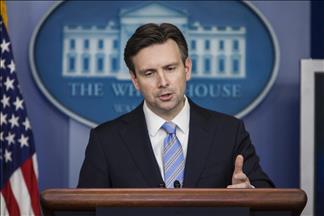
Iran’s influence on the rebels – which White House press secretary Josh Earnest characterized as a sort of "command-and-control influence" – doesn't appear to be to the extent as it has on Hezbollah.
Since a strong Houthi push earlier this week forced the resignation of the Yemeni government, U.S. officials have emphasized its counterterrorism strategy against al-Qaeda in the Arab Peninsula, also known as AQAP and the Yemeni al-Qaeda.
"This administration remains committed to pursuing a counterterrorism strategy against AQAP to protect the American people and our interests," Earnest said Friday.
But Houthi rebels are also a concern for the U.S. because of its anti-American sentiments and its covert relationship with Iran, and the U.S. considers the Houthis "a legitimate political constituency in Yemen," and a group that shares similar concerns toward AQAP.
Enmity between Houthis and AQAP give rise to the question of whether or not the U.S. will cooperate with Houthi rebels to fight a common enemy.
State Department spokeswoman Jen Psaki acknowledged that the U.S. and Houthis have a shared concern in respect to AQAP but would not say if there has been any meeting with Houthi leaders on the issue of cooperation.
Psaki even implied that having shared concerns about the al-Qaeda affiliate group doesn't mean the U.S. would cooperate with Houthis but she urged Houthis to be a part of a peaceful transition process while condemning their use of violence.
Pentagon spokesperson Rear Adm. John Kirby said Friday that as the future of the power structure in Yemen is not yet clear, the U.S. would adopt a "wait-see" strategy before defining a new counterterrorism strategy.
As the U.S.'s main concern in Yemen as well as the region is to secure its counterterrorism strategy, it would like to see a strong central government in the war torn country.
"We have made to try to invest in the stability of central governments so that they can serve to be an effective partner with us as we try to battle terrorists on the ground in their country," said Earnest.
Comparing the U.S’s search for partners in the Iraqi central government following the surge by ISIL, he said the Obama administration made similar investments in the central government in Yemen to make "good partners with the United States on the ground in Yemen," while adding that the U.S.’s counterterrorism partnership efforts continue in Yemen.
Psaki also said that Abdu Rabbuh Mansour Hadi remains the president and it would be up to the Yemeni people to determine the future.
The Yemeni Parliament will hold an emergency session Sunday to decide if to accept President Hadi's resignation that was submitted this week.
If accepted, the Speaker of Parliament will become acting president until an election can be scheduled in the next 60 days.
If a majority vote fails to accept Hadi's resignation, he will remain president for an additional 90 days. If Hadi submits his resignation again in 90 days, parliament must accept it.