By Ilgin Karlidag
STOCKHOLM
Sweden's Social Democrats are set to regain power in the country's parliamentary elections, having spent eight years in opposition.
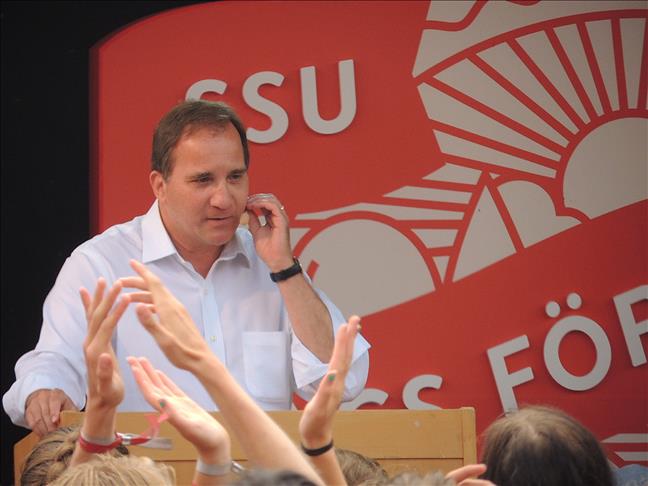
With votes counted in more than 80 percent of the districts in Sweden on Sunday, the left-leaning party’s leader Stefan Lofven was braced to become the new prime minister, taking over power from the center-right Moderates party leader Fredrik Reinfeldt, who took office in 2006.
The Social Democrats had garnered more than 31 percent of the vote, with the Moderates on 23 percent on Sunday night.
Reinfeldt’s government has not only cut corporate and income taxes since coming to power, but also taxes on wealth and minimized welfare benefits.
Critics say the policies have affected the government-funded healthcare system and education.
Concerns growing
Sarah Nader, a foreign-origin Swedish citizen currently studying for a master’s degree at Uppsala University, said: “The Moderate Party cut taxes to create more jobs by making it easier for companies to hire more people.
“But there are still concerns as to how this affects health, elderly care and retirement.”
The Social Democrats goal is for Sweden to have the lowest unemployment in the European Union by 2020.
The party argues that this can be done without cutting taxes and privatizing companies in Sweden.
The Social Democrats are in coalition with the Left Party, which had 5.7 percent of the votes and the Greens on 6.7 percent.
Increased popularity
The left-leaning coalition gained a total of 43.6 percent altogether, an unstoppable lead over the center-right alliance parties – the Moderates, the Christian Democrats, the Center Party and the Liberal People’s Party.
The far-right and anti-immigration Sweden Democrats (SD) saw a victory in the polls, holding 13 percent of the votes, more than doubling its support since the last parliamentary elections in 2010 when it won 5.7 percent.
Experts claim that one of the reasons behind the SD’s increased popularity is its stance against immigration in Sweden, which is expecting 80,000 asylum seekers in 2014, according to the migration board.
The SD has vowed to cut immigration heavily, claiming this would save the Swedish government 151 billion Swedish kronor ($21.9 billion) within four years.
By reforming itself and mobilizing public opinion against immigration, the SD has made it possible for people who were previously against racism to vote for them, says Andreas Johansson Heino, a political scientist and expert on integration at Gothenburg University.
www.aa.com.tr/en