31 March 2016•Update: 04 April 2016
By Alyssa McMurtry and Michael Sercan Daventry
MADRID
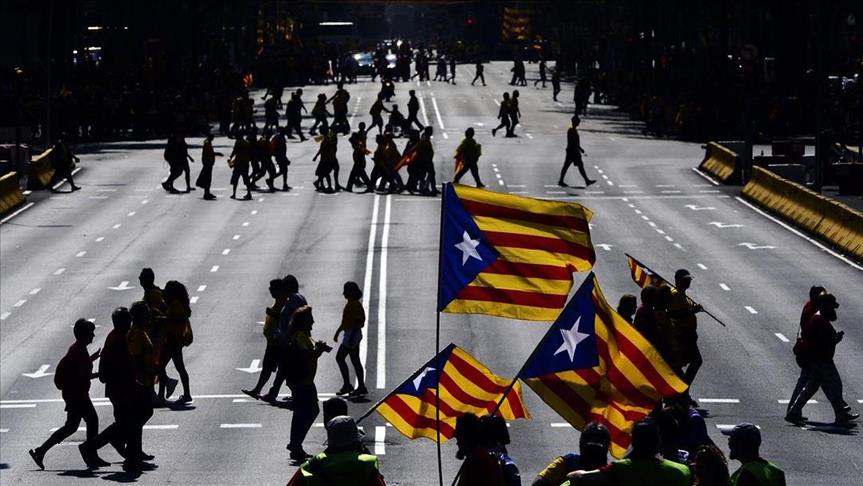
Muslim groups and teachers expressed grave concern over new directives in Catalonia meant to help teachers spot and report potential Islamic terrorists in the classroom.
“We think this is a sensationalist and stigmatizing measure that is going to generate more Islamophobia and more marginalization and stigma for these young people,” Mohamed Said Alilech, head of the Association of Young Muslims in Spain, told Anadolu Agency.
His association, along with the Spanish Federation of Islamic Religious Entities (FEERI), has come out against the recently announced directives. Joining their rejection are major teachers unions throughout Catalonia, insisting that identifying terrorists goes beyond educators’ duty and training. Two major parents’ associations, CEAPA and CONCAPA, have also voiced concerns.
“We don’t want political schools and we don’t want there to be a witch hunt,” Nicolás Fernández Guisado, head of the Anpe teachers’ union, told leading Spanish daily El Mundo. “The school is a place for learning, for coexistence, and education in values, and absolutely, it all has to come from inclusive education.”
Said Alilech pointed to the dangers of measures targeting the Muslim minority, and said that schools could have a role in battling radicalization in the community, but through education instead of security measures.
“The effects could be counterproductive…Those who are recruiting young people on social networks for terrorism work under the pretext that Muslims are oppressed and humiliated in their own societies for being Muslim, and this feeds into that narrative,” he said.
In the nearly finalized directives, Spanish media report that teachers will be asked to look for behavioral changes in students, such as a student adopting religious clothing, refusing to participate in activities for religious motives, or becoming more introverted. If they notice suspicious activity, they are to report the behavior to the authorities.
Joan Maria Piqué, director of foreign media communications of the Catalan government, told Anadolu Agency that he could not confirm the specifics of the directives until they are finalized and made public. He said that they aren’t expected for at least a month.
“There are still several points still up in the air…They will be guidelines that benefit from the best patterns and practices we know, compiled by experts on the subject,” said Piqué.
“No one is asking teachers to act as police officers.”
Although details of the directives are vague, Elena Arigita, professor of political science at the University of Granada, told Anadolu Agency that even the timing of the announcement is worrying. The first hints of the program came from Catalan’s interior minister after last November’s Paris attacks, and the more recent confirmation was made on Saturday, days after the Brussels attacks, by the education minister.
“The announcement contributes to a climate of fear, as after the terrorist attacks we witnessed a sharp rise in Islamophobic attitudes on social media in Spain and throughout Europe,” said Arigita.
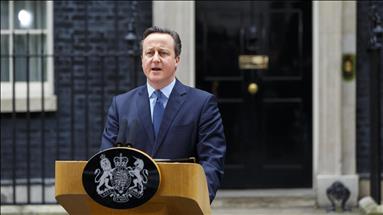
Arigita argued that the protocol calls to mind Britain’s controversial Prevent program.
Teachers in the UK are required by the authorities to report any signs of extremism. This government anti-radicalization strategy places a legal duty on schools and colleges to “prevent people from being drawn into terrorism”. But the measures have been criticized by teachers for shutting down open debate among students.
On Sunday, Britain’s National Union of Teachers voted at its annual conference for the strategy to be withdrawn from educational establishments.
Speaking after the vote, union leader Christine Blower said: “Evidence shows that grooming by extremist groups happens mainly on social media sites, not on school premises. Schools’ best contribution to countering any behavior that could be a problem is by encouraging discussion”.
The intended aim of the Catalan authorities is to prevent terrorism, report local media, and to avoid cases like that of Bilal Hadif, one of the terrorists responsible for the Paris attacks. According to Belgian newspaper De Morgen, the principal of the school the terrorist attended tried to alert the Belgian authorities to his radicalization, to no avail.
Piqué told Anadolu Agency that even without the program in place, teachers can “of course go to the police now with anything that catches their eye.”
In Catalonia, the approximately 75,800 Muslim students account for around 5 percent of the student population, according to a 2015 study by the Union of Islamic Communities in Spain (Ucide) and the Andalusi Observatory.
A recent report by El Cano Institute suggests that Catalonia is the most active region in peninsular Spain for Daesh or al-Qaeda-type terrorists.
Spain’s terrorism alert level has been at level four out of five since last June, after a Spanish hotel was attacked in Tunisia. This “high level” entails increased surveillance, vigilance, and police presence around suspected terrorists.