Esra Kaymak
17 February 2016•Update: 18 February 2016
By Esra Kaymak Avci
WASHINGTON
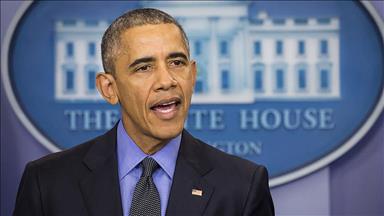
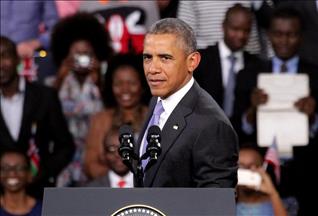
The U.S. will continue to travel wherever international law allows, including the South China Sea, President Barack Obama said Tuesday.
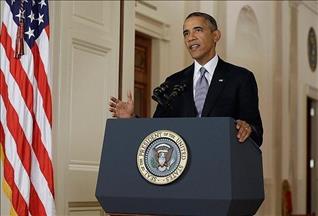
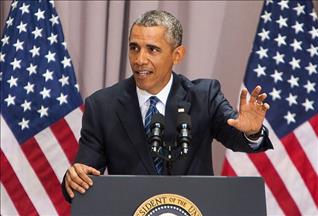
At a press briefing after at the end of the summit of the Association of Southeast Asian Nations (ASEAN) in California, Obama said the group discussed the need for "tangible steps" in the South China Sea to lower tensions, including a halt to further reclamation and new construction and militarization in disputed areas.
"Freedom of navigation must be upheld, and lawful commerce should not be impeded. I reiterated that the United States will continue to fly, sail and operate wherever international law allows, and we will support the right of all countries to do the same," Obama said.
He emphasized that U.S. foreign policy "rebalance" to the Asia-Pacific region, including Southeast Asia, would continue to be a foreign policy priority during his presidency.
In May, Obama will visit Vietnam for the first time during his presidency, he said, and would become the first American president to visit Laos as it hosts the East Asia Summit in September.
In a joint statement following the two-day meeting, the 10-member group reaffirmed "mutual respect for the sovereignty, territorial integrity, equality and political independence of all nations by firmly upholding the principles and purposes of the Charter of the United Nations, the ASEAN Charter and international law", according to White House.
China claims historical rights over all of the South China Sea, but two of ASEAN members, the Philippines and Vietnam, are involved in territorial disputes with China over islands and reefs in the sea.
Leaders from the Philippines and Vietnam want U.S. guarantees on security in the region. China has built man-made islands on seven reefs in the sea -- a move that has sparked tensions and triggered concerns among several nations, including the U.S.
Other ASEAN members, however, have hinted that they do not want to anger China with U.S. actions.
Since last October, two U.S. warships have sailed near Chinese claimed features in what Washington says are "freedom-of-navigation operations". Beijing has called the moves "provocative".