WASHINGTON
The Obama administration on Monday dismissed Israeli Prime Minister Benjamin Netanyahu’s backtrack on controversial statements he made during the run-up to Israel’s parliamentary elections last week.
During last-minute campaigning for Israel’s right-wing vote, Netanyahu said there would be no Palestinian state as long as he remained Israel’s premier.
The White House criticized the stunning public renouncement of peace efforts, saying Washington would have to reevaluate its own position.
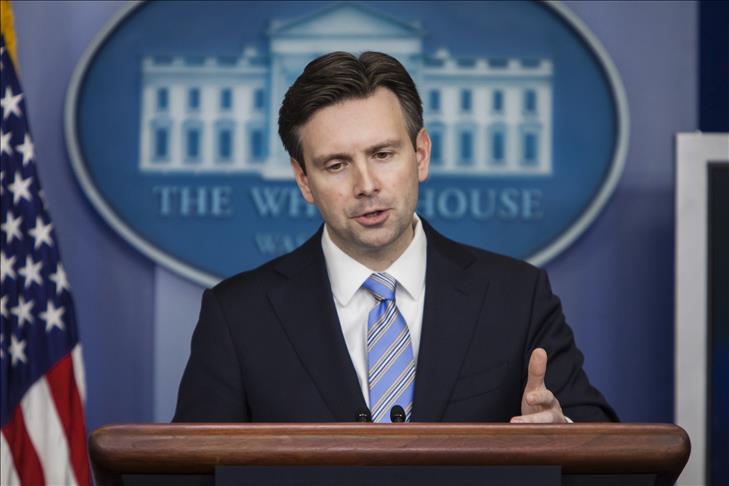
“The statements that we have made over the last week about the need to reevaluate U.S. policy is actually predicated on Prime Minister Netanyahu's comments that legitimately call into question his commitment to a two-state solution,” White House press secretary Josh Earnest told reporters.
“Now there's legitimate doubt about the commitment of our ally in those negotiations to participating in those talks. So it certainly calls into question what our policy can be if our ally is, at best, reluctant to participate in those conversations,” he said.
In a sharp reversal of those comments, Netanyahu told NBC News after the polls concluded that he wants a “sustainable, peaceful two-state solution,” but said that “circumstances have to change” for that to be accomplished.
“I think what we're looking for now are actions and policies that demonstrate genuine commitment to a two-state solution, not more words. So that's what we'll be looking for and we'll see what the path forward looks like,” State Department spokeswoman Marie Harf told reporters.
She denied media reports that the U.S. did not attend a UN meeting in Geneva as a policy change away from the U.S.'s shielding of Israel at the international body.
"We do not participate because we remain deeply troubled by the Human Rights Council's stand-alone agenda item directed against Israel, and by the many repetitive and one-sided resolutions under that agenda item," Harf said, noting that Monday's absence was not the first.
"We're not going to let Israel be singled out by the international community unfairly. We will stand up for them in the international community, absolutely. That's something we believe very deeply in," she added.
Netanyahu apologized earlier Monday for remarks he made against Israel's Arab minority as part of his party’s campaign for the latest Knesset election.
"I know that the things I said a few days ago hurt some citizens in Israel, the Arab Israeli citizens," Netanyahu said during a meeting with representatives of minority communities in Israel on Monday, according to the Jerusalem Post.
"This was not my intention and I am sorry," he said.
Earnest said “it certainly seems appropriate for him to make that acknowledgement.”
In controversial statements during last week's election, Netanyahu said, “The right-wing government is in danger. Arab voters are going en masse to the polls. Left-wing NGOs are bringing them on buses.”
Netanyahu's right-wing Likud Party won 30 seats in the Knesset election, while its closest rival, the Zionist Union Party, won 24 seats.
Netanyahu has won the support of 67 Knesset members to form the next government.