By Alex Jensen
SEOUL
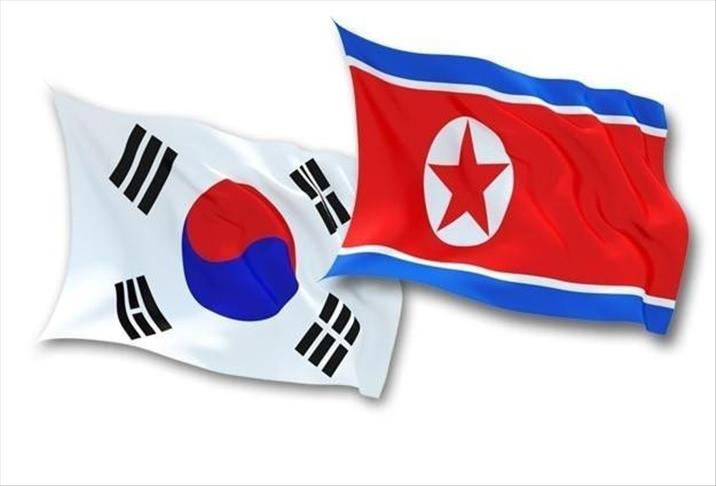
The atmosphere on the Korean Peninsula remained tense amid ongoing Seoul-Pyongyang talks Sunday, as more than 50 submarines from the North could not be accounted for by the South.
"Seventy percent of North Korea's submarines left their bases, and their locations are not confirmed," a South Korean military official revealed to reporters.
Coupled with a doubling of the North's artillery capabilities at the inter-Korean border, the official described the situation as "very serious."
Meanwhile, South Korea has moved to boost its own defenses by recalling six F-16 fighter jets from an exercise in Alaska.
All this while the Koreas are actively engaged in their most promising dialogue for months.
High-level representatives gathered for a second straight day of talks at the border village of Panmunjeom Sunday.
Among the officials present are North Korea's Hwang Pyong-so and Kim Yang-gon -- both of whom were part of the delegation that sprung a surprise visit to the South at the closing of last year's Asian Games.
As the North Korean military's leading political officer, Hwang is arguably the authoritarian state's most powerful figure after dictator Kim Jong-un.
On the South Korean side are National Security Adviser Kim Kwan-jin and Unification Minister Hong Yong-pyo.
The talks were hastily arranged ahead of a Saturday deadline set by the North, with the threat of military action unless the South switched off propaganda broadcasts at the border.
North Korea's warning was taken particularly seriously after Thursday's exchange of fire along the western inter-Korean divide -- though no casualties were reported.
Pyongyang denies starting the confrontation, while also rejecting Seoul's accusation that it was behind the August 4 landmine blasts that left two South Korean soldiers needing leg amputations.
Those explosions prompted the South to employ border loudspeakers blaring anti-Pyongyang information northwards for the first time in more than a decade.
The Koreas have remained in a state of conflict since 1953, as they never signed a peace treaty after the Korean War.