WASHINGTON
by Kasim ILERI
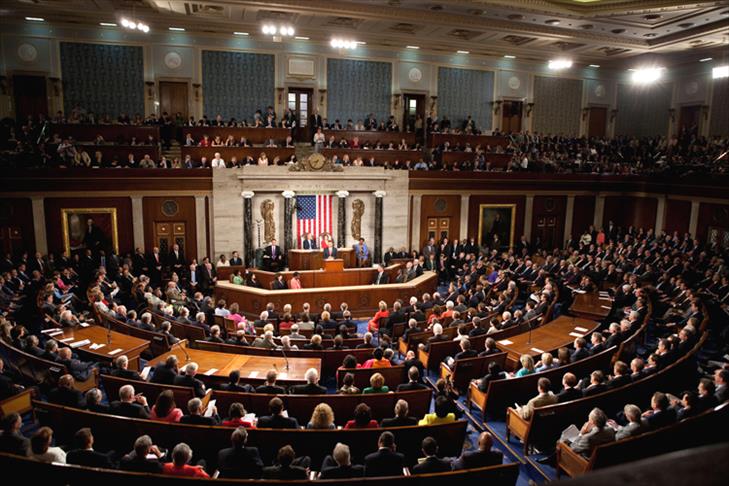
If Republicans gain control of the Senate in next month’s midterm elections, a very likely scenario, President Barack Obama’s dealings with Congress will prove difficult during his final two years in the White House.
All 435 seats in the U.S. House of Representatives and 33 seats out of the 100 in the Senate will be contested in the Nov. 4 elections; along with 38 governorships, 46 state legislatures, and numerous state and local races.
Heading into the elections Republicans currently have a 32-seat lead in the House while Democrats outnumber Republicans 53-45 in the Senate, with two Independents in the mix.
The contest for the Senate will mark the elections as Republicans seek control of both houses of Congress, which, if happens, will leave Obama facing gridlock concerning his legislative agenda.
With a Republican-controlled Senate, Obama would not have the supporting power behind him in Congress to get bills passed or to prevent a Republican bill from reaching his desk. Additionally, his administration could see itself bogged down in Senate hearings.
To take control of the Senate, Republicans need to win six seats currently held by Democrats while holding on to the 14 seats they hold that are contested. Meanwhile, Democrats need to win 17 seats currently held by Republicans in the House to take control of that chamber.
Some projections for the Senate show seven seats are considered safe for Democrats while Republicans have 14 safe seats. Democrats have six likely seats, while Republicans have five.
A CNN poll, however, calculates 10 safe seats for Democrats and 14 for Republicans in the Senate but the two parties have two seats each that are considered likely. There are eight seats considered a toss up. Hence, a Republican Senate would be of no surprise after Nov. 4 if Democrats fail to grab the toss up seats.
In the case of a 50-50 split in the Senate, Vice President Joe Biden, a Democrat, would represent the deciding vote.
For a majority in the House, 218 seats are required. Currently, Democrats hold 199 with 233 for Republicans. The Republicans are predicted to have 231 safe seats with 14 likely, while the number for Democrats remains at 189 with 23 likely seats.
There are 15 seats considered toss up between the two parties but even if all of those went to Democrats, the Republicans would still maintain control of the House.
Several domestic and foreign affairs issues have been the focus of midterm campaigns, including the completion of the Keystone XL pipeline; the Patient Protection and Affordable Care Act, or Obamacare, and foreign policy crises in the Middle East and eastern Europe.
For the GOP, the challenge is to move beyond the rhetoric of past campaigns and focus on specific policies showing the party would be effective on behalf of the poor.
For six years, under heavy pressure from environmental groups, Obama and Democrats have blocked passage of the Keystone XL pipeline project — a Canadian energy projectto ship oil from Alberta, Canada, to the U.S. Some analysts project the project would create more than 100,000 jobs but environmentalist counter that the harm to the environment would devestating.
Another favorite topic for Republicans is the health care law that they have attempted to repeal more than 140 times.
In addition to the problems that plagued the Obamacare website during its initial rollout last October that left the administration under fire, the law has been harshly criticized for allegedly raising the cost of health care premiums. It has long been the rallying cry of Republican but now even some Democratic voters charge that Obama assured Americans that the plan would decrease the federal deficit and reduce premiums but instead, both have increased.
These issues are likely to dampen the voters’ mood, ultimately resulting in damaging Democrats at the polls.
A plus for Democrats, however, is the 4.5 million new jobs created under the Obama administration’s six years in office.
Fact sheets released by the administration show that each month the administration has created more than 150,000 jobs and that figure increased to 200,000 in the last six months.
Although some Democratic candidates have chosen to distance themselves form Obama and Obamacare, they have emphasized the administration's economic gains at home.
www.aa.com.tr/en