ISTANBUL
Tensions between the US and Iran are rooted in a decades-long rivalry dating back to the 1979 Islamic Revolution, shaped by sanctions, proxy conflicts, nuclear disputes and periodic military confrontations.
Over the years, cycles of pressure and limited engagement have entrenched deep mistrust and competing security perceptions on both sides.
Following years of mounting pressure and stalled diplomacy, the 12-day Iran-Israel war in mid-June 2025 marked an unprecedented escalation that drew Washington into direct military confrontation with Tehran.
Since the ceasefire, relations have been defined by heightened rhetoric, military signaling, domestic unrest in Iran, renewed sanctions pressure and intermittent diplomatic efforts aimed at preventing a wider regional conflict.
With a new round of talks to be held in Oman on Friday, here are the major developments that have shaped US-Iran tensions since the 12-day war:
June 2025: 12-day war, US strikes and ceasefire
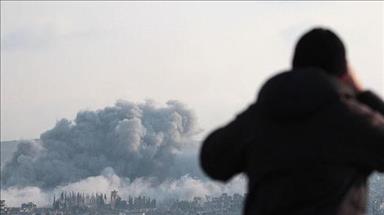
Israel launched attacks on Iran on June 13, sparking a war marked by tit-for-tat airstrikes, raising fears of a broader regional conflict.
Several senior Iranian military commanders and nuclear scientists were killed in Israeli airstrikes that targeted Tehran and other cities, including Maj. Gen. Mohammad Bagheri, chief of staff of the Iranian Armed Forces, Gen. Hossein Salami, chief of the Islamic Revolutionary Guard Corps (IRGC), and senior IRGC commander Gen. Gholam Ali Rashid, head of the central headquarters of the Iranian military.
Israeli intelligence operatives carried out covert operations inside Iran, including sabotage and drone attacks targeting air-defense systems, missile launchers and military infrastructure, according to multiple reports.
Iran responded by striking Israeli military and intelligence facilities with missiles and drones before the US carried out a wave of strikes on Iranian nuclear sites. The attack brought then-ongoing negotiations between the US and Iran over Tehran's nuclear program to a rapid end.
B-2 Spirit stealth bombers struck underground nuclear facilities at Fordow and Natanz, deploying GBU-57 Massive Ordnance Penetrator (MOP) bunker-buster bombs. US submarines also launched Tomahawk cruise missiles at nuclear infrastructure in Isfahan.
Iranian authorities acknowledged damage to nuclear facilities but said no radiation leaks were detected.
On the evening of June 23, US President Donald Trump announced that Iran and Israel had agreed to a “complete and total” ceasefire.
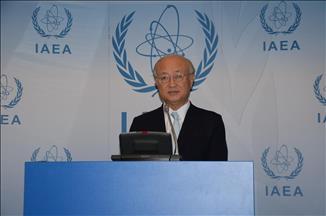
After the truce, Iran signaled that it would reassess its cooperation with the International Atomic Energy Agency (IAEA).
July to August 2025: Rhetoric and pressure
US officials warned Iran against further regional escalation, while Israel reiterated its objective of preventing Tehran from advancing its nuclear program.
In August, Iranian officials accused Washington and Tel Aviv of exploiting the war’s aftermath to justify intensified political and economic pressure.
September 2025: Snapback sanctions
On Sept. 29, the European Union reimposed nuclear-related sanctions on Iran under the “snapback” mechanism linked to the 2015 nuclear deal.
The move restored a broad range of sanctions that had been lifted or suspended under the Joint Comprehensive Plan of Action (JCPOA), including restrictions on banking, energy, shipping, insurance and trade in sensitive goods.
Tehran rejected the legality of the move, arguing that parties which withdrew from or violated the nuclear deal have no standing to invoke snapback, and warned that the decision would further undermine diplomatic efforts.
November 2025: Nuclear verification dispute
On Nov. 20, the IAEA Board of Governors adopted a resolution demanding full access to Iranian nuclear sites and clarification of uranium stockpiles, citing unresolved safeguards issues.
Iran warned that it would take reciprocal steps if pressure continued.
December 2025: Unrest in Iran
Shopkeepers and merchants in Tehran first started protests on Dec. 28 over a deepening economic crisis as the value of the rial plunged to a record low amid biting sanctions.
What began as sporadic economy-focused demonstrations morphed into broader anti-government protests across the country, leading to an internet shutdown and crackdown on demonstrations.
The US and other Western governments began voicing concern over reported casualties and arrests.
January 2026: Trump’s threats and military signaling
Trump called on Iranians to continue protesting across the country, telling them on Jan. 13 that “help is on its way.”
“Iranian Patriots, keep protesting - take over your institutions!!! Save the names of the killers and abusers. They will pay a big price,” Trump wrote on Truth Social. “I have cancelled all meetings with Iranian officials until the senseless killing of protesters stops. Help is on its way. MIGA!!!”
Trump used an acronym that is a play on his Make America Great Again slogan, referring instead to Iran.
The US began bolstering its military presence in the Middle East, deploying additional personnel and naval and air assets, and describing the move as deterrence amid rising tensions.
On Jan. 29, the EU designated the IRGC as a “terrorist organization,” with Iran responding by passing legislation designating the armed forces of EU member states as “terrorist organizations.”
February 2026: Gulf incident and diplomacy
As tensions continued to soar, Trump made multiple statements indicating that the US was holding negotiations with Tehran.
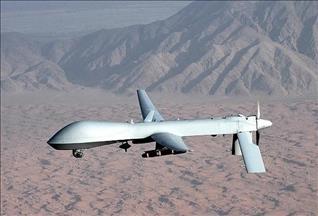
On Feb. 3, he told reporters at the White House that talks were taking place, even after the US military said it shot down an Iranian drone that approached its aircraft carrier in the Arabian Sea.
On Feb. 4, US and Iranian officials confirmed that talks would be held in Oman’s capital Muscat later in the week, with Friday's discussions expected to focus on nuclear issues, signaling continued diplomatic engagement despite mounting military and political pressure.