- Analysts warn that any ground operation carries ‘significant risks’ for US troops and broader escalation
- Around 50,000 troops are currently deployed to the Middle East, roughly 10,000 more than usual
- US objectives could be control of the Strait of Hormuz, seizing Iran’s enriched uranium, or taking over Kharg Island, say experts
ISTANBUL
As the Iran war rages on, concerns are mounting over a potential US shift toward ground operations, a move analysts warn would carry significant military risks and trigger broader regional escalation.
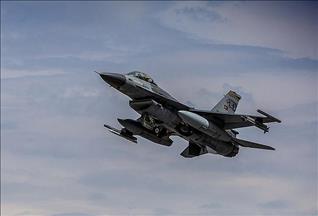
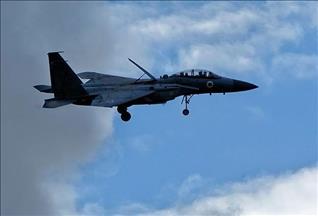
A buildup of US forces in the region and emerging reports of contingency planning have fueled speculation that Washington is weighing options that go beyond airstrikes, including limited land operations targeting strategic sites.
“The possibility exists that the US would send troops,” Christopher Preble, director of the Reimagining US Grand Strategy program at the Stimson Center, told Anadolu.
According to a report by The Washington Post, the Pentagon is preparing for weeks of potential ground operations in Iran, pending a final decision by US President Donald Trump. Officials said such plans could mark “a new phase of the war” that may be “significantly more dangerous” for US forces.
A troop buildup is underway. Several hundred Special Operations forces, including Army Rangers and Navy SEALs, have recently deployed, joining around 5,000 Marines and sailors, according to The New York Times.
In total, approximately 50,000 US troops are now stationed in the Middle East, roughly 10,000 more than usual.
Multiple scenarios under consideration
Analysts say Washington is weighing several potential ground operation scenarios, each with distinct risks.
Preble outlined three main options.
The first would involve seizing territory on the Iranian side of the Strait of Hormuz to prevent Tehran from threatening shipping routes.
The strait, which normally handles around 20% of global oil flows, has been effectively closed since early March following the joint US-Israeli attacks.
US Treasury Secretary Scott Bessent said on Monday that Washington would eventually retake control of the Strait of Hormuz and restore freedom of navigation. However, Trump later said the US would have “nothing to do with the Strait,” suggesting other countries should handle the consequences of its closure.
A second option would involve targeting Iran’s nuclear facilities, including seizing enriched uranium.
Iran’s Foreign Minister Abbas Araghchi said last month that Iran’s stockpile of approximately 440 kilograms (970 pounds) of highly enriched uranium is buried under the rubble of its destroyed nuclear facilities.
The third scenario would involve seizing Kharg Island, a critical hub for Iran’s oil exports and a major source of government revenue.
In an interview with the Financial Times on March 30, Trump said he would “prefer” to “take the oil” in Iran, signaling that control of the island could be used as leverage.
Risks and logistical challenges
Ahead of the potential ground operation, Parliament Speaker Mohammad Bagher Ghalibaf warned Iran would “rain fire” on any US troops entering its territory.
So far, at least 13 US troops have been killed and more than 300 wounded in attacks across the region since the war began, according to officials.
Brian Finucane, a senior adviser with the US Program at the International Crisis Group, said all potential ground operations carry “significant risks,” both in terms of troop safety and escalation.
Deploying forces on Iranian territory would expose US troops to drones, missiles, artillery and small arms fire, he said.
“There could be logistical challenges in maintaining, sustaining any US ground presence depending on where it is and how long it's there for,” he added.
Preble said even a limited operation along the Strait of Hormuz would be difficult to sustain.
“It is a very long stretch of land, and those troops would be subjected to resistance from the Iranians,” he said, noting that opposition would likely come from both military forces and civilians.
Troops landing on Kharg Island would also be vulnerable even though the territory is smaller.
“If the US were to be able to take the island, those troops would be under constant fire from the mainland, both from rockets and drones, but also from traditional artillery,” he said. "There would be considerable risk to US troops of fatalities and casualties.”
Operations targeting nuclear sites would be even more complex.
Such missions would likely require troops to be flown into contested areas under missile and drone threat, followed by hazardous ground operations involving mines and fortified facilities.
“This would involve a large-scale operation to excavate some of these facilities and to remove the enriched uranium, and again, this operation would be conducted under fire,” said Preble.
Diplomacy amid escalation
Discussion of a possible ground operation comes as Trump has alternated between threatening escalation and signaling openness to diplomacy or ending operations.
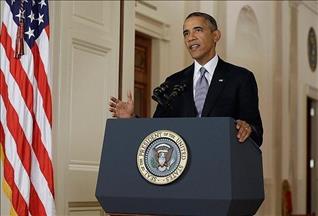
On Tuesday, he told reporters the war could be over in “two, three weeks.” The White House has also said he will deliver an “important update on Iran” in a televised address on Wednesday evening.
At the same time, regional diplomacy is intensifying.
Over the weekend, top diplomats from Türkiye, Pakistan, Egypt and Saudi Arabia met in Islamabad to discuss prospects for potential US-Iran talks and ways to end the conflict.
However, Iranian officials remain skeptical.
According to Axios, Tehran is wary of US diplomatic overtures, citing a history of negotiations coinciding with military action.
“The track record … is not reassuring and surely gives Tehran great reason for suspicion,” said Finucane.
He added that reported US demands remain similar to those made before the war began.
“If the president wants an off-ramp, and he should want an off-ramp, then that needs to be the priority, not the sort of maximalist wish list,” he said.
No clear end in sight
Analysts say the conflict is likely to continue, with Iran still demonstrating the ability to launch drones and missiles despite sustained strikes.
“We are likely to see what we’ve been seeing in the last four weeks … continued fighting and continued expansion of targets,” said Preble.
He argued that Washington may be misreading Iran’s previous responses to US actions.
In both the 2020 killing of the Iranian commander Qasem Soleimani and last year’s strikes on nuclear facilities, Iran’s retaliation was relatively restrained, he said, suggesting Tehran was trying to avoid escalation.
But that approach may now be changing.
“They intend to continue to fight and not demonstrate, in any respect, a desire to de-escalate because they think that the signal to de-escalate amounts to capitulation, and the US will again take advantage of it in the future,” he said.
For Finucane, this war was unnecessary.
“One hopes that Washington does its best to bring it to a close as soon as possible,” he said.