Iran’s Parliament Speaker and chief negotiator Mohammad Bagher Qalibaf said Monday that diplomacy is essential to securing the political and legal gains of military achievements, stressing that Lebanon’s sovereignty over its entire territory “must be fully restored.”
In statements carried by Iran’s state broadcaster IRIB, Qalibaf said he hoped the ongoing negotiations would ultimately secure Lebanon’s full sovereignty over its territory.
“Every military success, no matter how great or decisive, shows its real impact only when it is legally and politically recorded and consolidated,” he said.
He said such a process could not be achieved without diplomacy, arguing that the “sacrifices and costs of the battlefield” would not lead to final results without political and diplomatic follow-through.
“When conditions are created on the battlefield, it is diplomacy that must play its role by completing through political means what cannot be fully achieved militarily,” he said.
Qalibaf described negotiations as “a method of struggle” and “a continuation of the same struggle,” saying he had maintained that position for years.
He also criticized attempts to create a “false dichotomy” between military action and diplomacy, saying the two are complementary rather than contradictory.
Qalibaf said the recently signed Islamabad Memorandum of Understanding between Iran and the US emphasized ending the war “in Iran and among its allies,” referring to what Tehran describes as the “resistance front.”
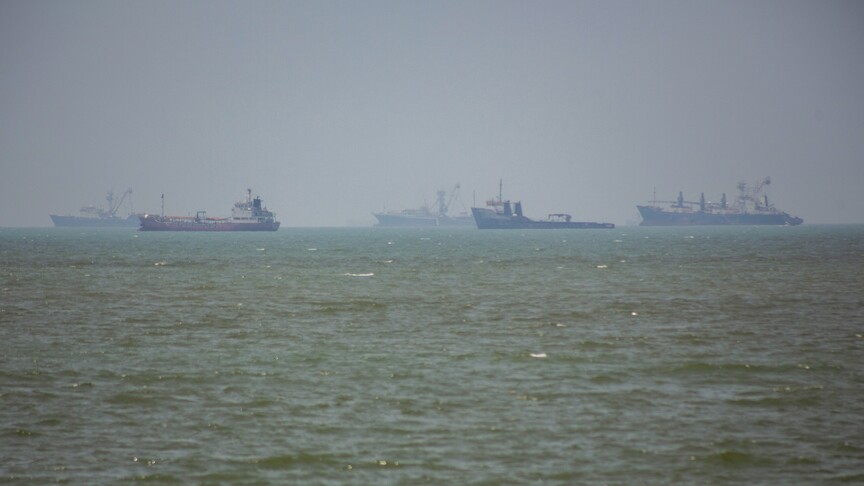
He said hostilities had ended on Iranian territory, although tensions persisted in the Strait of Hormuz, where naval restrictions imposed during the ceasefire amounted to “a form of war.”
Qalibaf said developments in Lebanon took a different course, with Israeli military operations continuing despite the broader framework, including attacks in Beirut’s southern suburbs.
He said Iran-backed forces responded with missile strikes on Israel, stressing that Tehran’s “red lines” included preventing attacks on Beirut and maintaining a ceasefire in southern Lebanon.
“Israel is strongly opposed to the negotiation process because it sees its destruction in this path and seeks to sabotage it,” he said.
Qalibaf said Iran’s participation in the Switzerland talks and subsequent diplomatic efforts helped reduce the intensity of fighting and brought hostilities in Lebanon to a halt within two days.
He said the talks resulted in an understanding under which both Iran and the US would guarantee Lebanon’s territorial integrity.
According to Qalibaf, those guarantees were incorporated into the memorandum, and a coordination center would be established to oversee implementation, facilitate the return of displaced residents and secure Israeli withdrawal from Lebanese territory.
On the Strait of Hormuz, Qalibaf said its administration would remain under Iranian management under “Iranian arrangements” while respecting international law.
He said the sides also agreed to establish a 30-day direct hotline to resolve maritime disputes, shipping incidents and technical problems.
Qalibaf said the hotline was not for granting passage authorization but solely for resolving problems involving ships or possible incidents.
He also said Clause 11 of the memorandum provided for the release of two tranches of $6 billion in frozen Iranian assets, adding that arrangements had been made earlier during his trip to Qatar and finalized in Switzerland.
On energy and sanctions, Qalibaf said Clause 10 covers crude oil exports, petrochemicals, banking, insurance and shipping.
He said while a final agreement has yet to be reached and broader sanctions remain in place, oil sanctions have been suspended under the interim arrangement until the end of the 60-day implementation period.
Qalibaf said another key outcome was an agreed framework for monitoring implementation of the memorandum over the next 60 days, with Iranian and US delegations set to hold further meetings to follow up on its provisions.
His remarks came a day after Iran and the US held 18 hours of negotiations in Switzerland under Pakistani and Qatari mediation to discuss unresolved provisions of the memorandum of understanding, including the cessation of hostilities on all fronts, among them Lebanon.
Israel’s military offensive in Lebanon has killed more than 4,000 people, injured over 12,000 and displaced over 1 million residents since March 2, according to Lebanese authorities.
Israel continues to occupy areas in southern Lebanon, some held for decades and others seized during the 2023–2024 war.