- ‘Israel is trying to undermine pretty much every existing order in the region just to demonstrate its strength,’ Israeli analyst Ori Goldberg tells Anadolu
- Critics say the decision risks deepening divisions inside Somaliland, destabilizing the region
ISTANBUL
Israel’s decision to recognize Somaliland, a breakaway region of Somalia that has lacked international recognition since declaring independence in 1991, has sparked widespread backlash and raised questions about Tel Aviv’s motives.
Israel became the only country in the world to formally recognize Somaliland last month, with Prime Minister Benjamin Netanyahu announcing the decision and Israeli Foreign Minister Gideon Saar visiting the region last week.
"Israel is trying to undermine pretty much every existing order in the region just to demonstrate its strength," Israeli political analyst Ori Goldberg told Anadolu.
Calling the recognition “cynical” and “shortsighted,” Goldberg said he sees little evidence of a coherent long-term strategy.
“It’s definitely reflective of the way Israel is thinking at the moment – full of despair, very short term,” he said.
British-Somali analyst and activist Adam Matan described the move as “sinister,” arguing that Netanyahu is seeking partnerships with politically weak or vulnerable Muslim entities that are more likely to align with Israel.
Abraham Accords framing questioned
Netanyahu has framed Somaliland's recognition as being part of the Abraham Accords normalization deals.
The Abraham Accords are normalization agreements signed between Israel and several Muslim-majority countries during US President Donald Trump's first term. Four nations have joined the peace agreements: Bahrain, Morocco, Sudan and the United Arab Emirates.
In a statement, Israel’s Foreign Ministry said Somaliland’s recognition was “in the spirit of the Abraham Accords.”
Somaliland's leader Abdirahman Mohamed Abdullahi has reportedly said his country would join the accords.
But analysts say Somaliland’s inclusion would add little substance.
“Somaliland is nobody in comparison to the countries that Netanyahu or Israel wants to join the Abraham Accords,” Matan said.
Fears of Palestinian displacement
Somalia’s President Hassan Sheikh Mohamud has warned that the breakaway region of Somaliland has agreed to resettle Palestinians and host an Israeli military base, citing intelligence reports.
Analysts say Israel’s short-term calculations may include using Somaliland as leverage to threaten or facilitate the displacement of Palestinians.
Goldberg said the idea appears designed more as a threat than a viable plan.
"I don't think that will materialize. I don't think the Somalis in Somaliland want anything like that to happen,” he said. “I think they know that it'll put them in real jeopardy and will undermine any kind of legitimacy they have.”
Matan said the scenario of displacing Palestinians to Somaliland would be “easy and quick” for Israel if pursued.
“Potentially that's the short-term sinister goal of this deal,” he said.
Strategic waterways and military presence
Somaliland’s location along the Bab al-Mandeb Strait, which connects the Red Sea to the Gulf of Aden, gives it major geopolitical significance.
The waterway is vital for global trade and has been disrupted by attacks from Yemen’s Houthi group since the start of Israel’s war on Gaza in October 2023.
Analysts say Israel’s recognition could be aimed at increasing pressure on the Houthis or expanding Israel’s security footprint along the Red Sea.
However, the Houthis have warned that any Israeli presence in Somali territory would be considered a legitimate target, raising fears that Somaliland – and Somalia more broadly – could be dragged into a wider regional conflict.
Matan questioned what Somaliland could realistically offer, noting that its entire annual government revenue is estimated at just $300-400 million.
“There is no capability to defend against Houthi missiles,” Matan said, calling the move “naive, misguided and miscalculated.”
Goldberg also dismissed the idea that Israel could meaningfully project power from Somaliland.
“The notion that Israel is spreading throughout the shores of the Red Sea in an attempt to ultimately conquer Yemen is kind of ridiculous,” he said.
He added that Israel gains little from such a move beyond “distracting attention from its genocide in Gaza,” arguing that Tel Aviv has struggled to assert itself even in more strategically significant arenas such as Syria.
Deepening divisions inside Somaliland
Analysts say the recognition has also exposed deep political and social divisions within Somaliland itself.
The region remains split between unionists, who favor remaining part of Somalia, and secessionists, who are concentrated mainly in cities such as Hargeisa and Berbera.
Matan said Israel’s move appears largely symbolic and aimed at appeasing secessionist elites rather than delivering tangible benefits.
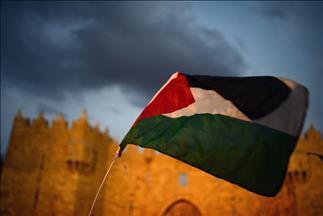
He added that tens of thousands reportedly marched in Borama carrying Palestinian flags, rejecting Israel’s recognition and opposing any attempt to turn Somaliland into a destination for displaced Palestinians or a base for regional military operations.
“Even if the entire world recognized Somaliland, how would that reconcile these internal communities?” he asked.