By Okech Francis
JUBA
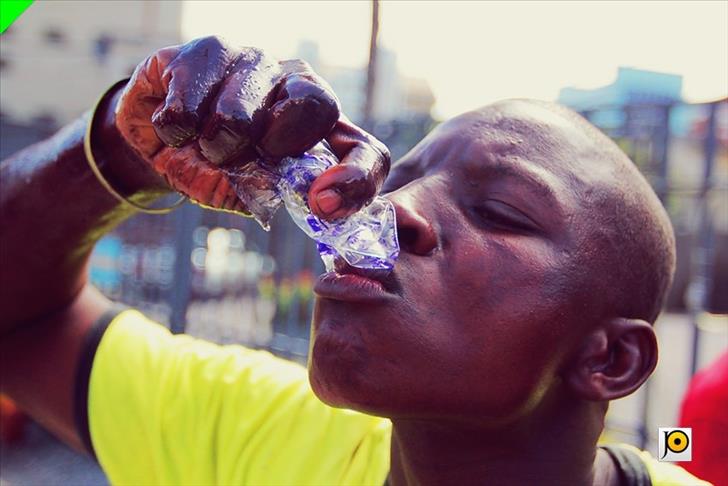
Denis Onen started drinking alcohol out of boredom.
"I have looked for work and I cannot get any," the 34-year-old told The Anadolu Agency at a drinking joint in Juba.
"It's so boring at home, so I come to the joint here," said Onen, who was already tipsy by 10am.
A 500ml bottle of "Siko," which is distilled locally from dates and yeast, goes for 5 South Sudanese pounds (about $1), while a half-liter bottle of "Kwete," a home beer brewed from maize flour, can go for as little as 1 pound.
Cheap imports from neighboring countries have also invaded the local market in South Sudan.
In capital Juba and most parts of the country, alcohol is freely available on the market and drinking hours are not defined.
Some bars and liquor stores are open as early as 7am.
"The whiskies which come from Eritrea are pocket-friendly and appealing to customers," Onen said.
"We call this the 'jobless corner,' our meeting point, because we have no phones," he noted.
"When we are here, we meet lots of people who share ideas with us," said he added.
Like Onen, many people in South Sudan are heavy drinkers due to a number of factors, including unemployment, boredom and idleness.
Whereas heavy drinking cuts across social classes, it is most widespread among the financially challenged.
The ongoing conflict in the country, which began in late 2013, has also taken its toll, with many people losing jobs, loved ones and businesses.
The UN estimates that tens of thousands of people have been killed in the conflict, which has also displaced nearly two million people while leaving 2.5 million on the brink of starvation.
Dr. Apollo Soro Oliva Duku, himself a former addict, now hopes to help others.
"I was a wreck; no work, no money and nobody could look up to me for assistance, despite the fact that I have a [college] degree," he told AA.
"An alcoholic is a very suspicious character. He thinks everybody is against him," said Duku. "When he needs to satisfy that urge [to get drunk], he can sell his shirt and other belongings."
He quit drinking in 2013 after receiving three months of treatment at a serenity center in Kampala, capital of neighboring Uganda.
"This is a huge problem. The community has a big role to play in supporting alcoholics," said Duku. "The problem also is that nobody wants to talk about it; nobody wants to address it head-on."
He hopes to help his compatriots who can't afford treatment abroad.
"My dream is to have a rehabilitation center in South Sudan," Duku said. "Alcoholism is a very big problem here."
Although he knows first-hand how alcoholism affects people's lives, he does not believe that putting regulations on the purchase of alcohol is the answer.
"With regulations, alcohol only becomes more attractive to addicts," Duku contended.
Rather, he promotes meetings, counseling and sharing of experiences.
"Through mental health initiatives and serenity, we can have a lot of outreach, which will pay off in the long run," Duku told AA.
Business
Part of the problem of curbing alcohol consumption is the fact that it has become a source of livelihood for so many.
"I must make sure all my children go to school," Agnes Naparata, a local brewer, told AA.
With four children out of wedlock, she has no man to help her raise them.
Naparata has been brewing alcohol for over 15 years to make ends meet.
"I need to feed them [my children] and take care of them," she said unapologetically.
Several states of South Sudan are trying to enforce bans on home brewing, sales and consumption of alcohol.
Dhieu Wal Takpiny, information minister for Lakes State, said a year-old community ban on alcohol brewing and consumption remained in place.
"The communities held a conference on conflict resolution and found out that one of the root causes of conflict was alcohol," he told AA by phone from Rumbek, the state's provincial capital.
"Of course, some people were dying, but these were isolated cases. The big issue was that it was the root cause of violence in the state," the official noted.
"With the availability of firearms in the hands of civilians, they begin using them [firearms] to create insecurity after getting drunk," he added.
"The ban is still standing, but there are people still drinking illegally," Takpiny lamented.
He asserted that spot checks were still being carried out for illegal brewing.
"Police move around checking for those women who are still brewing illegally," said the minister. "When we find alcohol in the house, we pour it out and warn the women."
Achol Otwar, a single mother and brewer, appeared unfazed.
"I have been brewing alcohol for many years and have managed to educate all my children," she told AA.
When pressed, however, she admitted that none of her six children had graduated past primary school.
"I will continue with this business because I have no money and alcohol makes quick money," said Otwar.