ISTANBUL
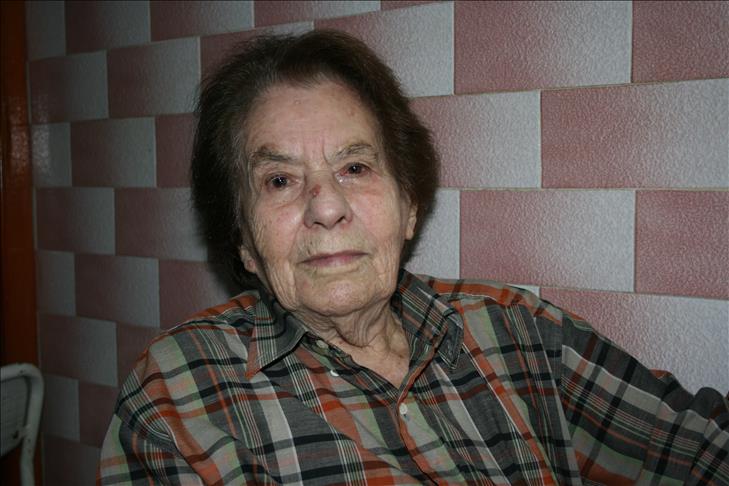
Prominent archeologist and one of the first Turkish women ever to compete in Olympic Games , Professor Halet Cambel has died at the age of ninety-eight in Istanbul.
Born in 1916 in Berlin, to one of Ataturk's close friends, Hasan Cemil Cambel and the daughter of the then Turkish ambassador in Berlin, Remziya Hanim, Cambel returned to Istanbul in 1924 and subsequently studying archeology.
After completing school in Turkey, she went to the University of Sorbonne in Paris to study archeology. She became a teaching assistant in 1940 and later in 1960 a professor of her field at the Istanbul University.
In 1936, Cambel, then a 20-year-old archeology student, was one of two female competitors sent to Berlin to compete in fencing in the Olympic Games.
The Nazis were in power and Cambel, repulsed by Hitler's ideas, rejected an invitation to meet him during the Games.
"Our assigned German official asked us to meet Hitler. We actually would not have come to Germany at all if it were down to us, as we did not approve Hitler's regime. We said that we would never have come to Berlin if our government had not told us to do so. When the official asked us to go up and introduce ourselves to Hitler, we firmly rejected her offer," she told the BBC in an interview two years ago.
She returned to Turkey and in the 1940s, played a prominent role in excavation of the antique Hittite settlement of Karatepe, in southern Turkey, with German archeologist Helmuth Bossert, deciphering Hittite hieroglyphics.
She played a key role in the understanding of Hittite hieroglyphics by discovering a tablet with the Phoenician alphabet, which allowed philologists to decipher the inscription.
As an eminent scholar and expert in the archeology of the Anatolian Peninsula, Cambel was renowned for conducting rescue excavations of endangered heritage sites, introducing stone restoration and ensuring proper conservation of significant cultural heritage in Turkey.
She founded the Department of Prehistoric Archeology at the Istanbul University, taught and inspired generations of students. She was instrumental in protecting a village of unique Turkish houses and has recently opened an Art and Culture House where concerts, exhibitions and other cultural activities take place. Cambel’s meticulous scholarship, commitment to international collaboration and enthusiasm for innovative research were praised both in Turkey and in the wider international community.
Cambel donated her house "Red Residence" to the Bogazici University in 2004.
The house, located in Istanbul's historic neighbourhood of Arnavutkoy, was founded by one of Sultan Mahmut II's Armenian gardeners. Cambel inherited the house where she lived with her husband.
Bogazici University will transform the house into "Halet Cambel and Nail Cakirhan Archeology and Traditional Architectural Research Centre".
englishnews@aa.com.tr