By Roy Ramos
ZAMBOANGA CITY, Philippines
The Philippines on Sunday welcomed the result of a global survey that suggests that Filipinos are the world’s joint fifth happiest citizens - the most positive outside of Latin America.
Top of a Positive Experience Index table was Paraguay, which scored 89, followed by Columbia, Ecuador and Guatemala, while the least positive - according to a series of set questions - was Sudan.
The most positive European country was Switzerland - joint fifth with the Philippines.
"Certainly we are pleased to learn about the survey result because between being happy and sad, most Filipinos say they are happy," said Presidential Communications Operations Office Secretary Herminio Coloma, Jr., in an interview with state-run dzRB Radyo ng Bayan radio.
The Philippines scored 80, based on research conducted by Gallup - a United States-based global performance-management consulting company.
Syria, the country with the lowest positive emotions ever reported last year, was absent because the report was issued before the 2014 Syrian data had been finalized.
Gallup interviewed 1,000 adults aged 15 and older in each country, asking a series of set questions to gauge their Positive Experience Index.
Among the questions were: Did you feel well rested yesterday? Were you treated with respect? Did you smile or laugh a lot? Did you learn or do something interesting?
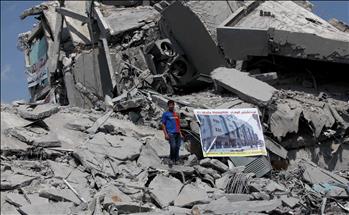
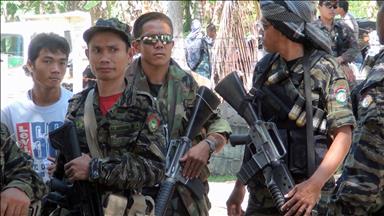
In 2012, the Philippines ranked joint fourth with Guatemala, just one place higher than 2014 - surprising considering that the country has been racked by a variety of problems, such as extreme poverty, armed insurgencies, natural disasters, corruption, and crime in urban centers such as Manila, Cebu and Zamboanga City.
The United States Agency for International Development reported in 2012 that extreme poverty in the Philippines was estimated at 19.2 percent of the population, or about 18.4 million people, based on the international poverty line of $1.25 per day.
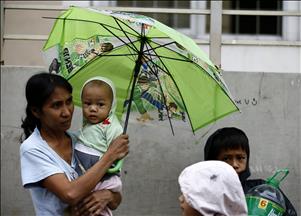
Most of the poor in the Philippines live in rural areas and work in the agriculture sector, mainly in farming and fishing. Urban poverty, however, has been increasing in recent years.
Migrants without jobs or with low-paying jobs are unable to afford decent housing. As a result, Philippine cities have high proportions of informal settlers who are among the poorest of the poor.
Moreover, poverty is severe in parts of the country with high levels of conflict. The Philippines’ 10 poorest provinces are considered either conflict-affected or vulnerable to conflict.
The Philippines also ranks high in the list of countries where corruption in government is prevalent.