By Evelyn T. Kpadeh
MONROVIA
Liberian cross-border woman traders are some of the hardest hit by the ongoing outbreak of the Ebola virus which is not only claiming lives, but also destroying livelihoods.
"We are suffering; we are dying slowly because we cannot leave Liberia," Kumba Browne, the president of the Women Cross Border Traders, an umbrella organization that advocates for and seeks the protection of over two hundred business women who travel to Guineas, Sierra Leone, Togo, China and other countries for trading, told Anadolu Agency.
"We did not go begging for the Ebola disease. We don't know how it came to our country," she said.
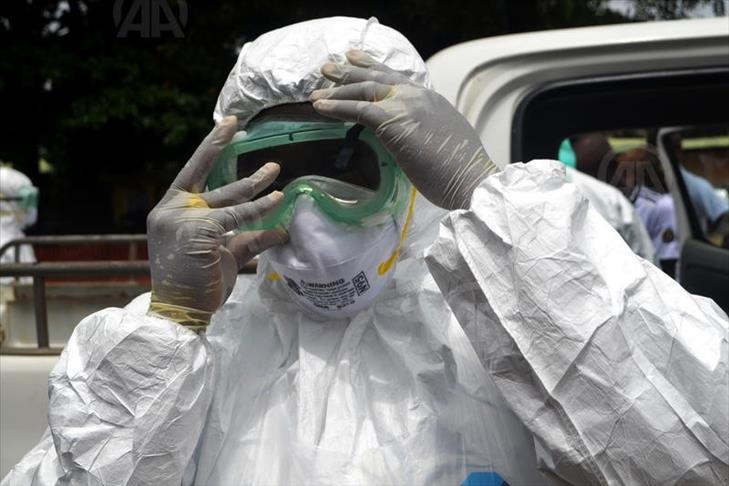
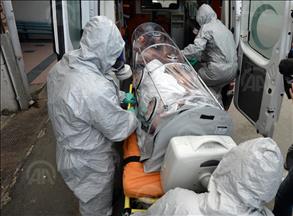
In recent months, Ebola – a contagious disease for which there is no known treatment or cure – has killed at least 3,879 people in West Africa, including 2,210 in Liberia alone, according to the World Health Organization.
A tropical fever that first appeared in 1976 in Sudan and the Democratic Republic of Congo, Ebola can be transmitted to humans from wild animals.
It can also reportedly spread through contact with the body fluids of infected persons or of those who have died of the virus.
Browned said that because of the Ebola situation the flight fare has almost tripled.
"At first, we were paying $300 to 400 as plane fare to Ghana, Togo and Ivory Coast," she recalled. "But at the moment, we are paying the sum of $1,200 to 1, 300 for just one way flight."
"How much will we be left with to buy our goods and pay hotel bills," Browned fumed.
The difficulty by the women, she added, goes beyond just the cost of the plane fare.
"Our brothers and sisters in Ivory Coast and Togo discriminate against and stigmatize us because we are from Liberia and Ebola is in Liberia," Browne lamented.
"As soon as the people recognize that we are Liberians in their country they come after us because they think we have carry Ebola to their country," she added.
Browne said 4 of their members who had earlier traveled to Togo and Ivory Coast are trapped in the two countries.
They are unable to pay the plane fare while traveling by road might seem even more scaring and threatening for them as the border remains closed, she added.
A UN Women report on Liberia indicates that 90 percent of Liberian businesswomen are the primary providers for their families.
-Nightmare-
The women traders say they have seen a serious decline in businesses since the Ebola outbreak making life difficult for them and their families.
Some have already ran out of stock and have nothing left to sell.
"When I leave my home the whole day to come and sell, I can hardly make a thousand Liberian dollar because goods that are often bought have finished and I have no means of traveling now," Peace Roberts, a woman trader, told AA.
"I have children to feed, house rent to pay and to gas my car every morning," she added. "We are really suffering."
What adds insult to injuries is that most woman traders now have overdue loan payments to banks.
"We took loans from the bank but we are struggling to pay because business is not going well," Antoinette Mulbah, a woman entrepreneur, told AA.
"We cannot travel but the banks don't care whether we sell or not all they want at the end of the month is for us to pay their money," she said.
Mulbah said some of the members unable to pay their loans have run away from the city, closing down their shops and businesses.
Under the loan agreements, failure by a creditor to pay back their loans on schedule entitles the bank to seize all prosperities given as collateral in addition to the arrest of the creditor's guarantor.
The destitute woman traders are seek a meeting with Central Bank Executive Governor Dr. Mills Jones and even President Ellen Johnson Sirleaf to help them get an extension and grace periods for the payment of their loans.
"We are appealing to Madam Sirleaf and Dr. Jones to come to our aid because the banks are killing us," Mulbah told AA.
englishnews@aa.com.tr
www.aa.com.tr/en